

Journal of Shanghai Jiao Tong University ›› 2025, Vol. 59 ›› Issue (7): 971-982.doi: 10.16183/j.cnki.jsjtu.2023.416
• New Type Power System and the Integrated Energy • Previous Articles Next Articles
REN Xiancheng1,2, LI Shangzhi3( ), LI Yingbiao3, HU Jiabing3, XU Taishan1,2, BAO Yanhong1,2, WU Feng1,2
Received:2023-08-24
Revised:2023-10-19
Accepted:2023-12-15
Online:2025-07-28
Published:2025-07-22
Contact:
LI Shangzhi
E-mail:szli@hust.edu.cn
CLC Number:
REN Xiancheng, LI Shangzhi, LI Yingbiao, HU Jiabing, XU Taishan, BAO Yanhong, WU Feng. Transient Modeling and Characteristic Comparative Analysis of Grid-Forming VSC with and Without Current Control[J]. Journal of Shanghai Jiao Tong University, 2025, 59(7): 971-982.
Add to citation manager EndNote|Ris|BibTeX
URL: https://xuebao.sjtu.edu.cn/EN/10.16183/j.cnki.jsjtu.2023.416
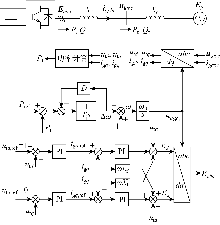
Fig.1
Structure of VSC with voltage and current dual loop control
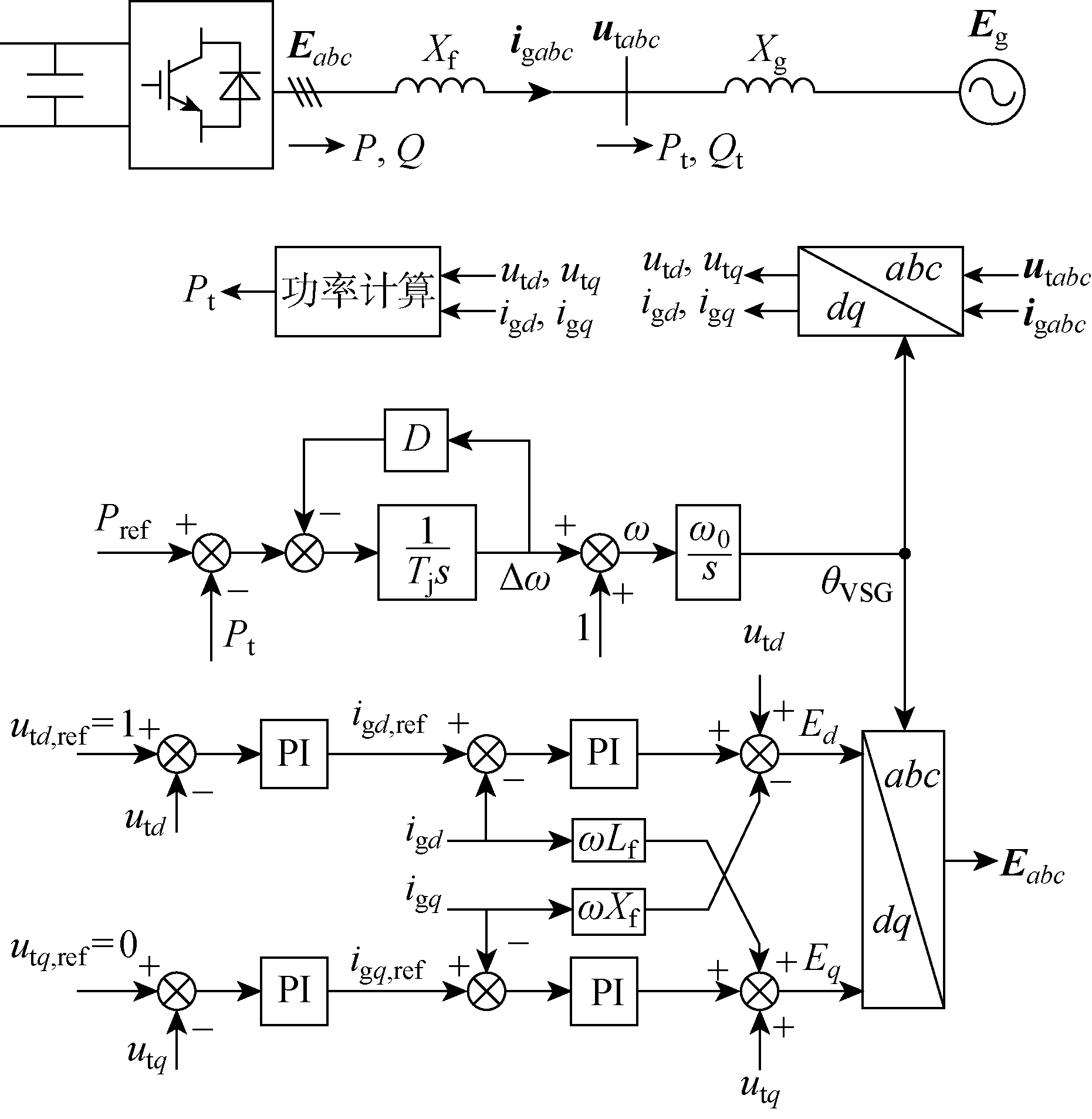
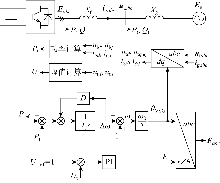
Fig.2
Structure of VSC with direct voltage control
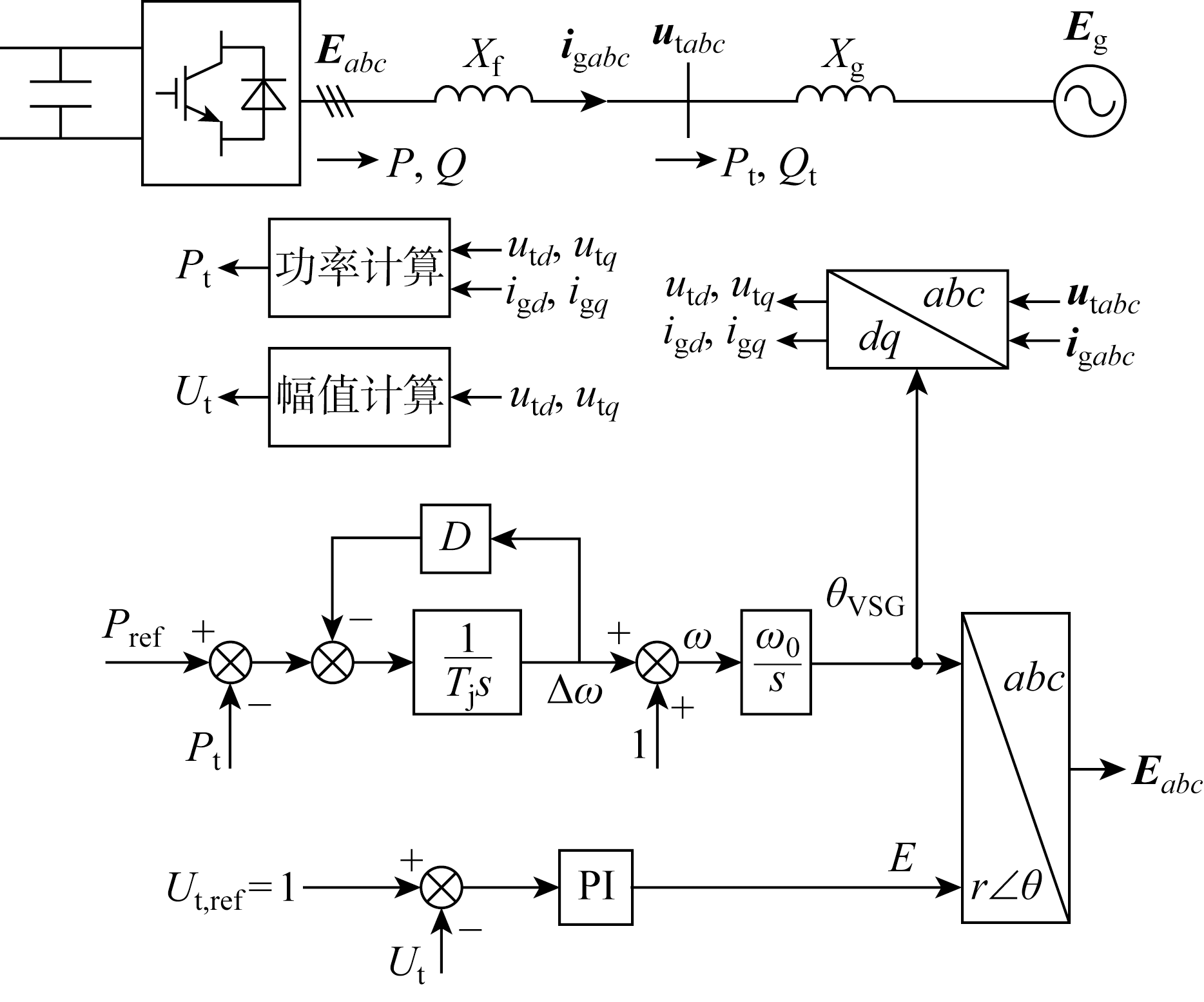
Fig.3
“Excitation-response” model of voltage and current dual loop control
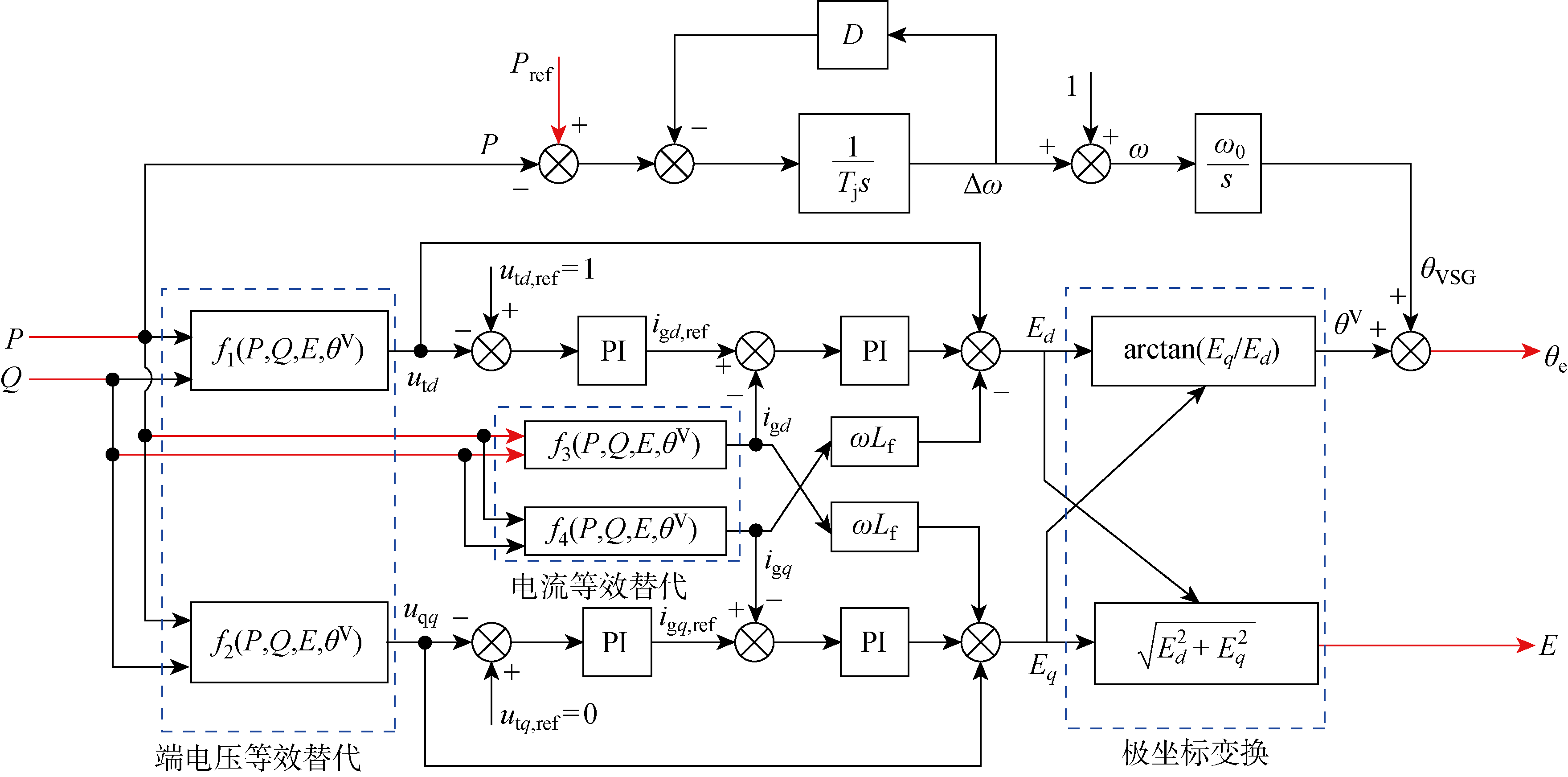
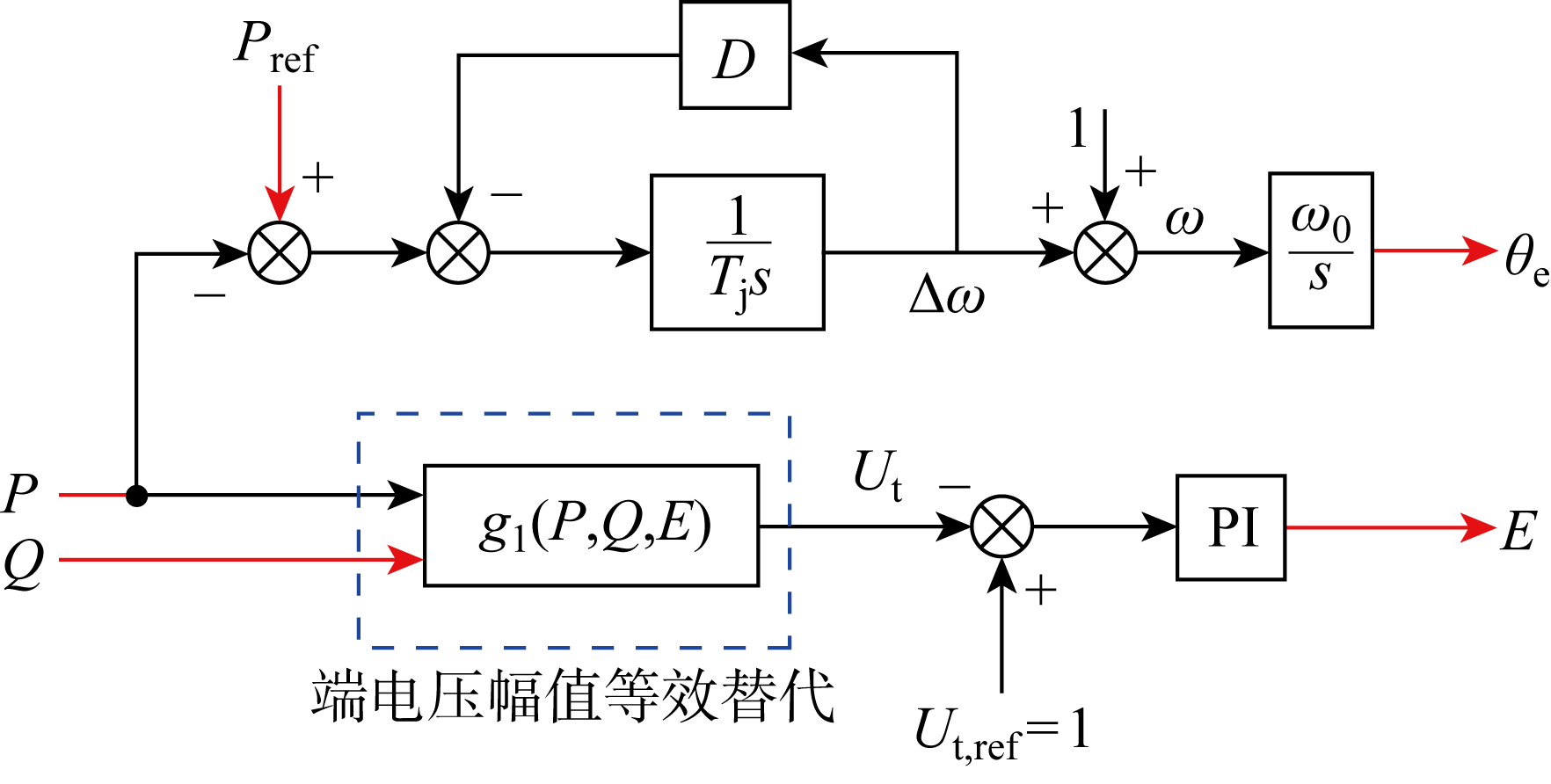
Fig.4
“Excitation-response” model of direct voltage control
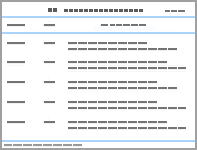
Tab.1
Comparison between internal voltage formation mechanisms of two types of grid-forming VSCs
| 电压电流双环控制VSC | 直接电压控制VSC | |
|---|---|---|
| 时间尺度特征 | 有功和无功输入经由电压环、电流环、交叉解耦项ωLfigd和ωLfigq等环节生成θV和内电势幅值E,内电势幅值和相位均呈现交流电流、直流电压、机电3个时间尺度特征 | 内电势幅值直接由端电压控制生成,仅呈现直流电压尺度特征;内电势相位等于VSG输出相角θVSG,仅呈现机电尺度特征 |
| 非线性特征 | 由于电压电流等效替代和直角坐标-极坐标变换环节的存在,所以内电势幅值、相位与有功、无功功率输入呈现非线性关系 | 端电压幅值等效替代使得内电势幅值与有功、无功功率输入呈现非线性关系,而内电势相位由有功功率线性驱动 |
| 耦合特征 | 极坐标变换环节使得内电势幅值和相位形成耦合关系,内电势幅值和相位动态相互影响 | 内电势幅值直接由端电压控制生成,内电势相位受有功功率驱动,幅值和相位解耦 |
Fig.5
Two grid-forming VSCs in a two-area system
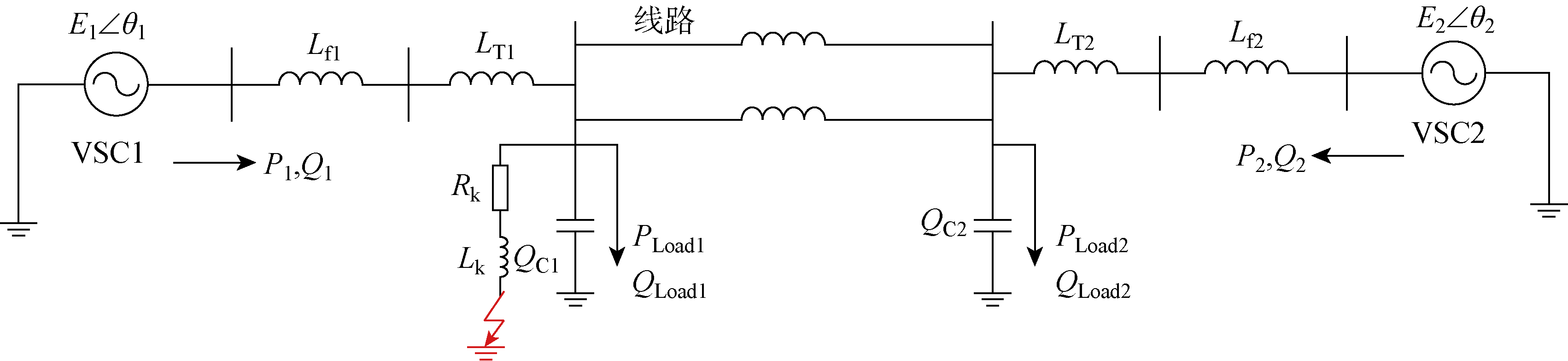
Tab.2
Parameters of system
| 参数 | 取值 | 参数 | 取值 |
|---|---|---|---|
| VSC1滤波电感, | 0.006 | VSC2滤波电感, | 0.008 |
| 变压器1电感, | 0.009 | 变压器2电感, | 0.01 |
| 线路单位长度电阻, | 0.0001 | 线路单位长度电感, | 0.001 |
| 线路单位长度电容, | 0.00175 | 线路长度/km | 110 |
| 有功负荷1,PLoad1/MW | 967 | 无功负荷1,QLoad1/Mvar | 100 |
| 有功负荷2,PLoad2/MW | 1467 | 无功负荷2,QLoad2/Mvar | 100 |
| 无功补偿1,QC1/Mvar | 200 | 无功补偿2,QC2/Mvar | 200 |
| 接地电阻, | 0.01 | 接地电感, | 0.1 |
Tab.3
Control parameters of VSC with voltage and current dual loop control
| 控制参数 | 数值 |
|---|---|
| 惯量系数, | 5 |
| 阻尼系数,Dp.u. | 25 |
| 端电压控制比例系数, | 2,50 |
| 电流控制比例系数, | 1,100 |
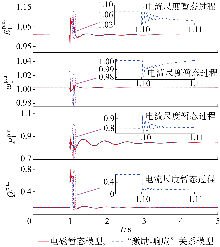
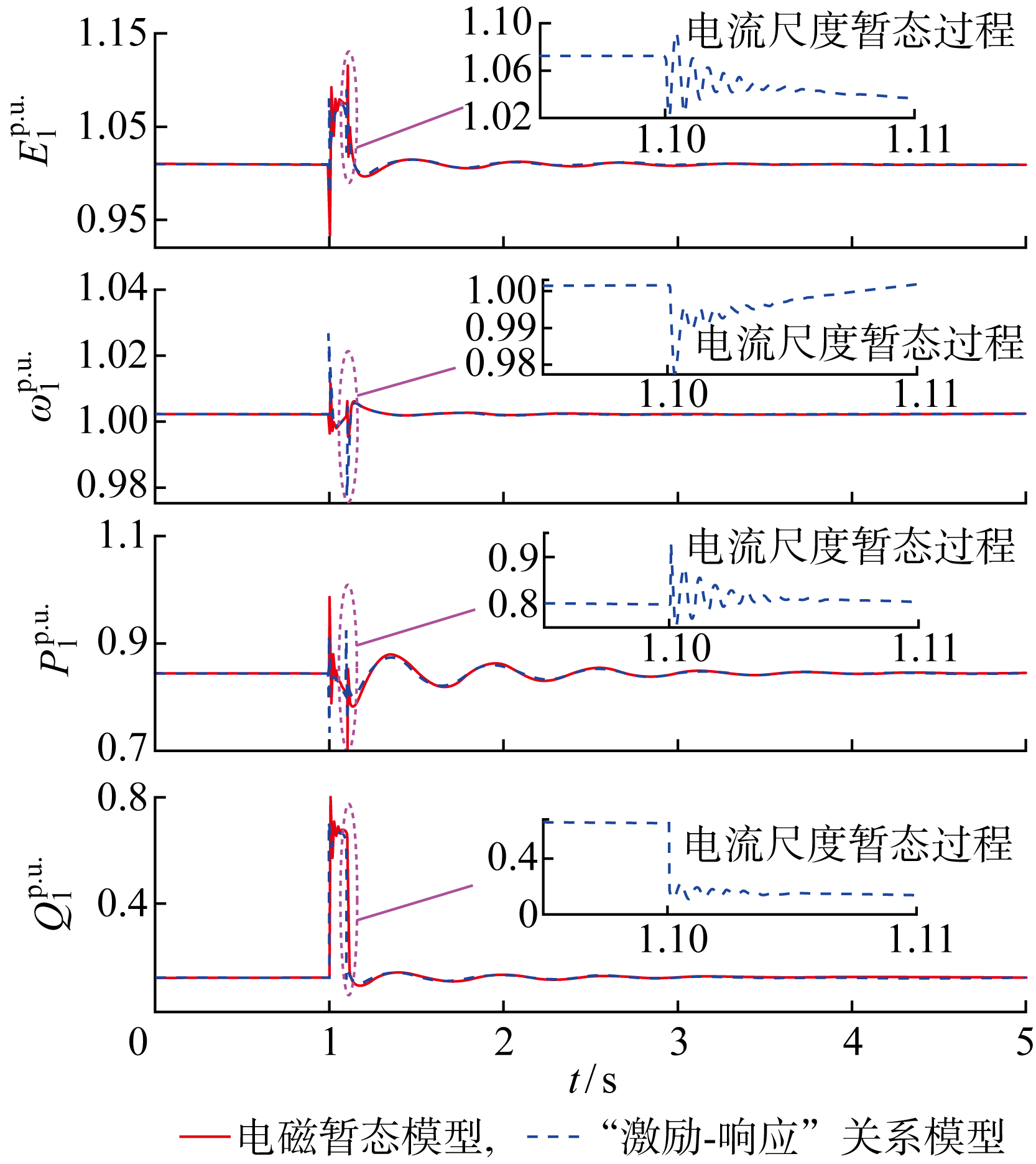
Fig.6
Model verification of voltage and current dual loop control
Tab.4
Control parameters of VSC with direct voltage control
| 控制参数 | 数值 |
|---|---|
| 惯量系数, | 5 |
| 阻尼系数,Dp.u. | 15 |
| 端电压控制比例系数, | 0.5,10 |
Fig.7
Model verification of direct voltage control
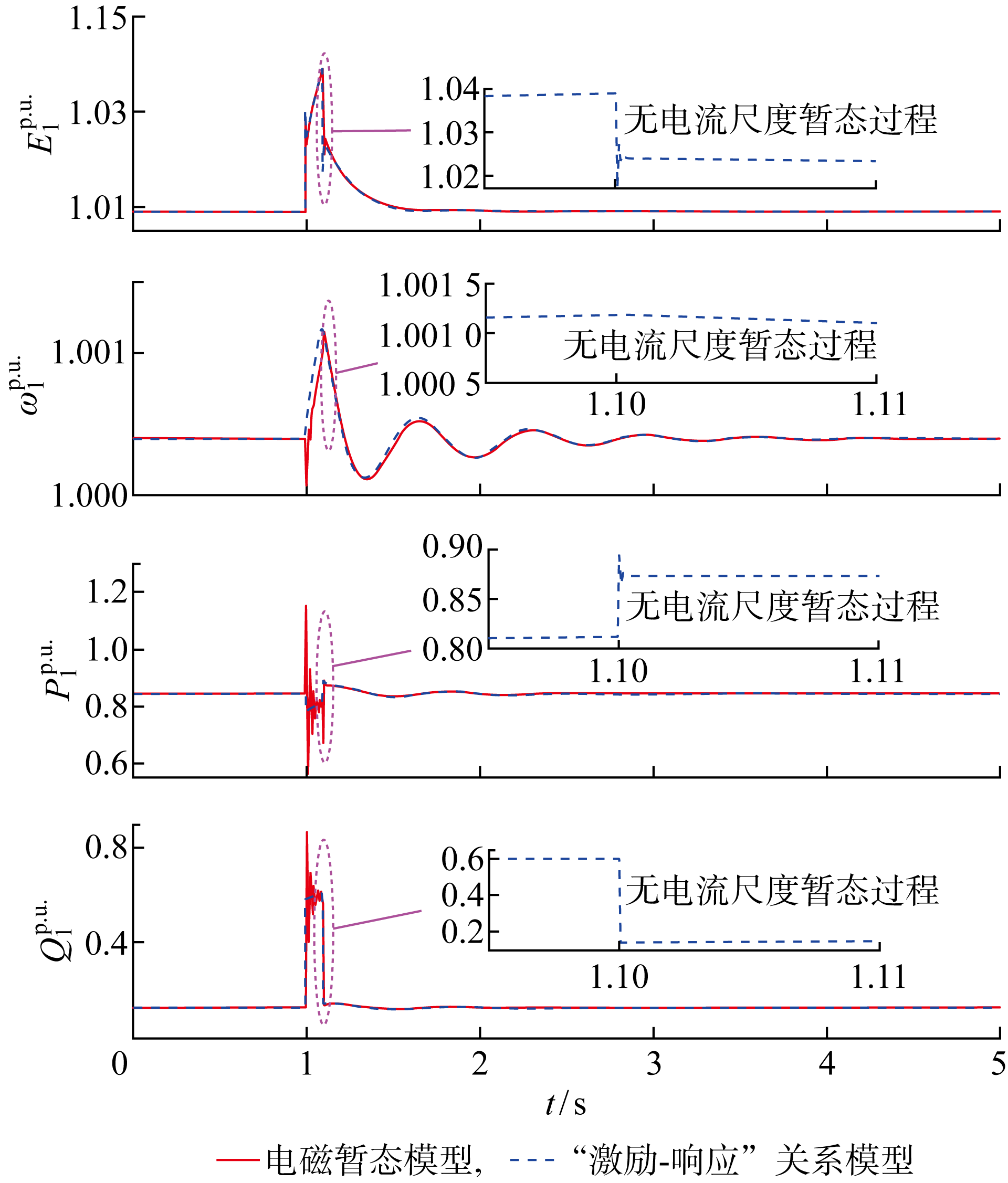

Fig.8
Grid-forming VSC-connected power system

Fig.9
Electromechanical scale model of VSC-connected system with voltage and current dual loop control
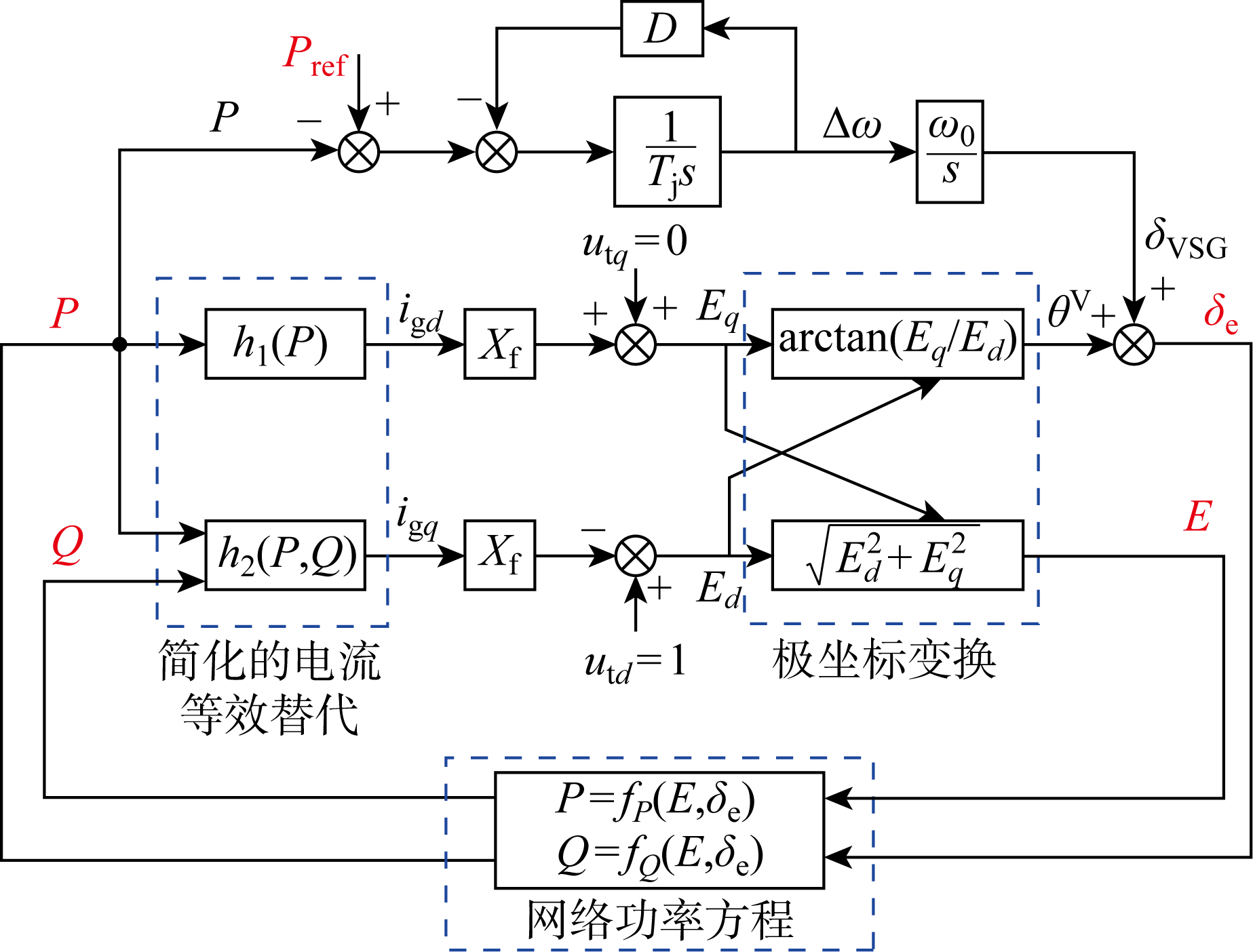
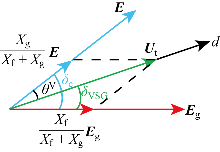
Fig.10
Relationship of system voltage vectors
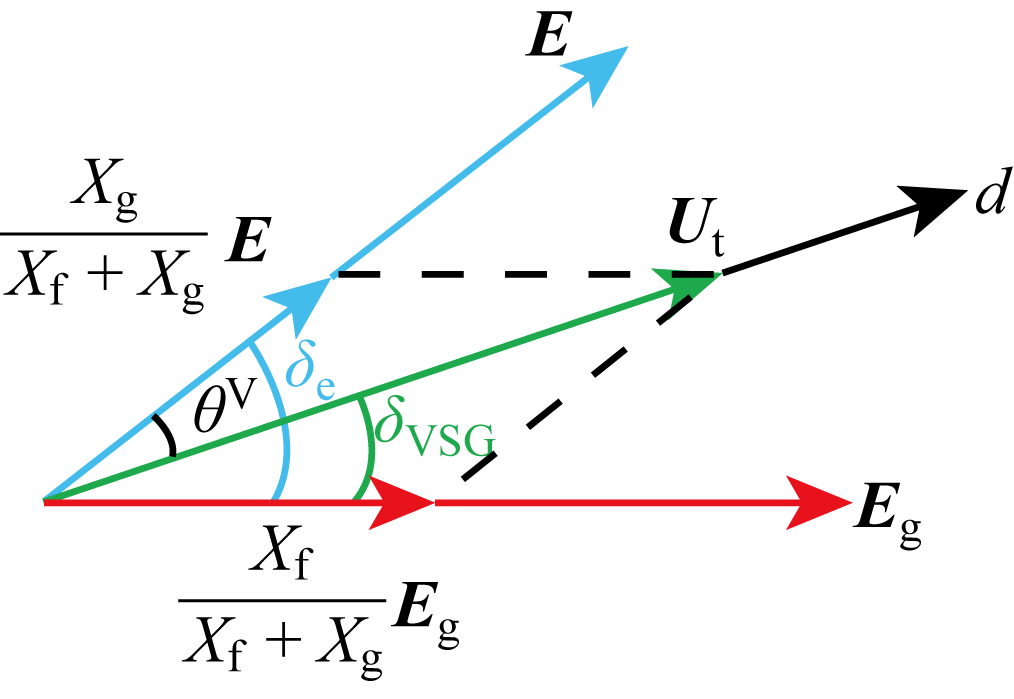
Fig.11
Electromechanical scale model of VSC-connected system with direct voltage control
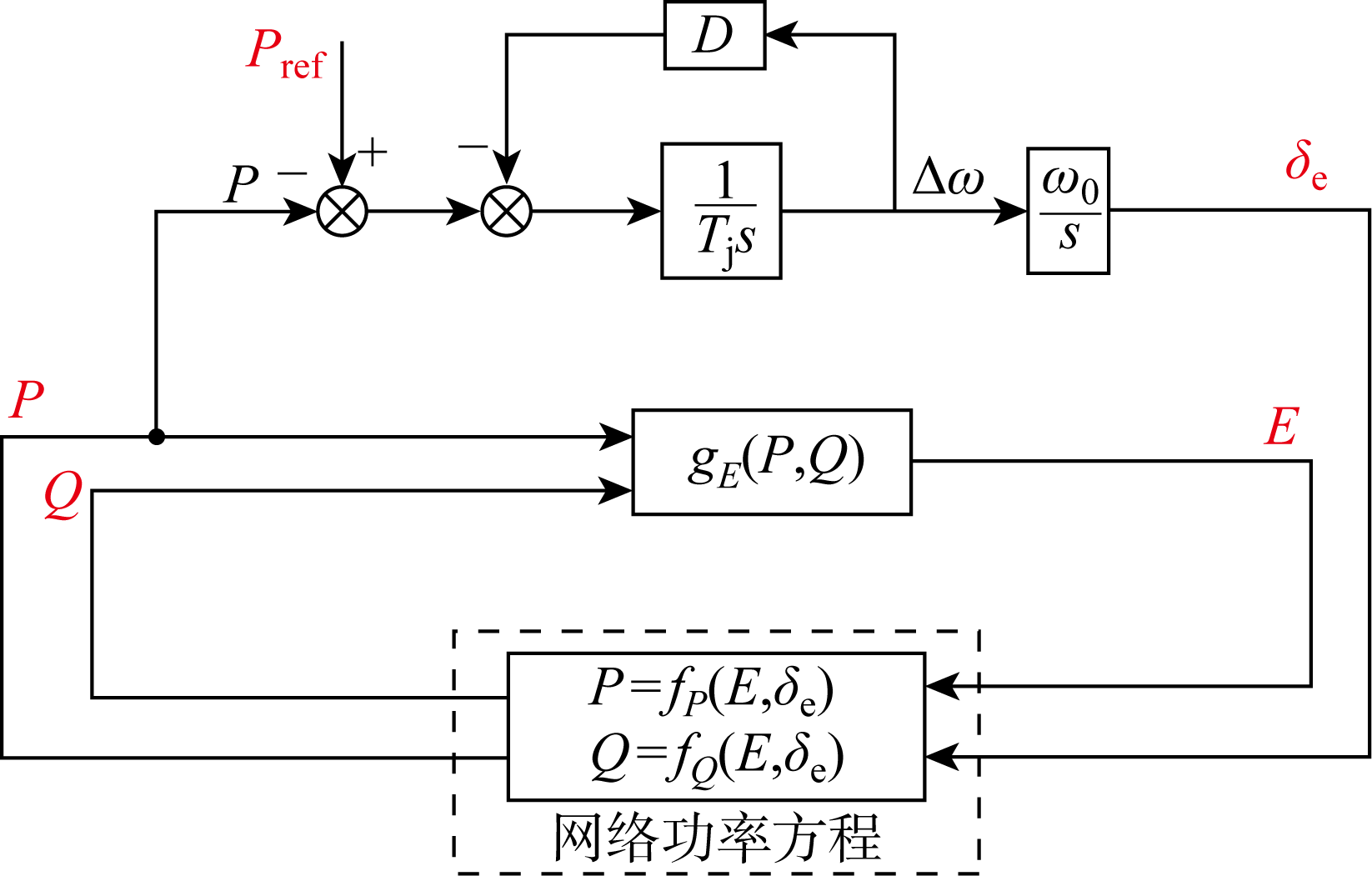
Fig.12
ft(δe) versus power at different Xg values
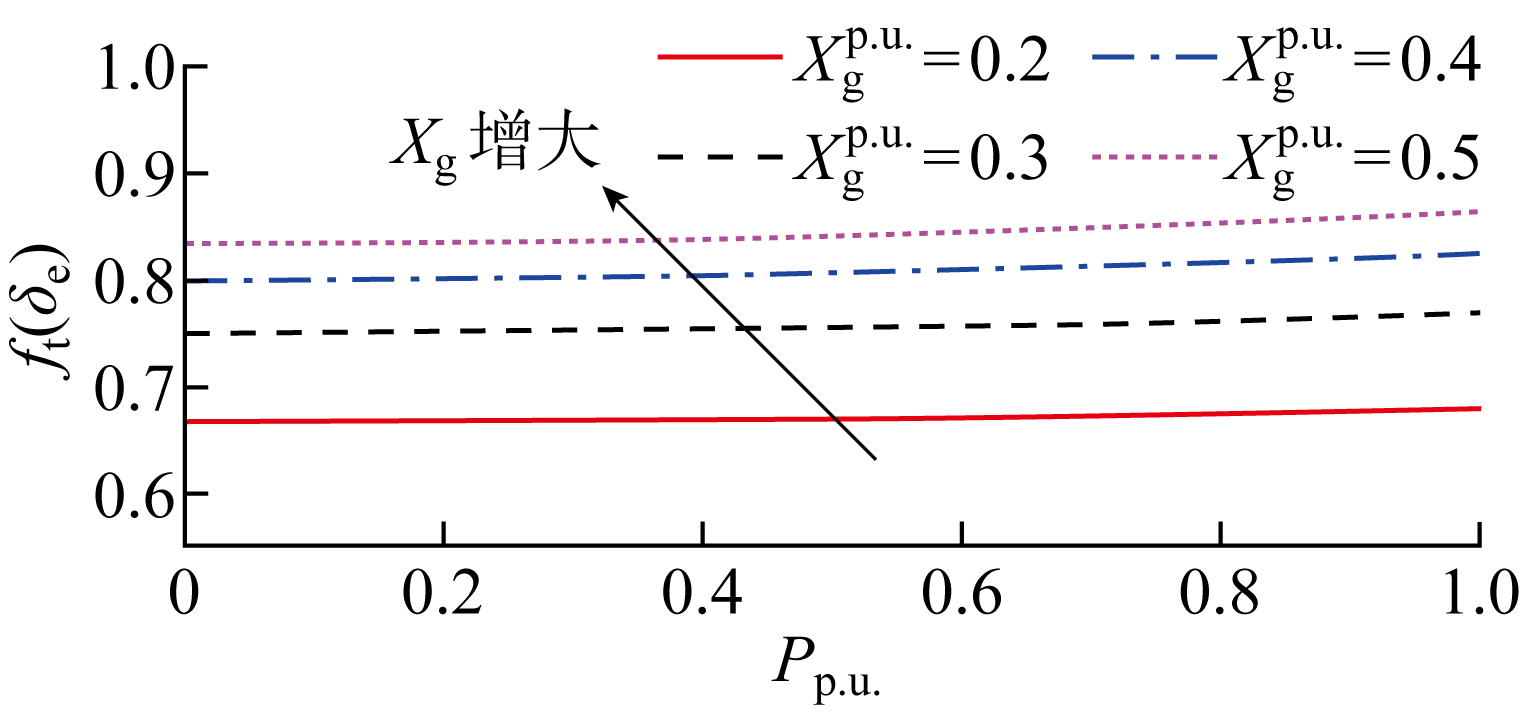
Fig.13
Active power at internal voltage at different Xg values
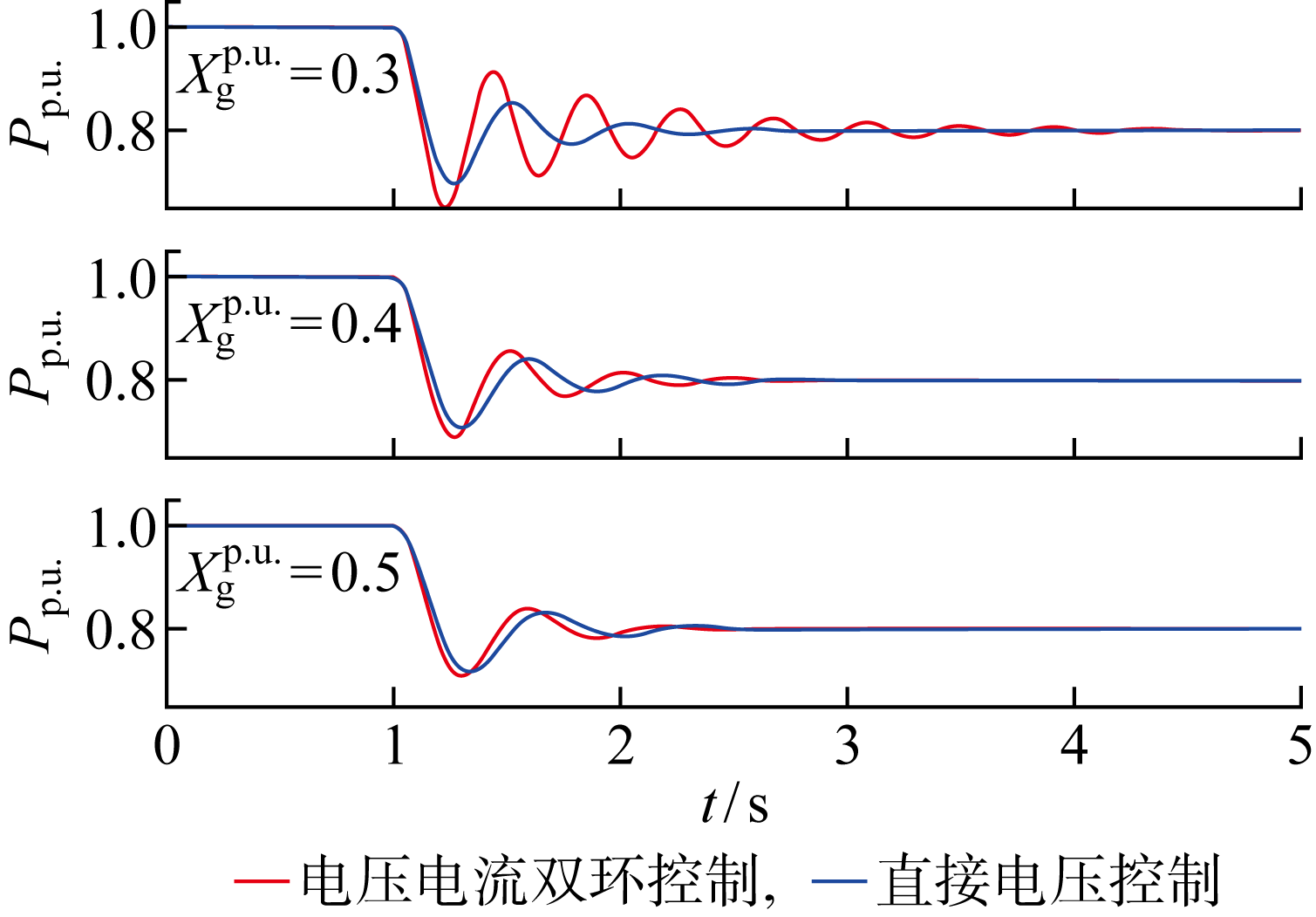
Fig.14
Extraction of equivalent inertia and damping
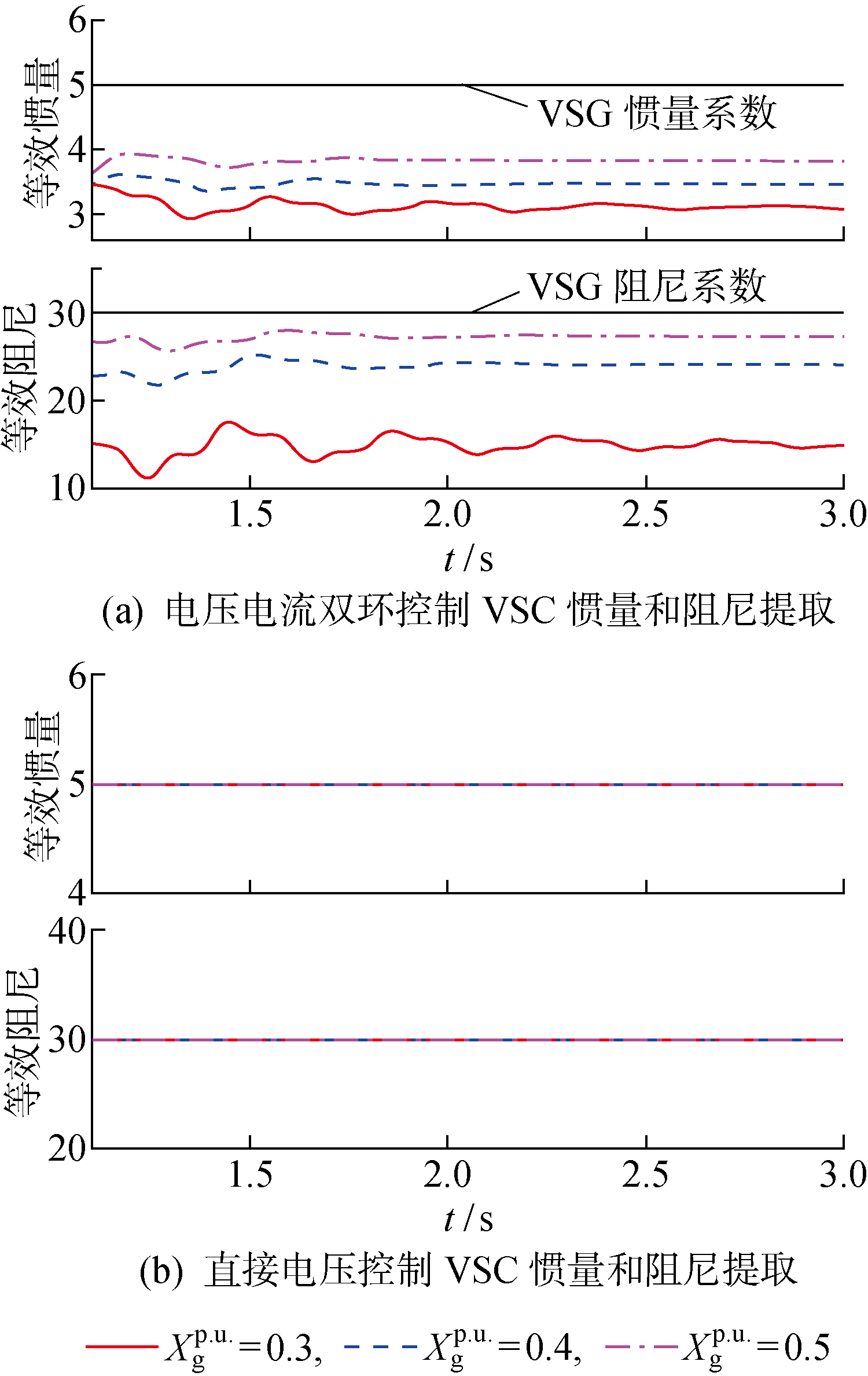
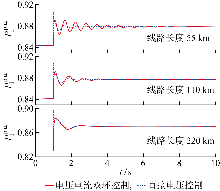
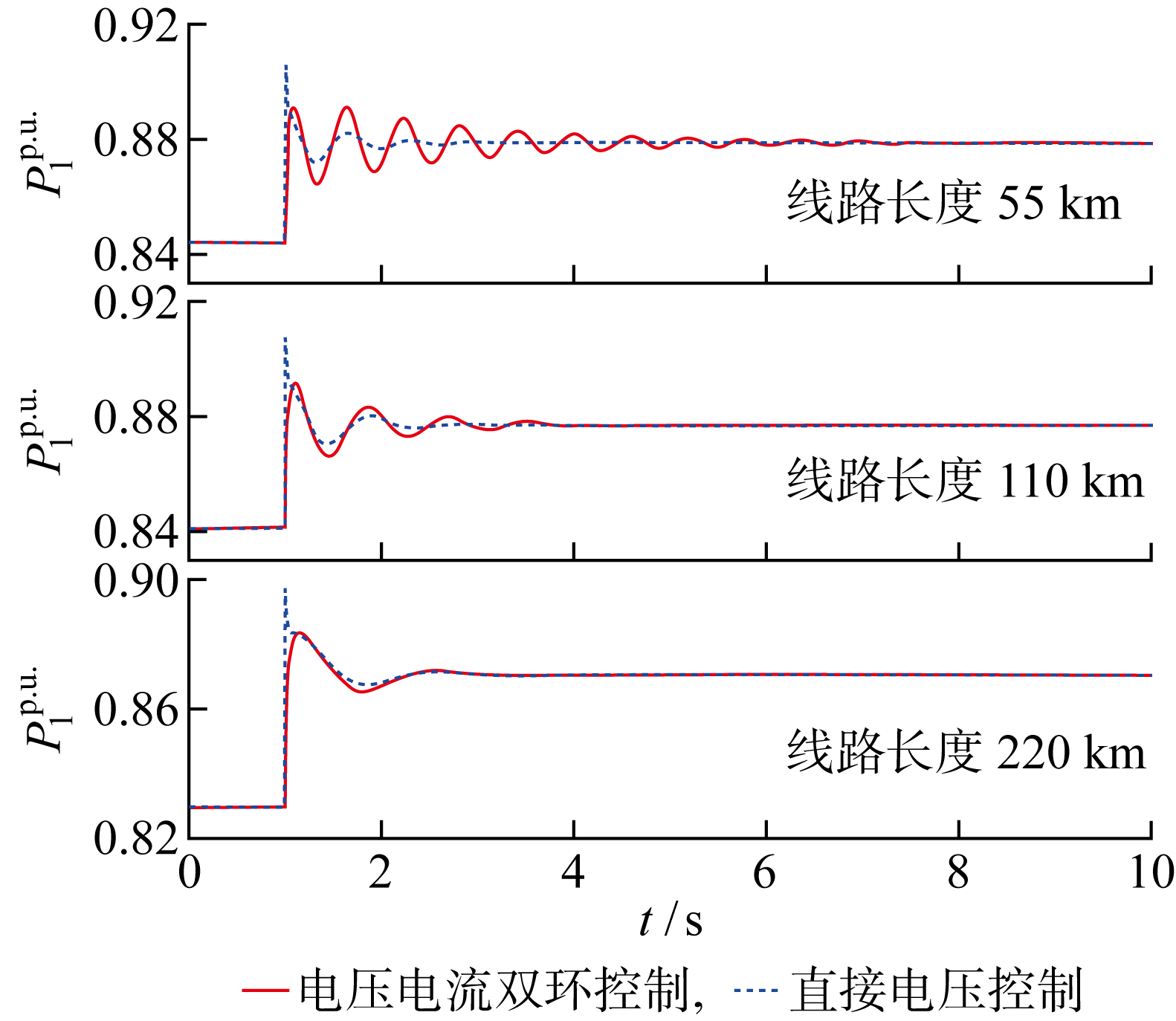
Fig.15
Active power at internal voltage of two VSC systems at different line lengths
| [1] |
黄强, 郭怿, 江建华, 等. “双碳”目标下中国清洁电力发展路径[J]. 上海交通大学学报, 2021, 55(12): 1499-1509.
doi: 10.16183/j.cnki.jsjtu.2021.272 |
| HUANG Qiang, GUO Yi, JIANG Jianhua, et al. Development pathway of China’s clean electricity under carbon peaking and carbon neutrality goals[J]. Journal of Shanghai Jiao Tong University, 2021, 55(12): 1499-1509. | |
| [2] | 张智刚, 康重庆. 碳中和目标下构建新型电力系统的挑战与展望[J]. 中国电机工程学报, 2022, 42(8): 2806-2819. |
| ZHANG Zhigang, KANG Chongqing. Challenges and prospects for constructing the new-type power system towards a carbon neutrality future[J]. Proceedings of the CSEE, 2022, 42(8): 2806-2818. | |
| [3] | ROSSO R, WANG X F, LISERRE M, et al. Grid-forming converters: Control approaches, grid-synchronization, and future trends—A review[J]. IEEE Open Journal of Industry Applications, 2021, 2: 93-109. |
| [4] | ROSCOE A, KNUEPPEL T, DA SILVA R, et al. Response of a grid forming wind farm to system events, and the impact of external and internal damping[J]. IET Renewable Power Generation, 2020, 14(19): 3908-3917. |
| [5] | 褚文从, 刘静利, 李永刚, 等. 考虑源端特性的虚拟同步直驱风机小信号建模与稳定性分析[J]. 电力自动化设备, 2022, 42(8): 3-10. |
| CHU Wencong, LIU Jingli, LI Yonggang, et al. Small-signal modeling and stability analysis of virtual synchronous PMSG considering source characteristics[J]. Electric Power Automation Equipment, 2022, 42(8): 3-10. | |
| [6] | 韩刚, 蔡旭. 虚拟同步发电机输出阻抗建模与弱电网适应性研究[J]. 电力自动化设备, 2017, 37(12): 116-122. |
| HAN Gang, CAI Xu. Output impedance modeling of virtual synchronous generator and its adaptability study in a weak grid[J]. Electric Power Automation Equipment, 2017, 37(12): 116-122. | |
| [7] | 马燕峰, 郑力文, 霍亚欣, 等. 虚拟同步发电机接入电力系统的阻尼转矩分析[J]. 电力自动化设备, 2020, 40(4): 166-171. |
| MA Yanfeng, ZHENG Liwen, HUO Yaxin, et al. Damping torque analysis of virtual synchronous generator connected to power system[J]. Electric Power Automation Equipment, 2020, 40(4): 166-171. | |
| [8] | ALIPOOR J, MIURA Y, ISE T. Power system stabilization using virtual synchronous generator with alternating moment of inertia[J]. IEEE Journal of Emerging & Selected Topics in Power Electronics, 2015, 3(2): 451-458. |
| [9] | 尚磊, 胡家兵, 袁小明, 等. 电网对称故障下虚拟同步发电机建模与改进控制[J]. 中国电机工程学报, 2017, 37(2): 403-412. |
| SHANG Lei, HU Jiabing, YUAN Xiaoming, et al. Modeling and improved control of virtual synchronous generators under symmetrical faults of grid[J]. Proceedings of the CSEE, 2017, 37(2): 403-412. | |
| [10] | 朱蜀, 刘开培, 秦亮. 虚拟同步发电机的暂态稳定性分析[J]. 电力系统自动化, 2018, 42(9): 51-58. |
| ZHU Shu, LIU Kaipei, QIN Liang. Transient stability analysis of virtual synchronous generator[J]. Automation of Electric Power Systems, 2018, 42(9): 51-58. | |
| [11] | FU X K, SUN J J, HUANG M, et al. Large-signal stability of grid-forming and grid-following controls in voltage source converter: A comparative study[J]. IEEE Transactions on Power Electronics, 2021, 36(7): 7832-7840. |
| [12] | PAN D H, WANG X F, LIU F C, et al. Transient stability of voltage-source converters with grid-forming control: A design-oriented study[J]. IEEE Journal of Emerging & Selected Topics in Power Electronics, 2020, 8(2): 1019-1033. |
| [13] | 袁小明, 程时杰, 胡家兵. 电力电子化电力系统多尺度电压功角动态稳定问题[J]. 中国电机工程学报, 2016, 36(19): 5145-5154. |
| YUAN Xiaoming, CHENG Shijie, HU Jiabing. Multi-time scale voltage and power angle dynamics in power electronics dominated large power systems[J]. Proceedings of the CSEE, 2016, 36(19): 5145-5154. | |
| [14] | 唐王倩云. 双馈型风机转子转速控制尺度暂态建模及其并网系统暂态稳定性分析[D]. 武汉: 华中科技大学, 2020. |
| TANG Wangqianyun. Transient modeling of doubly fed induction generator-based wind turbine and transient stability analysis of its grid-connected power systems in rotor speed control timescale[D]. Wuhan: Huazhong University of Science and Technology, 2020. | |
| [15] | 张巍, 黄文, 帅智康, 等. 虚拟调速器对VSG暂态功角稳定影响机理分析[J]. 电力自动化设备, 2022, 42(8): 55-62. |
| ZHANG Wei, HUANG Wen, SHUAI Zhikang, et al. Impact mechanism analysis of virtual governor on transient power angle stability of VSG[J]. Electric Power Automation Equipment, 2022, 42(8): 55-62. | |
| [16] | XIANG Z M, NI Q L, LI Z H, et al. Transient stability analysis of grid-forming converter based on virtual synchronous generator[C]// 2022 Asian Conference on Frontiers of Power and Energy. Chengdu, China: IEEE, 2022: 118-124. |
| [17] | 王继磊, 张兴, 朱乔华, 等. 虚拟同步发电机暂态稳定性分析与控制策略[J]. 电机与控制学报, 2022, 26(12): 28-37. |
| WANG Jilei, ZHANG Xing, ZHU Qiaohua, et al. Transient stability analysis and control strategy of virtual synchronous generator[J]. Electric Machines & Control, 2022, 26(12): 28-37. | |
| [18] | 陈昕, 张昌华, 黄琦, 等. 与SG具有一致响应的VSG小信号建模和分析[J]. 电力自动化设备, 2017, 37(11): 78-85. |
| CHEN Xin, ZHANG Changhua, HUANG Qi, et al. Small signal modeling for virtual synchronous generator consistent with synchronous generator and analysis[J]. Electric Power Automation Equipment, 2017, 37(11): 78-85. | |
| [19] | WU H, RUAN X B, YANG D S, et al. Small-signal modeling and parameters design for virtual synchronous generators[J]. IEEE Transactions on Industrial Electronics, 2016, 63(7): 4292-4303. |
| [20] | 王硕. 双馈风机虚拟同步并网控制基础理论与关键技术研究[D]. 武汉: 华中科技大学, 2017. |
| WANG Shuo. Basic theory and key technology of virtual synchronous controlled DFIG-based wind turbine[D]. Wuhan: Huazhong University of Science and Technology, 2017. | |
| [21] | 陈天一, 陈来军, 郑天文, 等. 基于模式平滑切换的虚拟同步发电机低电压穿越控制方法[J]. 电网技术, 2016, 40(7): 2134-2140. |
| CHEN Tianyi, CHEN Laijun, ZHENG Tianwen, et al. LVRT control method of virtual synchronous generator based on mode smooth switching[J]. Power System Technology, 2016, 40(7): 2134-2140. | |
| [22] | SHI K, SONG W T, XU P F, et al. Low-voltage ride-through control strategy for a virtual synchronous generator based on smooth switching[J]. IEEE Access, 2017, 6: 2703-2711. |
| [23] | DU W, CHEN Z, SCHNEIDER K P, et al. A comparative study of two widely used grid-forming droop controls on microgrid small-signal stability[J]. IEEE Journal of Emerging & Selected Topics in Power Electronics, 2019, 8(2): 963-975. |
| [24] | 胡家兵, 袁小明, 程时杰. 电力电子并网装备多尺度切换控制与电力电子化电力系统多尺度暂态问题[J]. 中国电机工程学报, 2019, 39(18): 5457-5467. |
| HU Jiabing, YUAN Xiaoming, CHENG Shijie. Multi-time scale transients in power-electronized power systems considering multi-time scale switching control schemes of power electronics apparatus[J]. Proceedings of the CSEE, 2019, 39(18): 5457-5467. |
| [1] | ZENG Jupeng, ZENG Xiangjun, BAI Hao, YU Kun, YANG Weichen, LONG Xuanlin, ZHUANG Jie. Fault Location Method for Active Distribution Networks Based on Holographic-Mapping of Time-Frequency Traveling Waves [J]. Journal of Shanghai Jiao Tong University, 2026, 60(2): 256-269. |
| [2] | SHEN Bing, CHAI Wei, WANG Kai, LI Xiaoyuan, LÜ Jing. Oscillation Suppression Method of Power Electronic Alternating Current Distribution System Based on Weak Point Location [J]. Journal of Shanghai Jiao Tong University, 2026, 60(1): 32-41. |
| [3] | ZHANG Yu, ZHANG Chen, LIU Hui, YU Siqi, WU Linlin, CAI Xu. Mechanism of Power Transfer Limit Under Multiple Electrical Constraints for Grid-Connected New Energy Units and Full-Power Operation Conditions in Weak Grids [J]. Journal of Shanghai Jiao Tong University, 2026, 60(1): 19-31. |
| [4] | BAI Feng, CHEN Wuhui, QIN Wei. Sub-Synchronous Oscillations Caused by Interaction of a PMSG-Based Wind Farm with a Four-Terminal MMC-HVDC Grid [J]. Journal of Shanghai Jiao Tong University, 2025, 59(11): 1707-1719. |
| [5] | LI Xiang, CHEN Siyuan, ZHANG Jun, KE Deping, GAO Jiemai, YANG Huanhuan. Physics-Informed Fast Transient Stability Assessment of Non-Fixed Length in Power Systems [J]. Journal of Shanghai Jiao Tong University, 2025, 59(7): 962-970. |
| [6] | WU Shuangxi, LI Wenbo, QIN Yingjie, YAN Binjie, LI Jiapeng, LI Yujun. Quantization and Enhancement of System Frequency Nadir in Power Step Control [J]. Journal of Shanghai Jiao Tong University, 2025, 59(6): 857-866. |
| [7] | WANG Yuyang, ZHANG Chen, ZHANG Yu, WANG Yiming, XU Po, CAI Xu. Reactive Power-Voltage Droop Gain Online Tuning Method of Photovoltaic Inverters for Improvement of Stable Output Power Capability in Weak Grids [J]. Journal of Shanghai Jiao Tong University, 2025, 59(6): 845-856. |
| [8] | SI Wenjia, CHEN Junru, ZHANG Chenglin, LIU Muyang. Influence of DC-Bus Voltage on Synchronization Stability of Grid-Following Converters [J]. Journal of Shanghai Jiao Tong University, 2025, 59(3): 313-322. |
| [9] | LI Hongxin, ZHONG Zuhao, LU Yi, WEN Yunfeng. Optimization of Frequency Control Parameters of Wind Farms Considering Inertia Security Requirement [J]. Journal of Shanghai Jiao Tong University, 2025, 59(3): 323-332. |
| [10] | ZONG Haoxiang, ZHANG Chen, BAO Yanhong, WU Feng, CAI Xu. Frequency-Domain Modeling and Synchronization Perspective Interaction Mechanism of GFL-GFM Converter System [J]. Journal of Shanghai Jiao Tong University, 2025, 59(2): 151-164. |
| [11] | ZHANG Yu, ZHANG Chen, BAO Yanhong, WU Feng, CAI Xu. Transient Frequency Interaction Between Grid-Following and Grid-Forming Sources in Windfarm Under Severe Grid Faults [J]. Journal of Shanghai Jiao Tong University, 2024, 58(12): 1903-1914. |
| [12] | ZHOU Tao, HUANG Ju, HAN Rushuai, HU Qinran, QUAN Hao. Inertial Support Capacity Analysis and Equivalent Inertia Estimation of Wind Turbines in Integrated Inertial Control [J]. Journal of Shanghai Jiao Tong University, 2024, 58(12): 1915-1924. |
| [13] | DENG Xiaoyu, LIU Muyang, CHANG Xiqiang, NAN Dongliang, MO Ruo, CHEN Junru. Online Monitoring Method for Inertial Support Capacity of Point-to-Grid in New Power Systems [J]. Journal of Shanghai Jiao Tong University, 2024, 58(9): 1390-1399. |
| [14] | LUO Min, YANG Jinfeng, YU Hui, LAI Yuchen, GUO Yangyun, ZHOU Shangli, XIANG Rui, TONG Xing, CHEN Xiao. TPE-Based Boosting Short-Term Load Forecasting Method [J]. Journal of Shanghai Jiao Tong University, 2024, 58(6): 819-825. |
| [15] | BI Zhongqin, YU Xiaowan, WANG Baonan, HUANG Wentao, ZHANG Dan, DONG Zhen. Fast Fault Location Technology for Distribution Network Based on Quantum Ant Colony Algorithm [J]. Journal of Shanghai Jiao Tong University, 2024, 58(5): 693-708. |
| Viewed | ||||||
|
Full text |
|
|||||
|
Abstract |
|
|||||
