

Journal of Shanghai Jiao Tong University ›› 2026, Vol. 60 ›› Issue (7): 1087-1098.doi: 10.16183/j.cnki.jsjtu.2024.431
• New Type Power System and the Integrated Energy • Previous Articles Next Articles
WANG Danhao1, PENG Daogang2,3( ), HUANG Dongmei1, LIU Yu2
Received:2024-10-28
Revised:2024-11-03
Accepted:2025-03-25
Online:2026-07-28
Published:2026-08-05
Contact:
PENG Daogang
E-mail:pengdaogang@shiep.edu.cn
CLC Number:
WANG Danhao, PENG Daogang, HUANG Dongmei, LIU Yu. Short-Term Wind and Solar Power Forecasting Method Based on Closed-Loop Empirical Mode Decomposition and Temporal Convolutional Feature Extraction[J]. Journal of Shanghai Jiao Tong University, 2026, 60(7): 1087-1098.
Add to citation manager EndNote|Ris|BibTeX
URL: https://xuebao.sjtu.edu.cn/EN/10.16183/j.cnki.jsjtu.2024.431

Fig.1
Power forecasting model architecture


Fig.2
CEEMDAN decomposition process


Fig.3
TCN model architecture


Fig.4
BiGRU-Attention model architecture

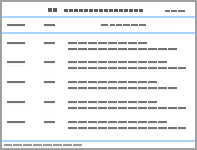
Tab.1
R2 of prediction results with different numbers of IMF components
| 能源 | R2 | ||||||||
|---|---|---|---|---|---|---|---|---|---|
| KIMF=5 | KIMF=6 | KIMF=7 | KIMF=8 | KIMF=9 | KIMF=10 | KIMF=11 | KIMF=12 | KIMF=13 | |
| 风 | 0.9434 | 0.9632 | 0.9666 | 0.9727 | 0.9798 | 0.9735 | 0.9729 | 0.9718 | 0.9706 |
| 光 | 0.9329 | 0.9518 | 0.9612 | 0.9691 | 0.9774 | 0.9823 | 0.9784 | 0.9761 | 0.9755 |
Tab.2
Energy proportion of each IMF component
| 能源 | Pn | |||||||||
|---|---|---|---|---|---|---|---|---|---|---|
| IMF1 | IMF2 | IMF3 | IMF4 | IMF5 | IMF6 | IMF7 | IMF8 | IMF9 | IMF10 | |
| 风 | 0.0059 | 0.0074 | 0.031 | 0.0303 | 0.0751 | 0.0608 | 0.0849 | 0.0639 | 0.6408 | |
| 光 | 0.0124 | 0.0083 | 0.0101 | 0.0151 | 0.0872 | 0.3413 | 0.1285 | 0.0297 | 0.0147 | 0.3527 |
Tab.3
R2 of prediction results with different energy proportions
| 能源 | R2 | |||||
|---|---|---|---|---|---|---|
| Pth>0 | Pth>1% | Pth>3% | Pth>5% | Pth>10% | Pth>30% | |
| 风 | 0.9618 | 0.9765 | 0.9765 | 0.9798 | 0.9032 | 0.9032 |
| 光 | 0.9711 | 0.9798 | 0.9823 | 0.9823 | 0.9616 | 0.9514 |

Fig.5
Comparison of hyperparameter optimization methods


Fig.6
Comparison of actual and predicted wind power values


Fig.7
Comparison of actual and predicted solar power values

Tab.4
Model performance metrics on test set
| 发电类型 | RMSE/kW | MAE /kW | R2 |
|---|---|---|---|
| 风力发电 | 1674.7352 | 1039.5361 | 0.9798 |
| 光伏发电 | 490.1308 | 301.0943 | 0.9823 |
Tab.5
Comparison of performance metrics of popular models
| 预测模型 | 风力发电评估指标 | 光伏发电评估指标 | 模型性能指标 | |||||||
|---|---|---|---|---|---|---|---|---|---|---|
| RMSE/kW | MAE/kW | R2 | RMSE/kW | MAE/kW | R2 | 参数量 | FLOPs | |||
| LSTM | 2752 | 1771 | 0.9193 | 777 | 457 | 0.9311 | 2901 | 20 | ||
| Transformer | 3558 | 2982 | 0.8652 | 871 | 542 | 0.9134 | 86069 | 8064020 | ||
| BiLSTM | 2255 | 1523 | 0.9459 | 811 | 465 | 0.9250 | 5801 | 40 | ||
| LSTM-Attention | 2960 | 1975 | 0.9066 | 1049 | 689 | 0.8744 | 2922 | 1940 | ||
| TCN | 2369 | 1669 | 0.9402 | 750 | 355 | 0.9358 | 2401 | 222740 | ||
| TCN-LSTM | 2199 | 1501 | 0.9485 | 764 | 371 | 0.9335 | 14357 | 1903124 | ||
| VMD-LSTM | 2124 | 1424 | 0.9489 | 618 | 444 | 0.9544 | 2901 | 20 | ||
| EMD-LSTM | 2534 | 1646 | 0.9316 | 742 | 362 | 0.9373 | 2901 | 20 | ||
| VMD-GRU | 1943 | 1262 | 0.9573 | 702 | 496 | 0.9411 | 2181 | 20 | ||
| EMD-GRU | 2517 | 1825 | 0.9325 | 769 | 383 | 0.9326 | 2181 | 20 | ||
| VMD-TCN | 2383 | 1751 | 0.9357 | 661 | 466 | 0.9478 | 2401 | 222740 | ||
| EMD-TCN | 2964 | 2059 | 0.9064 | 762 | 396 | 0.9337 | 2401 | 222740 | ||
| 所提模型 | 1675 | 1040 | 0.9798 | 490 | 301 | 0.9823 | 22317 | 2619204 | ||
Tab.6
Comparison of performance metrics of ablation models
| 预测模型 | 风力发电评估指标 | 光伏发电评估指标 | |||||
|---|---|---|---|---|---|---|---|
| RMSE/kW | MAE/kW | R2 | RMSE/kW | MAE/kW | R2 | ||
| GRU | 3056 | 2120 | 0.9005 | 895 | 499 | 0.9087 | |
| BiGRU | 2839 | 1841 | 0.9142 | 797 | 401 | 0.9276 | |
| GRU-Attention | 2776 | 2254 | 0.9179 | 879 | 514 | 0.9118 | |
| TCN-GRU | 2822 | 1854 | 0.9152 | 875 | 526 | 0.9126 | |
| SSA-TCN-BiGRU | 2375 | 1558 | 0.9399 | 784 | 391 | 0.9299 | |
| SSA-GRU-Attention | 2221 | 1491 | 0.9474 | 799 | 444 | 0.9272 | |
| SSA-BiGRU-Attention | 2164 | 1356 | 0.9501 | 786 | 422 | 0.9295 | |
| SSA-TCN-GRU-Attention | 2112 | 1452 | 0.9525 | 770 | 392 | 0.9324 | |
| SSA-TCN-BiGRU-Attention | 2083 | 1299 | 0.9538 | 714 | 317 | 0.9419 | |
| 所提模型 | 1675 | 1040 | 0.9798 | 490 | 301 | 0.9823 | |
| [1] |
黄强, 郭怿, 江建华, 等. “双碳”目标下中国清洁电力发展路径[J]. 上海交通大学学报, 2021, 55(12): 1499-1509.
doi: 10.16183/j.cnki.jsjtu.2021.272 |
| HUANG Qiang, GUO Yi, JIANG Jianhua, et al. Development pathway of China’s clean electricity under carbon peaking and carbon neutrality goals[J]. Journal of Shanghai Jiao Tong University, 2021, 55(12): 1499-1509. | |
| [2] | 郑珂, 王丽婕, 郝颖, 等. 基于数据集蒸馏的光伏发电功率超短期预测[J]. 中国电机工程学报, 2024, 44(13): 5196-5207. |
| ZHENG Ke, WANG Lijie, HAO Ying, et al. Ultra-short-term prediction of photovoltaic power based on dataset distillation[J]. Proceedings of the CSEE, 2024, 44(13): 5196-5207. | |
| [3] | 朱琼锋, 李家腾, 乔骥, 等. 人工智能技术在新能源功率预测的应用及展望[J]. 中国电机工程学报, 2023, 43(8): 3027-3048. |
| ZHU Qiongfeng, LI Jiateng, QIAO Ji, et al. Application and prospect of artificial intelligence technology in renewable energy forecasting[J]. Proceedings of the CSEE, 2023, 43(8): 3027-3048. | |
| [4] | 曹俊波, 周任军, 邓学华, 等. 考虑优化ARIMA模型差分次数的风功率预测[J]. 电力系统及其自动化学报, 2019, 31(1): 105-111. |
| CAO Junbo, ZHOU Renjun, DENG Xuehua, et al. Wind power forecast considering differential times of optimal ARIMA model[J]. Proceedings of the CSU-EPSA, 2019, 31(1): 105-111. | |
| [5] | 董存, 王铮, 白捷予, 等. 光伏发电功率超短期预测方法综述[J]. 高电压技术, 2023, 49(7): 2938-2951. |
| DONG Cun, WANG Zheng, BAI Jieyu, et al. Review of ultra-short-term forecasting methods for photovoltaic power generation[J]. High Voltage Engineering, 2023, 49(7): 2938-2951. | |
| [6] |
KHAN S, MUHAMMAD Y, JADOON I, et al. Leveraging LSTM-SMI and ARIMA architecture for robust wind power plant forecasting[J]. Applied Soft Computing, 2025, 170: 112765.
doi: 10.1016/j.asoc.2025.112765 URL |
| [7] | 吴硕. 光伏发电系统功率预测方法研究综述[J]. 热能动力工程, 2021, 36(8): 1-7. |
| WU Shuo. Review of power forecasting methods of photovoltaic power generation system[J]. Journal of Engineering for Thermal Energy & Power, 2021, 36(8): 1-7. | |
| [8] | 彭嘉宁, 徐鹤勇. 基于随机森林和支持向量回归的风力发电预测算法[J]. 热能动力工程, 2024, 39(5): 143-149. |
| PENG Jianing, XU Heyong. Wind power prediction algorithm based on random forest and support vector regression[J]. Journal of Engineering for Thermal Energy & Power, 2024, 39(5): 143-149. | |
| [9] | 杨雷, 罗雪红, 韩鹍, 等. 基于人工智能算法的电力系统负荷预测研究综述[J]. 电工技术, 2024(12): 57-60. |
| YANG Lei, LUO Xuehong, HAN Kun, et al. A review of power system load forecasting based on artificial intelligence algorithms[J]. Electric Engineering, 2024(12): 57-60. | |
| [10] | 邓斌, 张楠, 王江, 等. 基于LTC-RNN模型的中长期电力负荷预测方法[J]. 天津大学学报, 2022, 55(10): 1026-1033. |
| DENG Bin, ZHANG Nan, WANG Jiang, et al. Medium-and long-term power load forecasting method based on LTC-RNN model[J]. Journal of Tianjin University, 2022, 55(10): 1026-1033. | |
| [11] |
李芬, 孙凌, 王亚维, 等. 基于CEEMDAN-GSA-LSTM和SVR的光伏功率短期区间预测[J]. 上海交通大学学报, 2024, 58(6): 806-818.
doi: 10.16183/j.cnki.jsjtu.2022.511 |
| LI Fen, SUN Ling, WANG Yawei, et al. Short-term interval forecasting of photovoltaic power based on CEEMDAN-GSA-LSTM and SVR[J]. Journal of Shanghai Jiao Tong University, 2024, 58(6): 806-818. | |
| [12] |
ZHANG C, PENG T, NAZIR M S. A novel integrated photovoltaic power forecasting model based on variational mode decomposition and CNN-BiGRU considering meteorological variables[J]. Electric Power Systems Research, 2022, 213: 108796.
doi: 10.1016/j.epsr.2022.108796 URL |
| [13] | 梁宏涛, 刘红菊, 李静, 等. 基于机器学习的短期负荷预测算法综述[J]. 计算机系统应用, 2022, 31(10): 25-35. |
| LIANG Hongtao, LIU Hongju, LI Jing, et al. Survey on short-term load forecasting algorithm based on machine learning[J]. Computer Systems & Applications, 2022, 31(10): 25-35. | |
| [14] |
WU Q Y, GUAN F, LÜ C, et al. Ultra-short-term multi-step wind power forecasting based on CNN-LSTM[J]. IET Renewable Power Generation, 2021, 15(5): 1019-1029.
doi: 10.1049/rpg2.v15.5 URL |
| [15] |
PENG D G, LIU Y, WANG D H, et al. Multi-energy load forecasting for integrated energy system based on sequence decomposition fusion and factors correlation analysis[J]. Energy, 2024, 308: 132796.
doi: 10.1016/j.energy.2024.132796 URL |
| [16] |
WANG H, ZHANG N, DU E S, et al. A comprehensive review for wind, solar, and electrical load forecasting methods[J]. Global Energy Interconnection, 2022, 5(1): 9-30.
doi: 10.1016/j.gloei.2022.04.002 URL |
| [17] | 崔京港, 王芳, 叶泽甫, 等. 基于QD和因果注意力TCN的光伏功率区间预测[J]. 太阳能学报, 2024, 45(3): 488-495. |
| CUI Jinggang, WANG Fang, YE Zefu, et al. Photovoltaic power interval prediction based on QD and causal attention TCN[J]. Acta Energiae Solaris Sinica, 2024, 45(3): 488-495. | |
| [18] | 雷柯松, 吐松江·卡日, 伊力哈木·亚尔买买提, 等. 基于WGAN-GP和CNN-LSTM-Attention的短期光伏功率预测[J]. 电力系统保护与控制, 2023, 51(9): 108-118. |
| LEI Kesong, KARI Tusongjiang, YAERMAIMAITI Yilihamu, et al. Prediction of short-term photovoltaic power based on WGAN-GP and CNN-LSTM-Attention[J]. Power System Protection & Control, 2023, 51(9): 108-118. | |
| [19] |
LIU W H, BAI Y L, YUE X X, et al. A wind speed forcasting model based on rime optimization based VMD and multi-headed self-attention-LSTM[J]. Energy, 2024, 294: 130726.
doi: 10.1016/j.energy.2024.130726 URL |
| [20] |
SHI J, TEH J. Load forecasting for regional integrated energy system based on complementary ensemble empirical mode decomposition and multi-model fusion[J]. Applied Energy, 2024, 353: 122146.
doi: 10.1016/j.apenergy.2023.122146 URL |
| [21] | 梁恩豪, 孙军伟, 王延峰. 基于自适应樽海鞘算法优化BP的风光互补并网发电功率预测[J]. 电力系统保护与控制, 2021, 49(24): 114-120. |
| LIANG Enhao, SUN Junwei, WANG Yanfeng. Wind and solar complementary grid-connected power generation prediction based on BP optimized by a swarm intelligence algorithm[J]. Power System Protection & Control, 2021, 49(24): 114-120. | |
| [22] | HU C J, ZHAO Y, JIANG H, et al. Prediction of ultra-short-term wind power based on CEEMDAN-LSTM-TCN[J]. Energy Reports, 2022, 8: 483-492. |
| [23] |
KARIJADI I, CHOU S Y, DEWABHARATA A. Wind power forecasting based on hybrid CEEMDAN-EWT deep learning method[J]. Renewable Energy, 2023, 218: 119357.
doi: 10.1016/j.renene.2023.119357 URL |
| [24] |
DENG Y, YUE Z P, WU Z Y, et al. TCN-Attention-BIGRU: Building energy modelling based on attention mechanisms and temporal convolutional networks[J]. Electronic Research Archive, 2024, 32(3): 2160-2179.
doi: 10.3934/era.2024098 URL |
| [25] |
GONG J Q, QU Z G, ZHU Z L, et al. Ensemble models of TCN-LSTM-LightGBM based on ensemble learning methods for short-term electrical load forecasting[J]. Energy, 2025, 318: 134757.
doi: 10.1016/j.energy.2025.134757 URL |
| [1] | Zhang Xinchao, Zhu Hengliang, Mao Guojun. HFANet: Hierarchical Feature-Enhanced Aggregation Network for Camouflaged Object Detection [J]. J Shanghai Jiaotong Univ Sci, 2026, 31(4): 920-928. |
| [2] | XUE Yujia, ZHUANG Ruowang, XU Yi, RUAN Kaizhi, ZHONG Kai, HU Jinfeng. Intelligent Spectrum Sensing Technology in Unmanned Air Defense Systems [J]. Air & Space Defense, 2026, 9(3): 69-79. |
| [3] | Dai Renjie, Dong Shenhua, Lyu Baoliang, Zheng Weilong. EEG Foundation Models for Brain-Computer Interfaces: Progress and Future Directions [J]. J Shanghai Jiaotong Univ Sci, 2026, 31(3): 783-799. |
| [4] | Zhong Jihao, Liao Shenghui, Jiang Wenbo, Li Jianfeng, Liu Lihong, Kui Xiaoyan. Deep Residual Learning-Based AprilTag Surgical Instrument Localization and Tracking [J]. J Shanghai Jiaotong Univ Sci, 2026, 31(3): 646-659. |
| [5] | Yang Tao, Chen Ningxin, Yao Liguo, Wang Lisheng. Unsupervised Anomaly Detection in 3D Medical Imaging via Normal Sample Learning: A Survey and Benchmark [J]. J Shanghai Jiaotong Univ Sci, 2026, 31(3): 631-645. |
| [6] | Zhou Xin, Li Xiaomin, Zhang Zhengjia, Ma Hairong, Cao Ran, Wu Jianwei, Sun Qi, Ai Songtao. Deep Learning-Based Reconstruction of Temporomandibular Joint MRI at 1.5-T and 3-T [J]. J Shanghai Jiaotong Univ Sci, 2026, 31(3): 611-621. |
| [7] | GUO Qi, YAN Jun, HAO Qianpeng, HAN Dong, YANG Zhihao, YAN Xinyue, ZHANG Haipeng, LI Ran. Short-Term Wind Power Prediction Method Based on Closed-Loop Clustering and Multi-Objective Optimization [J]. Journal of Shanghai Jiao Tong University, 2026, 60(2): 246-255. |
| [8] | Dong Ruyi, Shi Cong. Traffic Light Recognition Based on Improved YOLOv5l [J]. J Shanghai Jiaotong Univ Sci, 2026, 31(2): 319-333. |
| [9] | CHEN Liangwen, ZHU Yuxin, SHEN Tao, YU Yifan, LING Xiao, SHENG Qinghong. Deep Learning-Based Infrared Ship Target Wake Matching and Detection Algorithm [J]. Air & Space Defense, 2026, 9(1): 80-90. |
| [10] | LUO Zhijun, WANG Jianrui, YIN Jiawei. A Survey of Task-Driven Intelligent Target Recognition Methods in Complex Battlefield Environments [J]. Air & Space Defense, 2026, 9(1): 1-11. |
| [11] | CHEN Cheng, PENG Pan, TAO Wei, ZHAO Hui. Hyperspectral Satellite Image Classification Based on Feature Pyramid Networks With 3D Convolution [J]. J Shanghai Jiaotong Univ Sci, 2025, 30(6): 1073-1084. |
| [12] | RONG Guang, ZHANG Yexin, TANG Chao, CHEN Jinbao, ZHOU Yiling, WANG Jianyuan. Study on Simulation Data-Driven Fault Diagnosis Technology for Unmanned Aerial Vehicles [J]. Air & Space Defense, 2025, 8(6): 73-84. |
| [13] | TAHIR Rizwana, CAI Yunze. Multi-Human Pose Estimation by Deep Learning-Based Sequential Approach for Human Keypoint Position and Human Body Detection [J]. J Shanghai Jiaotong Univ Sci, 2025, 30(6): 1103-1113. |
| [14] | MA Changxi, HUANG Xiaoting, MENG Wei. Predicting Parking Spaces Using CEEMDAN and GRU [J]. J Shanghai Jiaotong Univ Sci, 2025, 30(5): 962-975. |
| [15] | YANG Zhuang, LI Zhaofei, WANG Jihua, WEI Xudong, ZHANG Yijie. Named Entity Identification of Chinese Poetry and Wine Culture Based on ALBERT [J]. J Shanghai Jiaotong Univ Sci, 2025, 30(5): 1065-1072. |
| Viewed | ||||||
|
Full text |
|
|||||
|
Abstract |
|
|||||
