

Journal of Shanghai Jiao Tong University ›› 2026, Vol. 60 ›› Issue (7): 1207-1215.doi: 10.16183/j.cnki.jsjtu.2024.435
• New Type Power System and the Integrated Energy • Previous Articles Next Articles
ZHANG Zhaoqi, SONG Hui( ), WANG Zonglin, SHENG Gehao, JIANG Xiuchen
Received:2024-10-30
Revised:2024-11-12
Accepted:2024-11-25
Online:2026-07-28
Published:2026-08-05
Contact:
SONG Hui
E-mail:songeos@163.com
CLC Number:
ZHANG Zhaoqi, SONG Hui, WANG Zonglin, SHENG Gehao, JIANG Xiuchen. Degradation Degree Classification of GIS Insulation Surface Defects Based on Mean Value Normalized by Work Function[J]. Journal of Shanghai Jiao Tong University, 2026, 60(7): 1207-1215.
Add to citation manager EndNote|Ris|BibTeX
URL: https://xuebao.sjtu.edu.cn/EN/10.16183/j.cnki.jsjtu.2024.435

Fig.1
Wiring diagram of high voltage experiment


Fig.2
Variation of UHF pulse number in experiment


Fig.3
Variation of mean amplitude of measured UHF pulses


Fig.4
Meshing in simulation (mm)


Fig.5
Schematic diagram of UHF signal simulation based on circuit model

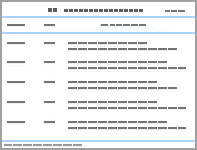
Tab.1
Circuit parameter values at different severity levels under peak voltage
| 严重 程度 | re | 发展距离/mm | R1/Ω | R2/Ω | C1/pF | C2/pF | |||||||||
|---|---|---|---|---|---|---|---|---|---|---|---|---|---|---|---|
| 正向 | 负向 | 正向 | 负向 | 正向 | 负向 | 正向 | 负向 | 正向 | 负向 | ||||||
| 1 | 0.5 | 0.40 | 1.20 | 1.02×10⁴ | 5.49×10⁴ | 1.98×10¹⁰ | 2.87×10¹⁰ | 0.222 | 0.074 | 0.055 | 0.111 | ||||
| 2 | 0.7 | 0.49 | 1.25 | 1.24×10⁴ | 4.78×10⁴ | 1.79×10¹⁰ | 1.98×10¹⁰ | 0.180 | 0.071 | 0.059 | 0.118 | ||||
| 3 | 1.0 | 0.64 | 1.29 | 1.79×10⁴ | 3.54×10⁴ | 1.52×10¹⁰ | 9.83×10⁹ | 0.138 | 0.069 | 0.065 | 0.125 | ||||
| 4 | 1.2 | 0.83 | 1.33 | 2.21×10⁴ | 2.89×10⁴ | 1.25×10¹⁰ | 4.93×10⁹ | 0.107 | 0.067 | 0.076 | 0.132 | ||||
| 5 | 1.5 | 2.00 | 1.38 | 4.20×10⁴ | 2.53×10⁴ | 1.00×10⁷ | 1.32×10⁹ | 0.044 | 0.064 | 1 | 0.143 | ||||

Fig.6
UHF amplitudes of defects with different severity levels at peak voltage


Fig.7
UHF pulses count versus Φ for defects with different severity levels


Fig.8
Mean value of positive half-cycle UHF pulse versus Φ for defects with different severity levels


Fig.9
Variation of normalized mean value of UHF pulses

| [1] | QI B, LI C R, XING Z L, et al. Partial discharge initiated by free moving metallic particles on GIS insulator surface: Severity diagnosis and assessment[J]. IEEE Transactions on Dielectrics & Electrical Insulation, 2014, 21(2): 766-774. |
| [2] | 齐波, 李成榕, 郝震, 等. GIS绝缘子表面固定金属颗粒沿面局部放电发展的现象及特征[J]. 中国电机工程学报, 2011, 31(1): 101-108. |
| QI Bo, LI Chengrong, HAO Zhen, et al. Evolution phenomena and features of surface partial discharge initiated by immobilized metal particles on GIS insulators[J]. Proceedings of the CSEE, 2011, 31(1): 101-108. | |
| [3] | 李阳, 唐志国. 恒压下GIS环氧树脂绝缘子沿面放电发展全过程状态特征研究与诊断[J]. 电瓷避雷器, 2024(3): 123-130. |
| LI Yang, TANG Zhiguo. Research and diagnosis of state characteristics in the whole process of creeping discharge development of GIS epoxy resin insulating parts under constant voltage[J]. Insulators & Surge Arresters, 2024(3): 123-130. | |
| [4] |
ZENG F P, DONG Y L, TANG J. Feature extraction and severity assessment of partial discharge under protrusion defect based on fuzzy comprehensive evaluation[J]. IET Generation, Transmission & Distribution, 2015, 9(16): 2493-2500.
doi: 10.1049/gtd2.v9.16 URL |
| [5] |
TANG J, JIN M, ZENG F P, et al. Feature selection for partial discharge severity assessment in gas-insulated switchgear based on minimum redundancy and maximum relevance[J]. Energies, 2017, 10(10): 1516.
doi: 10.3390/en10101516 URL |
| [6] | 朱宁, 吴司颖, 曾福平, 等. 基于SF6分解特性的局部放电故障程度评估[J]. 中国电机工程学报, 2019, 39(3): 933-942. |
| ZHU Ning, WU Siying, ZENG Fuping, et al. Partial discharge failure evaluation based on SF6 decomposition characteristics[J]. Proceedings of the CSEE, 2019, 39(3): 933-942. | |
| [7] | 唐志国, 李阳. 恒压下GIS固体绝缘界面气隙缺陷放电严重程度评估[J]. 高压电器, 2024, 60(2): 62-68. |
| TANG Zhiguo, LI Yang. Severity assessment of air gap defect discharge at GIS solid insulation interface under constant voltage[J]. High Voltage Apparatus, 2024, 60(2): 62-68. | |
| [8] | 宋辉, 代杰杰, 李喆, 等. 运行条件下GIS局部放电严重程度评估方法[J]. 中国电机工程学报, 2019, 39(4): 1231-1241. |
| SONG Hui, DAI Jiejie, LI Zhe, et al. An assessment method of partial discharge severity for GIS in service[J]. Proceedings of the CSEE, 2019, 39(4): 1231-1241. | |
| [9] |
MENG X L, SONG H, DAI J J, et al. Severity evaluation of UHF signals of partial discharge in GIS based on semantic analysis[J]. IEEE Transactions on Power Delivery, 2022, 37(3): 1456-1464.
doi: 10.1109/TPWRD.2021.3087749 URL |
| [10] | 满玉岩, 董艳唯, 王伟, 等. 基于局部放电能量的油纸绝缘典型缺陷放电严重程度评估方法[J]. 高压电器, 2019, 55(8): 223-229. |
| MAN Yuyan, DONG Yanwei, WANG Wei, et al. Discharge severity evaluation method for typical defects of oil-paper insulation based on partial discharge energy[J]. High Voltage Apparatus, 2019, 55(8): 223-229. | |
| [11] |
HUSSAIN G A, HASSAN W, MAHMOOD F, et al. Partial discharge based risk assessment framework for MV switchgear containing electrical defects[J]. IEEE Transactions on Industry Applications, 2023, 59(6): 7868-7875.
doi: 10.1109/TIA.2023.3299902 URL |
| [12] | LUO B, HE H X, CHENG C, et al. Numerical simulation of the positive streamer propagation and chemical reactions in SF6/N2 mixtures under non-uniform field[J]. IEEE Transactions on Dielectrics & Electrical Insulation, 2020, 27(3): 782-790. |
| [13] |
FLORKOWSKI M. Imaging and simulations of positive surface and airborne streamers adjacent to dielectric material[J]. Measurement, 2021, 186: 110170.
doi: 10.1016/j.measurement.2021.110170 URL |
| [14] |
周录波, 张钊棋, 王栋, 等. SF6中沿面放电及其放电信号的多尺度仿真研究[J]. 上海交通大学学报, 2025, 59(9): 1397-1406.
doi: 10.16183/j.cnki.jsjtu.2023.525 |
| ZHOU Lubo, ZHANG Zhaoqi, WANG Dong, et al. A multiscale simulation of surface discharge and discharge signals in SF6[J]. Journal of Shanghai Jiao Tong University, 2025, 59(9): 1397-1406. | |
| [15] | ZHANG Z Q, SONG H, LUO L G, et al. Comprehensive simulation research on microprocess and macroscopic electromagnetic signals of surface discharge in SF6[J]. IEEE Transactions on Dielectrics & Electrical Insulation, 2023, 30(4): 1769-1778. |
| [16] |
CALLENDER G, TANMANEEPRASERT T, LEWIN P L. Simulating partial discharge activity in a cylindrical void using a model of plasma dynamics[J]. Journal of Physics D: Applied Physics, 2019, 52(5): 055206.
doi: 10.1088/1361-6463/aaedf0 |
| [17] |
TIAN P, SHAN Y Y, LIU G H, et al. Analysis of temperature sensitivity parameters in hydrodynamic model of streamer[J]. IEEE Access, 2023, 11: 45056-45065.
doi: 10.1109/ACCESS.2023.3273611 URL |
| [18] | CHRISTOPHOROU L G, VAN BRUNT R J. SF6/N2 mixtures: Basic and HV insulation properties[J]. IEEE Transactions on Dielectrics & Electrical Insulation, 1995, 2(5): 952-1003. |
| [19] |
ZHANG R M, WANG L J, LIU J, et al. Numerical simulation of breakdown properties and streamer development processes in SF6/CO2 mixed gas[J]. AIP Advances, 2022, 12: 015003.
doi: 10.1063/5.0076343 URL |
| [20] |
OU X F, WANG L J, LIU J, et al. Numerical simulation of streamer discharge development processes with multi-component SF6 mixed gas[J]. Physics of Plasmas, 2020, 27(7): 073504.
doi: 10.1063/5.0006140 URL |
| [21] |
HAGELAAR G J M, DE HOOG F J, KROESEN G M W. Boundary conditions in fluid models of gas discharges[J]. Physical Review E, 2000, 62(1): 1452-1454.
doi: 10.1103/PhysRevE.62.1452 URL |
| [22] | ZHENG Q F, LUO L G, QIAN Y, et al. A joint simulation of UHF signal generation and propagation based on pulsed current model of partial discharge[J]. IEEE Transactions on Dielectrics & Electrical Insulation, 2023, 30(5): 2001-2009. |
| [23] | SATO N. Discharge current induced by the motion of charged particles[J]. Journal of Physics D: Applied Physics, 1980, 13(1): L3-L6. |
| [24] | NIEMEYER L. A generalized approach to partial discharge modeling[J]. IEEE Transactions on Dielectrics & Electrical Insulation, 1995, 2(4): 510-528. |
| [25] | GUTFLEISCH F, NIEMEYER L. Measurement and simulation of PD in epoxy voids[J]. IEEE Transactions on Dielectrics & Electrical Insulation, 1995, 2(5): 729-743. |
| [26] |
ZHANG R, ZHANG Q G, ZHOU J J, et al. Critical study of partial discharge inception in voids: Statistical behavior to stochastic nature[J]. Journal of Physics D: Applied Physics, 2022, 55(6): 065501.
doi: 10.1088/1361-6463/ac30ba |
| [1] | XU Yang, CHEN Yang, LI Wei, TANG Yu, CAO Xuanhe, YANG Jinggang, ZHAO Ke, REN Chengyan. Electro-Thermal Aging Characteristics of Polypropylene Films in Pulsed Electric Fields [J]. Journal of Shanghai Jiao Tong University, 2026, 60(7): 1216-1226. |
| [2] | ZHAO Xuan, ZHAO Qi, ZHANG Daxu, ZHANG Peifu. Effects of Polymer Matrices on Interlaminar Shear Strength of GFRP Rebars in Seawater Sea-Sand Concrete Environment [J]. Journal of Shanghai Jiao Tong University, 2026, 60(3): 452-462. |
| [3] | WANG Yangda, WANG Jianguo, LIAN Guan, ZHANG Dacheng. Performance Degradation Analysis of DMFC Under Different Operating Conditions Based on Relaxation Times [J]. Journal of Shanghai Jiao Tong University, 2026, 60(2): 289-299. |
| [4] | LUO Yifu, HU Qinran, QIAN Tao, CHEN Tao, ZHANG Yuanshi, ZHANG Fei, WANG Qi. Unit Commitment Optimization Model Considering Impact of Multiple Operating Conditions on Unit Life Loss [J]. Journal of Shanghai Jiao Tong University, 2025, 59(6): 768-779. |
| [5] | LI Chunxi, QIAO Hanzhe, YAO Gang, JIANG Haoyu, CUI Xiangke, GE Quanbo. SOH Estimation Method Based on RBF-BLS for Low-Carbon and Safe Travel of Electric Vehicle [J]. Journal of Shanghai Jiao Tong University, 2024, 58(9): 1454-1464. |
| [6] | Yao Xiao, Zaijin Tao, Yufeng Ju, Xiaolu Huang, Xinshu Zhang, Xiaonan Liu, Pavel A. Volotovski, Chao Huang, Hongqi Chen, Yaozhong Zhang, Shen Liu. Diamond-Like Carbon Depositing on the Surface of Polylactide Membrane for Prevention of Adhesion Formation During Tendon Repair [J]. Nano-Micro Letters, 2024, 16(1): 186-. |
| [7] | WANG Hanyu, CHEN Zhen, ZHOU Di, CHEN Zhaoxiang, PAN Ershun. Nonlinear Degradation Modeling and Residual Life Prediction for Rollers Based on Kernel-based Wiener Process [J]. Journal of Shanghai Jiao Tong University, 2023, 57(8): 1037-1045. |
| [8] | WANG Wenhua, ZHAO Qi, ZHANG Daxu, ZHANG Peifu, CHEN Peng. Effects of Relative Humidity on Tensile Property Degradation of GFRP Rebars in Seawater and Sea Sand Concrete Environment [J]. Journal of Shanghai Jiao Tong University, 2023, 57(2): 148-160. |
| [9] | LIU Kai1 (刘 凯), DANG Wei1 (党 炜), ZOU Tianji1,2∗ (邹田骥), LÜ Congmin1 (吕从民), LI Peng1,2 (李 鹏), ZHANG Haitao1 (张海涛). Reliability Evaluation of Two-Phase Degradation Process with a Fuzzy Change-Point [J]. J Shanghai Jiaotong Univ Sci, 2022, 27(6): 867-872. |
| [10] | YANG Zhiyuan, ZHAO Jianmin, CHENG Zhonghua, GUO Chiming, LI Liying. Optimization Model of Maintenance and Spare Parts Ordering Policy in Multivariate Degradation System [J]. Journal of Shanghai Jiao Tong University, 2021, 55(7): 858-867. |
| [11] | ZHAO Pengfei, XUE Xin, YANG Cheng. Simulation of Influence of End Anchorage Degradation of Stirrups Caused by Alkali Aggregate Reaction on Shear Performance of Reinforced Concrete Beams [J]. Journal of Shanghai Jiao Tong University, 2021, 55(6): 681-688. |
| [12] | WANG Wei, WANG Bing, HU Xiong, SUN Dejian. Online Degradation Assessment of Shore Bridge Hoisting Gearbox Based on Improved Symbolic Sequence Entropy and Logistic Regression Model [J]. Journal of Shanghai Jiao Tong University, 2021, 55(10): 1272-1280. |
| [13] | KOU Haixia, AN Zongwen, MA Qiang, GUO Xu. Lifetime Prediction of Wind Turbine Blade Based on Full-Scale Fatigue Testing [J]. J Shanghai Jiaotong Univ Sci, 2020, 25(6): 755-761. |
| [14] | ZHOU Yuan (周源), WANG Haowei (王浩伟), Lü Weimin (吕卫民). Statistical Inference of Reliability with Multivariate Accelerated Degradation Data [J]. Journal of Shanghai Jiao Tong University (Science), 2020, 25(2): 237-245. |
| [15] | HU Anfeng, NAN Bowen, CHEN Yuan, FU Peng. Modified p-y Curves Method Based on Degradation Stiffness Model of Sand [J]. Journal of Shanghai Jiao Tong University, 2020, 54(12): 1316-1323. |
| Viewed | ||||||
|
Full text |
|
|||||
|
Abstract |
|
|||||
