

上海交通大学学报 ›› 2026, Vol. 60 ›› Issue (8): 1247-1255.doi: 10.16183/j.cnki.jsjtu.2024.508
徐波1( ), 商雲翔1, 刘迪1, 黄志光2, 李东东1
收稿日期:2024-12-13
修回日期:2025-02-21
接受日期:2025-03-25
出版日期:2026-08-28
发布日期:2026-09-02
作者简介:徐 波(1981—),副教授,主要从事新能源并网分析与控制研究;E-mail:xubo@shiep.edu.cn.
基金资助:
XU Bo1(), SHANG Yunxiang1, LIU Di1, HUANG Zhiguang2, LI Dongdong1
Received:2024-12-13
Revised:2025-02-21
Accepted:2025-03-25
Online:2026-08-28
Published:2026-09-02
摘要:
附加电池储能可以避免风电机组调频过程中发生频率二次跌落,提高风电机组调频性能,但电池储能退出也可能对频率恢复造成再次危害.为避免风储一次调频过程中储能退出导致频率再次跌落的问题,首先,阐明该问题的机理,提出一种基于牛顿冷却定理的储能退出控制方法;然后,以此为基础,从风储输出互补的角度提出风储联合调频策略,利用风电机组与储能的特性实现储能平滑退出与联合调频;最后,搭建含高渗透风电机组的系统模型.仿真结果表明:该策略下储能退出过程产生的有功骤降由非零值变为零,验证了所提控制方法的有效性.
中图分类号:
徐波, 商雲翔, 刘迪, 黄志光, 李东东. 考虑电池储能退出过程的风储联合调频控制方法[J]. 上海交通大学学报, 2026, 60(8): 1247-1255.
XU Bo, SHANG Yunxiang, LIU Di, HUANG Zhiguang, LI Dongdong. Frequency Regulation Control Method for Wind Turbine and Energy Storage Equipment Considering Battery Energy Storage Exit Process[J]. Journal of Shanghai Jiao Tong University, 2026, 60(8): 1247-1255.

图1
风电机组频率响应功率变化曲线


图2
储能参与调频的频率响应曲线


图3
系统一次调频频率响应曲线


图4
不同冷却系数下的频率响应曲线


图5
储能一次调频控制参数变化曲线


图6
风储联合调频过程中风电和储能出力曲线


图7
风储联合系统一次调频控制流程图


图8
风储联合系统一次调频控制框图


图9
含风电机组和电池储能的四机两区系统

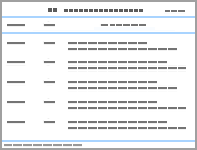
表1
电池储能不同调频控制策略
| 控制策略 | 储能调频控制策略 |
|---|---|
| A | 储能不参与调频 |
| B | 传统储能调频策略 |
| C | 考虑储能退出调频策略(与策略B初始参数相同) |
| D | 考虑储能退出调频策略(较策略C初始参数更大) |

图10
不同储能调频控制策略下系统频率响应

表2
不同调频阶段下的频率控制策略
| 控制策略 | 风储投入调频阶段 | 风电转速恢复阶段 |
|---|---|---|
| I | 风电固定调频参数 | 风电定PI系数 |
| 储能不参与调频 | 储能不协助风电 | |
| II | 风电固定调频参数 | 风电定PI系数 |
| 储能采用2.2节策略 | 储能采用3.1节策略 | |
| III | 风电充分释放转子动能 | 风电变PI系数 |
| 储能采用2.2节策略 | 储能不协助风电 | |
| IV(所提策略) | 风电充分释放转子动能 | 风电变PI系数 |
| 储能采用2.2节策略 | 储能采用3.1节策略 |
表3
不同调频控制策略下的仿真结果
| 控制策略 | 是否发生频率 二次跌落 | 一次频率最低点后 最大频率偏差/Hz |
|---|---|---|
| I | 是 | 0.46 |
| II | 是 | 0.28 |
| III | 否 | 0.31 |
| IV(所提策略) | 否 | 0.24 |

图11
不同调频控制策略下机组有功出力与系统频率曲线


图12
含风电机组和电池储能的IEEE 39节点系统

表4
大电网中风储系统不同调频控制策略
| 控制策略 | 调频控制策略 |
|---|---|
| X | 储能辅助风电机组调频但未考虑储能退出 |
| Y | 风电机组和储能均采用自适应调频策略 |
| Z | 所提风储联合调频策略 |

图13
大电网中不同调频策略下系统频率曲线

| [1] |
邵昊舒, 蔡旭. 大型风电机组惯量控制研究现状与展望[J]. 上海交通大学学报, 2018, 52(10): 1166-1177.
doi: 10.16183/j.cnki.jsjtu.2018.10.004 |
| SHAO Haoshu, CAI Xu. Research status and prospect of inertia control for large scale wind turbines[J]. Journal of Shanghai Jiao Tong University, 2018, 52(10): 1166-1177. | |
| [2] | 刘巨, 姚伟, 文劲宇, 等. 大规模风电参与系统频率调整的技术展望[J]. 电网技术, 2014, 38(3): 638-646. |
| LIU Ju, YAO Wei, WEN Jinyu, et al. Prospect of technology for large-scale wind farm participating into power grid frequency regulation[J]. Power System Technology, 2014, 38(3): 638-646. | |
| [3] | DÍAZ-GONZÁLEZ F, HAU M, SUMPER A, et al. Participation of wind power plants in system frequency control: Review of grid code requirements and control methods[J]. Renewable & Sustainable Energy Reviews, 2014, 34: 551-564. |
| [4] |
李仪博, 周前, 朱丹丹, 等. 提高海上风电场主动频率支撑能力的控制策略[J]. 上海交通大学学报, 2025, 59(10): 1442-1450.
doi: 10.16183/j.cnki.jsjtu.2023.581 |
| LI Yibo, ZHOU Qian, ZHU Dandan, et al. Control strategy for improving active frequency support capability of offshore wind farm[J]. Journal of Shanghai Jiao Tong University, 2025, 59(10): 1442-1450. | |
| [5] | 胡家欣, 胥国毅, 毕天姝, 等. 减载风电机组变速变桨协调频率控制方法[J]. 电网技术, 2019, 43(10): 3656-3662. |
| HU Jiaxin, XU Guoyi, BI Tianshu, et al. A strategy of frequency control for deloaded wind turbine generator based on coordination between rotor speed and pitch angle[J]. Power System Technology, 2019, 43(10): 3656-3662. | |
| [6] | 姜惠兰, 蔡继朝, 肖瑞, 等. 一种提高系统频率响应特性的风储协调控制策略[J]. 电力自动化设备, 2021, 41(7): 44-51. |
| JIANG Huilan, CAI Jizhao, XIAO Rui, et al. A wind-storage coordinated control strategy for improving system frequency response characteristics[J]. Electric Power Automation Equipment, 2021, 41(7): 44-51. | |
| [7] | 丁磊, 尹善耀, 王同晓, 等. 结合超速备用和模拟惯性的双馈风机频率控制策略[J]. 电网技术, 2015, 39(9): 2385-2391. |
| DING Lei, YIN Shanyao, WANG Tongxiao, et al. Integrated frequency control strategy of DFIGs based on virtual inertia and over-speed control[J]. Power System Technology, 2015, 39(9): 2385-2391. | |
| [8] |
VIDYANANDAN K V, SENROY N. Primary frequency regulation by deloaded wind turbines using variable droop[J]. IEEE Transactions on Power Systems, 2013, 28(2): 837-846.
doi: 10.1109/TPWRS.2012.2208233 URL |
| [9] | 唐飞, 亓君锋, 谢家锐, 等. 避免频率二次跌落的风储联合调频控制策略[J]. 中国电机工程学报, 2024, 44(10): 3824-3836. |
| TANG Fei, QI Junfeng, XIE Jiarui, et al. Coordinated control strategy of wind turbine generator and energy storage equipment to avoid frequency secondary drop[J]. Proceedings of the CSEE, 2024, 44(10): 3824-3836. | |
| [10] |
HOSSEINI S A, FOTUHI-FIRUZABAD M, DEHGHANIAN P, et al. Coordinating demand response and wind turbine controls for alleviating the first and second frequency dips in wind-integrated power grids[J]. IEEE Transactions on Industrial Informatics, 2024, 20(2): 2223-2233.
doi: 10.1109/TII.2023.3288883 URL |
| [11] | 唐玉烽, 杨苹, 杨义. 考虑频率二次跌落的风电机组频率响应控制策略[J]. 电力系统自动化, 2023, 47(9): 166-174. |
| TANG Yufeng, YANG Ping, YANG Yi. Frequency response control strategy of wind turbines considering frequency secondary drop[J]. Automation of Electric Power Systems, 2023, 47(9): 166-174. | |
| [12] | 王鑫, 杨德健. 基于变系数PI控制的双馈风电机组自适应转速恢复策略[J]. 电工技术学报, 2023, 38(15): 4120-4129. |
| WANG Xin, YANG Dejian. Adaptive speed recovery strategy of doubly-fed induction generator based on variable PI control coefficient[J]. Transactions of China Electrotechnical Society, 2023, 38(15): 4120-4129. | |
| [13] | 唐西胜, 苗福丰, 齐智平, 等. 风力发电的调频技术研究综述[J]. 中国电机工程学报, 2014, 34(25): 4304-4314. |
| TANG Xisheng, MIAO Fufeng, QI Zhiping, et al. Survey on frequency control of wind power[J]. Proceedings of the CSEE, 2014, 34(25): 4304-4314. | |
| [14] |
ZHOU Y N, ZHU D H, ZOU X D, et al. Adaptive temporary frequency support for DFIG-based wind turbines[J]. IEEE Transactions on Energy Conversion, 2023, 38(3): 1937-1949.
doi: 10.1109/TEC.2023.3247034 URL |
| [15] | 付媛, 万怿, 张祥宇, 等. 储能虚拟惯量主动支撑与调频状态转移控制[J]. 中国电机工程学报, 2024, 44(7): 2628-2640. |
| FU Yuan, WAN Yi, ZHANG Xiangyu, et al. Energy storage virtual inertia active support and frequency modulation state transfer control[J]. Proceedings of the CSEE, 2024, 44(7): 2628-2640. | |
| [16] | 贺悝, 谭庄熙, 李欣然, 等. 考虑荷电状态一致性的分布式储能电站一次调频控制策略[J]. 高电压技术, 2024, 50(2): 902-913. |
| HE Kui, TAN Zhuangxi, LI Xinran, et al. Control strategy of primary frequency regulation for distributed energy storage stations considering SOC consensus[J]. High Voltage Engineering, 2024, 50(2): 902-913. | |
| [17] | 聂永辉, 王浩宇, 孙灵芳, 等. 基于Hamilton方法的风电参与电网调频控制策略[J]. 中国电机工程学报, 2025, 45(23): 9190-9202. |
| NIE Yonghui, WANG Haoyu, SUN Lingfang, et al. A Hamilton based control design method for wind turbine participating in power grid frequency regulation[J]. Proceedings of the CSEE, 2025, 45(23): 9190-9202. | |
| [18] | 李世春, 申骜, 程绪长, 等. 提升惯量响应与转速恢复的风储协调惯量控制方法[J]. 电网技术, 2023, 47(4): 1570-1580. |
| LI Shichun, SHEN Ao, CHENG Xuchang, et al. Wind-storage coordinated inertia control for improving inertia response and rotor speed recovery[J]. Power System Technology, 2023, 47(4): 1570-1580. | |
| [19] |
WINTERTON R H S. Newton’s law of cooling[J]. Contemporary Physics, 1999, 40(3): 205-212.
doi: 10.1080/001075199181549 URL |
| [20] |
PENG X T, YAO W, YAN C, et al. Two-stage variable proportion coefficient based frequency support of grid-connected DFIG-WTs[J]. IEEE Transactions on Power Systems, 2020, 35(2): 962-974.
doi: 10.1109/TPWRS.59 URL |
| [21] |
ZHAO J J, LÜ X, FU Y, et al. Coordinated microgrid frequency regulation based on DFIG variable coefficient using virtual inertia and primary frequency control[J]. IEEE Transactions on Energy Conversion, 2016, 31(3): 833-845.
doi: 10.1109/TEC.2016.2537539 URL |
| [22] |
刘鑫, 马清元, 陈磊, 等. 基于复频率概念的电网频率空间分布机制[J]. 上海交通大学学报, 2026, 60(6): 925-931.
doi: 10.16183/j.cnki.jsjtu.2024.333 |
| LIU Xin, MA Qingyuan, CHEN Lei, et al. Estimation of frequency distribution based on complex frequency[J]. Journal of Shanghai Jiao Tong University, 2026, 60(6): 925-931. |
| [1] | 刘盛松, 徐云清, 陈达伟, 曹毅, 王升波, 刘厚儒. 撬棒启动下高比例风电系统阻抗矩阵修改与短路电流抑制[J]. 上海交通大学学报, 2026, 60(8): 1238-1246. |
| [2] | 丁文斌, 李昱彤. 含移动储能车与换电重卡的综合能源系统协同优化策略[J]. 上海交通大学学报, 2026, 60(7): 1099-1109. |
| [3] | 李东东, 刘迪, 徐波, 丁浩寅, 刘嘉宸. 风力机虚拟惯量有效支撑能力的量化评估方法[J]. 上海交通大学学报, 2026, 60(7): 1120-1129. |
| [4] | 刘行, 黎灿兵, 刘健哲, 吴雨杭, 施敏捷. 机组组合中电池储能调峰调频联合调度方法[J]. 上海交通大学学报, 2026, 60(7): 1045-1054. |
| [5] | 肇嘉毅, 黄淳驿, 王承民, 李康平, 李钊, 田壮梅. 考虑实体-虚拟储能耦合的含储能数据中心园区调频交易投标调度[J]. 上海交通大学学报, 2026, 60(6): 871-881. |
| [6] | 张栋, 蒋东方, 刘晨曦, 游沛羽. 风光储并网制氢系统双层平准化成本模型[J]. 上海交通大学学报, 2026, 60(6): 955-964. |
| [7] | 刘鸣飞, 凌威, 王森, 鲍劲松. 融合几何与工艺语义的风力发电机装配工艺重用方法[J]. 上海交通大学学报, 2026, 60(5): 809-823. |
| [8] | 方子闻, 周永智, 但扬清, 韦巍. 考虑微电网协同的线路冰灾下配电网韧性提升策略[J]. 上海交通大学学报, 2026, 60(4): 584-594. |
| [9] | 徐吉米, 吴雨杭, 黎灿兵, 蒋文杰, 黄子宇, 程语. 物流园区及共享储能的电制冷需求响应与多系统协同定价优化方法[J]. 上海交通大学学报, 2026, 60(4): 563-573. |
| [10] | 王萧博, 贾勇勇, 李铮, 李文博, 贾宇乔, 李华瑞, 朱鑫要. 计及全周期时序特性的微电网源储优化设计方法[J]. 上海交通大学学报, 2026, 60(4): 642-651. |
| [11] | 石子川, 邰能灵, 樊飞龙, 陈新仪, 刘仲, 张希鹏. 含高比例可再生能源园区混合储能系统能量-功率跨季节协调调度方法[J]. 上海交通大学学报, 2026, 60(4): 682-694. |
| [12] | 原凯, 王菲菲, 张沈习, 孙充勃, 宋毅, 侯若松, 程浩忠. 考虑5G基站通信负载和备用储能调控的配电网分布式优化[J]. 上海交通大学学报, 2026, 60(4): 628-641. |
| [13] | 冯梦圆, 文书礼, 时珊珊, 王皓靖, 朱淼, 杨雯. 满足新型电力系统调峰调频需求的储能优化配置及运行研究综述[J]. 上海交通大学学报, 2026, 60(1): 1-18. |
| [14] | 刘东林, 周霞, 戴剑丰, 解相朋, 汤奕, 李隽诗. 考虑虚拟储能的建筑综合能源系统双层优化调度策略[J]. 上海交通大学学报, 2026, 60(1): 61-73. |
| [15] | 方珺, 何德, 裴志刚, 彭智慧, 鲍洁滢, 刘维康, 周斌. 考虑定制电力违约风险的分布式储能分级定价策略[J]. 上海交通大学学报, 2025, 59(9): 1359-1369. |
| 阅读次数 | ||||||
|
全文 |
|
|||||
|
摘要 |
|
|||||
