

Journal of Shanghai Jiao Tong University ›› 2026, Vol. 60 ›› Issue (7): 1183-1193.doi: 10.16183/j.cnki.jsjtu.2024.376
• New Type Power System and the Integrated Energy • Previous Articles Next Articles
JIANG Wenjie1, ZHOU Xiaoyu2, WU Yuhang1, LI Canbing1( ), LI Xinxi2, WANG Jianpeng3, ZENG Run3
Received:2024-09-23
Revised:2024-11-04
Accepted:2024-11-12
Online:2026-07-28
Published:2026-08-05
Contact:
LI Canbing
E-mail:licanbing@sjtu.edu.cn
CLC Number:
JIANG Wenjie, ZHOU Xiaoyu, WU Yuhang, LI Canbing, LI Xinxi, WANG Jianpeng, ZENG Run. Thermal-Electrical Characteristics and Failure Mechanisms of 26650 Ternary Lithium-Ion Batteries Under Overdischarge at Different Ambient Temperatures[J]. Journal of Shanghai Jiao Tong University, 2026, 60(7): 1183-1193.
Add to citation manager EndNote|Ris|BibTeX
URL: https://xuebao.sjtu.edu.cn/EN/10.16183/j.cnki.jsjtu.2024.376
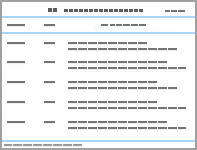
Tab.1
Specifications of 26650-type ternary LIB
| 参数 | 取值 |
|---|---|
| 直径/mm | 26 |
| 高度/mm | 65 |
| 质量/g | 93±3 |
| 标称容量/(A·h) | 5 |
| 标称电压/V | 3.6 |
| 充电截止电压/V | 4.2±0.05 |
| 放电截止电压/V | 2.75±0.05 |

Fig.1
Schematic diagram of LIB overdischarge test platform


Fig.2
Performance variation of LIB during 130% DOD overdischarge at 25 ℃


Fig.3
Performance variation of LIB during 130% DOD overdischarge at -25 ℃


Fig.4
Performance variation of LIB during 130% DOD overdischarge at 50 ℃

Tab.2
Instant and corresponding DOD of internal short circuit occurrence, and battery temperature rise in overdischarge process
| 环境温度/℃ | 内短路时刻/s | DOD/% | 电池温升/℃ |
|---|---|---|---|
| -25 | 3706 | 102.94 | 15.20 |
| 25 | 3662 | 101.72 | 4.23 |
| 50 | 3757 | 104.36 | 4.07 |

Fig.5
Temperature rise characteristics of LIB during 130% DOD overdischarge at different ambient temperatures


Fig.6
Temperature rate curves of LIB during overdischarge at different ambient temperatures


Fig.7
Electrochemical performance variation of LIB during overdischarge at different ambient temperatures and DODs

Tab.3
Variation in battery internal resistance before and post overdischarge
| 放电深度 | 内阻变化率/% | ||
|---|---|---|---|
| -25 ℃ | 25 ℃ | 50 ℃ | |
| 100% DOD | -1.548 | -2.071 | 1.190 |
| 110% DOD | -6.813 | 7.009 | 8.906 |
| 120% DOD | -0.796 | 9.871 | 9.940 |
| 130% DOD | 4.818 | 12.028 | 17.473 |
| [1] |
乌江, 张燕, 刘泽龙, 等. 考虑驾驶工况及老化程度的锂电池荷电状态估算[J]. 上海交通大学学报, 2024, 58(12): 1935-1945.
doi: 10.16183/j.cnki.jsjtu.2023.168 |
| WU Jiang, ZHANG Yan, LIU Zelong, et al. State of charge estimation of lithium-ion battery considering operating conditions and aging degree[J]. Journal of Shanghai Jiao Tong University, 2024, 58(12): 1935-1945. | |
| [2] |
GAO X W, ZHOU Y N, HAN D Z, et al. Thermodynamic understanding of Li-dendrite formation[J]. Joule, 2020, 4(9): 1864-1879.
doi: 10.1016/j.joule.2020.06.016 URL |
| [3] |
MEI W X, ZHANG L, SUN J H, et al. Experimental and numerical methods to investigate the overcharge caused lithium plating for lithium ion battery[J]. Energy Storage Materials, 2020, 32: 91-104.
doi: 10.1016/j.ensm.2020.06.021 URL |
| [4] |
MAO N, GADKARI S, WANG Z R, et al. A comparative analysis of lithium-ion batteries with different cathodes under overheating and nail penetration conditions[J]. Energy, 2023, 278: 128027.
doi: 10.1016/j.energy.2023.128027 URL |
| [5] |
GALUSHKIN N E, YAZVINSKAYA N N, GALUSHKIN D N. Causes and mechanism of thermal runaway in lithium-ion batteries, contradictions in the generally accepted mechanism[J]. Journal of Energy Storage, 2024, 86: 111372.
doi: 10.1016/j.est.2024.111372 URL |
| [6] |
GAN N F, SUN Z Y, ZHANG Z S, et al. Data-driven fault diagnosis of lithium-ion battery overdischarge in electric vehicles[J]. IEEE Transactions on Power Electronics, 2022, 37(4): 4575-4588.
doi: 10.1109/TPEL.2021.3121701 URL |
| [7] |
GUO R, LU L G, OUYANG M G, et al. Mechanism of the entire overdischarge process and overdischarge-induced internal short circuit in lithium-ion batteries[J]. Scientific Reports, 2016, 6: 30248.
doi: 10.1038/srep30248 pmid: 27444934 |
| [8] |
WANG Z P, XU S Q, ZHU X Q, et al. Effects of short-term over-discharge cycling on the performance of commercial 21, 700 lithium-ion cells and the identification of degradation modes[J]. Journal of Energy Storage, 2021, 35: 102257.
doi: 10.1016/j.est.2021.102257 URL |
| [9] |
ZHANG G X, WEI X Z, CHEN S Q, et al. Unlocking the thermal safety evolution of lithium-ion batteries under shallow over-discharge[J]. Journal of Power Sources, 2022, 521: 230990.
doi: 10.1016/j.jpowsour.2022.230990 URL |
| [10] |
OUYANG D X, WENG J W, CHEN M Y, et al. Experimental analysis on the degradation behavior of overdischarged lithium-ion battery combined with the effect of high-temperature environment[J]. International Journal of Energy Research, 2020, 44(1): 229-241.
doi: 10.1002/er.v44.1 URL |
| [11] |
KIM E, SONG J H, DZAKPASU C B, et al. Degradation behavior of 21700 cylindrical lithium-ion battery cells during overdischarge cycling at low temperatures[J]. Journal of Energy Storage, 2023, 72: 108627.
doi: 10.1016/j.est.2023.108627 URL |
| [12] | QIAN L Q, YI Y H, ZHANG W J, et al. Revealing the impact of high current overcharge/overdischarge on the thermal safety of degraded Li-ion batteries[J]. International Journal of Energy Research, 2023, 2023(1): 8571535. |
| [13] |
LAI X, JIN C Y, YI W, et al. Mechanism, modeling, detection, and prevention of the internal short circuit in lithium-ion batteries: Recent advances and perspectives[J]. Energy Storage Materials, 2021, 35: 470-499.
doi: 10.1016/j.ensm.2020.11.026 URL |
| [14] |
HU D Z, CHEN G, TIAN J, et al. Unrevealing the effects of low temperature on cycling life of 21700-type cylindrical Li-ion batteries[J]. Journal of Energy Chemistry, 2021, 60: 104-110.
doi: 10.1016/j.jechem.2020.12.024 |
| [15] |
TIAN J P, XIONG R, SHEN W X. State-of-health estimation based on differential temperature for lithium ion batteries[J]. IEEE Transactions on Power Electronics, 2020, 35(10): 10363-10373.
doi: 10.1109/TPEL.63 URL |
| [16] |
QIAO D D, WANG X Y, LAI X, et al. Online quantitative diagnosis of internal short circuit for lithium-ion batteries using incremental capacity method[J]. Energy, 2022, 243: 123082.
doi: 10.1016/j.energy.2021.123082 URL |
| [17] |
KASNATSCHEEW J, BÖRNER M, STREIPERT B, et al. Lithium ion battery cells under abusive discharge conditions: Electrode potential development and interactions between positive and negative electrode[J]. Journal of Power Sources, 2017, 362: 278-282.
doi: 10.1016/j.jpowsour.2017.07.044 URL |
| [18] | KIM Y S, LEE S H, SON M Y, et al. Succinonitrile as a corrosion inhibitor of copper current collectors for overdischarge protection of lithium ion batteries[J]. ACS Applied Materials & Interfaces, 2014, 6(3): 2039-2043. |
| [19] | CHEN C C, HE G H, CAI J B, et al. Investigating the overdischarge failure on copper dendritic phenomenon of lithium ion batteries in portable electronics[C]// 2019 22nd European Microelectronics and Packaging Conference & Exhibition. Pisa, Italy: IEEE, 2020: 1-6. |
| [20] |
LI H F, GAO J K, ZHANG S L. Effect of overdischarge on swelling and recharge performance of lithium ion cells[J]. Chinese Journal of Chemistry, 2008, 26(9): 1585-1588.
doi: 10.1002/cjoc.v26:9 URL |
| [21] |
JAGUEMONT J, BOULON L, DUBÉ Y. A comprehensive review of lithium-ion batteries used in hybrid and electric vehicles at cold temperatures[J]. Applied Energy, 2016, 164: 99-114.
doi: 10.1016/j.apenergy.2015.11.034 URL |
| [22] |
PASTOR-FERNÁNDEZ C, UDDIN K, CHOUCHELAMANE G H, et al. A comparison between electrochemical impedance spectroscopy and incremental capacity-differential voltage as Li-ion diagnostic techniques to identify and quantify the effects of degradation modes within battery management systems[J]. Journal of Power Sources, 2017, 360: 301-318.
doi: 10.1016/j.jpowsour.2017.03.042 URL |
| [23] |
ZHANG L, HUANG L W, ZHANG Z S, et al. Degradation characteristics investigation for lithium-ion cells with NCA cathode during overcharging[J]. Applied Energy, 2022, 327: 120026.
doi: 10.1016/j.apenergy.2022.120026 URL |
| [24] |
GUO Z X, YANG S G, ZHAO W Y, et al. Overdischarge-induced evolution of Cu dendrites and degradation of mechanical properties in lithium-ion batteries[J]. Journal of Energy Chemistry, 2023, 78: 497-506.
doi: 10.1016/j.jechem.2022.12.013 |
| [25] |
LI L, ZHOU X D, JU X Y, et al. Comprehensive analysis on aging behavior and safety performance of LiNixCoyMnzO2/graphite batteries after slight over-discharge cycle[J]. Applied Thermal Engineering, 2023, 225: 120172.
doi: 10.1016/j.applthermaleng.2023.120172 URL |
| [26] | OUYANG D X, WENG J W, CHEN M Y, et al. Impacts of current rates on the degradation behaviors of lithium-ion batteries under over-discharge conditions[J]. Journal of the Electrochemical Society, 2019, 166(14): A3432-A3440. |
| [1] | LI Liang, REN Zhiyi, WANG Peng, LUO Yi, SU Zhe, CAI Hongxiang, TIAN Hao, NIU Bo, LONG Donghui. Research Progress on Lightweight Resin-Based Thermal Protection Materials [J]. Air & Space Defense, 2024, 7(6): 58-75. |
| [2] | YU Haiyan, WU Hangyu. Failure Mechanism and Material Selection Method of CFRP/Steel Rivet-Bonding Joints [J]. Journal of Shanghai Jiao Tong University, 2023, 57(2): 230-240. |
| [3] | LIU Hailong,ZHANG Daxu,QI Heyin,WU Haihui,GUO Hongbao,HONG Zhiliang,CHEN Chao,ZHANG Yi. Tensile Damage Evolution of Plain Weave SiC/SiC Composites Based on In-situ X-Ray CT Tests [J]. Journal of Shanghai Jiaotong University, 2020, 54(10): 1074-1083. |
| [4] | SONG Xiaolong,ZHAO Wei,NIAN Tingkai,JIAO Houbin. Experiment Simulation of Submarine Clayey Slope Failure Induced by Gas Hydrate Dissociation [J]. Journal of Shanghai Jiaotong University, 2020, 54(1): 43-51. |
| [5] | CHEN Mingming, CHEN Xiuhua, ZHANG Daxu, WU Haihui, GUO Hongbao, GONG Jinghai. Tensile Behavior and Failure Mechanisms of Plain Weave SiC/SiC Composites at Room and High Temperatures [J]. Journal of Shanghai Jiao Tong University, 2019, 53(1): 11-18. |
| [6] | TANG Hua,XIONG Xiaorong,DENG Qin,YUAN Conghua,WU Zhenjun. Deformation Law and Failure Mechanism of Anchorage-Surrounding Rock System of Puli Extra-large Bridge [J]. Journal of Shanghai Jiaotong University, 2015, 49(07): 961-967. |
| [7] | WANG Bin,CHE Ailan,GE Xiurun. Shaking Table Test on Earthquake Response of Discontinuous Medium High and Steep Rock Slope [J]. Journal of Shanghai Jiaotong University, 2015, 49(07): 951-956. |
| [8] | SHI Lu. Effect of Illumination and Color Temperature of Lighting on Human Thermoregulation [J]. Journal of Shanghai Jiaotong University, 2013, 47(10): 1616-1620. |
| Viewed | ||||||
|
Full text |
|
|||||
|
Abstract |
|
|||||
