

上海交通大学学报 ›› 2026, Vol. 60 ›› Issue (2): 270-276.doi: 10.16183/j.cnki.jsjtu.2024.194
杨增力1, 王若琪2, 胡炎2( ), 范春菊2, 王晶1
收稿日期:2024-05-27
修回日期:2024-09-01
接受日期:2024-11-21
出版日期:2026-02-28
发布日期:2026-03-06
通讯作者:
胡炎
E-mail:yanhu@sjtu.edu.cn.
作者简介:杨增力(1982—),高级工程师,从事电力系统继电保护研究和管理相关工作.
基金资助:
YANG Zengli1, WANG Ruoqi2, HU Yan2(), FAN Chunju2, WANG Jing1
Received:2024-05-27
Revised:2024-09-01
Accepted:2024-11-21
Online:2026-02-28
Published:2026-03-06
Contact:
HU Yan
E-mail:yanhu@sjtu.edu.cn.
摘要:
在含分布式电源的配电网故障恢复中,利用柔性软开关(SOP)替代联络开关,能够在进行负荷转供的同时对分布式电源进行电压支撑.然而,柔性软开关引入的双侧电源重合闸在两端电压不一致时易产生冲击电流,若未控制,将危及配电网的安全运行.本文将柔性软开关在故障恢复过程中的支撑电压与系统电源电压之间可能存在的相位差作为冲击电流的主源之一,同时考虑分布式电源接入点电压相位突变对冲击电流的贡献,将系统总合闸冲击电流表示为两部分的叠加并给出其物理含义,提出总合闸冲击电流的简化计算公式,并通过时域仿真在标准配电网模型下验证公式的正确性与合理性.基于最大冲击电流的极限分析,探讨合闸冲击电流对系统侧电流保护的影响,并给出配电网允许接入的分布式电源容量上限,指出容量过大可能导致保护动作失效的风险.
中图分类号:
杨增力, 王若琪, 胡炎, 范春菊, 王晶. 含柔性软开关有源配电网故障恢复合闸时冲击电流对电流保护的影响[J]. 上海交通大学学报, 2026, 60(2): 270-276.
YANG Zengli, WANG Ruoqi, HU Yan, FAN Chunju, WANG Jing. Impact of Impulse Current on Current Protection in Fault Recovery and Closing of Active Distribution Networks with Soft Open Point[J]. Journal of Shanghai Jiao Tong University, 2026, 60(2): 270-276.

图1
极端情况下合闸时旋转坐标轴的变化


图2
合闸时电流分布情况

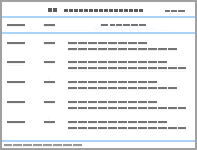
表1
合闸时不同出力DG的输出电流仿真值
| DG出力/ MW | i*理论 值/A | i*仿真 值/A | IDG,max 仿真值/A | M= IDG,max/i* |
|---|---|---|---|---|
| 0.5 | 29 | 24 | 41 | 1.414 |
| 1.0 | 58 | 53 | 82 | 1.414 |
| 1.5 | 87 | 82 | 121 | 1.391 |
| 2.0 | 115 | 112 | 162 | 1.409 |
表2
不同出力DG接入配电网时系统侧冲击电流仿真数据
| DG出力/ MW | I1理论 值/A | IDG,max 理论值/A | Iimp理论 值/A | Iimp仿真 值/A |
|---|---|---|---|---|
| 0.5 | 455 | 43 | 498 | 495 |
| 1.0 | 455 | 87 | 542 | 507 |
| 1.5 | 455 | 130 | 585 | 530 |
| 2.0 | 455 | 172 | 627 | 566 |

图3
含DG的简单配电网结构图

表3
合闸冲击电流对各阶段电流保护的影响总结
| 保护类型 | 电流速断保护 | 限时电流速断保护 | 定时限过电流保护 |
|---|---|---|---|
| 合闸冲击电流是否对 保护产生影响 | 是 | 是 | 否 |
| 不影响保护准确 动作的DG容量限制 |
| [1] | 王成山, 李鹏. 分布式发电、微网与智能配电网的发展与挑战[J]. 电力系统自动化, 2010, 34(2): 10-14. |
| WANG Chengshan, LI Peng. Development and challenges of distributed generation, the micro-grid and smart distribution system[J]. Automation of Electric Power Systems, 2010, 34(2): 10-14. | |
| [2] | 中华人民共和国国家质量监督检验检疫总局, 国家标准化管理委员会. 分布式电源并网运行控制规范: GB/T 33592—2017[S]. 北京: 中国标准出版社, 2017. |
| General Administration of Quality Supervision, Inspection and Quarantine of the People’s Republic of China, Standardization Administration of the People’s Republic of China. Specification of operation and controlling for distributed resources connected to power grid: GB/T 33592—2017[S]. Beijing: Standards Press of China, 2017. | |
| [3] | 唐成虹, 杨志宏, 宋斌, 等. 有源配电网的智能分布式馈线自动化实现方法[J]. 电力系统自动化, 2015, 39(9): 101-106. |
| TANG Chenghong, YANG Zhihong, SONG Bin, et al. A method of intelligent distributed feeder automation for active distribution network[J]. Automation of Electric Power Systems, 2015, 39(9): 101-106. | |
| [4] | 汤一达, 吴志, 顾伟, 等. 主动配电网故障恢复的重构与孤岛划分统一模型[J]. 电网技术, 2020, 44(7): 2731-2740. |
| TANG Yida, WU Zhi, GU Wei, et al. Research on active distribution network fault recovery strategy based on unified model considering reconstruction and island partition[J]. Power System Technology, 2020, 44(7): 2731-2740. | |
| [5] | 杨学信, 李谅, 傅坚, 等. 考虑主网和孤岛的两阶段配电网供电恢复[J]. 上海电力大学学报, 2024, 40(1): 58-65. |
| YANG Xuexin, LI Liang, FU Jian, et al. Two-stage power restoration in interconnected and islanded distribution networks[J]. Journal of Shanghai University of Electric Power, 2024, 40(1): 58-65. | |
| [6] | 张纯江, 徐菁远, 庆宏阳, 等. 主从结构微电网逆变器离网全过程平滑切换控制策略[J]. 电力系统自动化, 2022, 46(23): 125-133. |
| ZHANG Chunjiang, XU Jingyuan, QING Hong-yang, et al. Seamless transferring control strategy for master-slave microgrid inverter in whole off-grid process[J]. Automation of Electric Power Systems, 2022, 46(23): 125-133. | |
| [7] | 赵鹏飞. 构网型换流器的孤岛运行及平滑并网控制策略研究[D]. 北京: 华北电力大学, 2022. |
| ZHAO Pengfei. Research on islanding operation and smooth grid-connected control strategy of grid-forming converters[D]. Beijing: North China Electric Power University, 2022. | |
| [8] | 周政, 廖凯, 郭毅娜, 等. 面向配电网恢复能力提升的SOP优化配置方法[J]. 电力系统及其自动化学报, 2024, 36(11): 1-10. |
| ZHOU Zheng, LIAO Kai, GUO Yina, et al. SOP optimization configuration method for distribution network restorability improvement[J]. Proceedings of the CSU-EPSA, 2024, 36(11): 1-10. | |
| [9] | 胡亚静, 刘龙飞, 徐宪东. 基于软开关的互联区域能源系统功率控制[J]. 电力系统及其自动化学报, 2023, 35(3): 38-45. |
| HU Yajing, LIU Longfei, XU Xiandong. Soft opening point based power control of interconnected district energy systems[J]. Proceedings of the CSU-EPSA, 2023, 35(3): 38-45. | |
| [10] | 韩笑, 蒋剑涛, 孙杰, 等. 含柔性软开关的配电网供电恢复优化策略[J]. 电气自动化, 2022, 44(4): 54-56. |
| HAN Xiao, JIANG Jiantao, SUN Jie, et al. Optimization strategy for power supply restoration of distribution network with soft open point[J]. Electrical Automation, 2022, 44(4): 54-56. | |
| [11] | 孙守晶, 丛伟, 邱吉福, 等. 含智能软开关的智能配电网分布式供电恢复方法[J]. 电力系统自动化, 2022, 46(8): 79-85. |
| SUN Shoujing, CONG Wei, QIU Jifu, et al. Distributed power restoration method for smart distribution network with soft open point[J]. Automation of Electric Power Systems, 2022, 46(8): 79-85. | |
| [12] | 徐潜, 王彤, 王增平. 计及锁相环和电流内环暂态过程的逆变型电源故障电流解析方法[J]. 电网技术, 2024, 48(6): 2603-2612. |
| XU Qian, WANG Tong, WANG Zengping. Fault current analysis method of inverter-interfaced renewable energy sources with PLL and current inner loop transient processes[J]. Power System Technology, 2024, 48(6): 2603-2612. | |
| [13] | 李立生, 于海东, 刘洋, 等. 适应光伏高比例接入配电网的变流器控制策略[J]. 供用电, 2024, 41(3): 17-23. |
| LI Lisheng, YU Haidong, LIU Yang, et al. Control strategy of converters for high penetration of PVs into distribution network[J]. Distribution & Utilization, 2024, 41(3): 17-23. | |
| [14] | 杨欣, 李志伟, 王江, 等. 基于虚拟同步控制的光伏并网变流器对配电网电能质量的提升方法[J]. 电气工程学报, 2024, 19(4): 296-307. |
| YANG Xin, LI Zhiwei, WANG Jiang, et al. Improvement of power quality of distribution network by photovoltaic grid connected converter based on virtual synchronous control[J]. Journal of Electrical Engineering, 2024, 19(4): 296-307. | |
| [15] | 李邦源, 李昂, 石恒初, 等. 计及分布式电源输出特性的主动配电网合环电流计算方法[J]. 电网与清洁能源, 2023, 39(6): 115-123. |
| LI Bangyuan, LI Ang, SHI Hengchu, et al. A calculation method of the closing loop current in active distribution networks with distributed power output characteristics considered[J]. Power System & Clean Energy, 2023, 39(6): 115-123. | |
| [16] | 王增平, 林一峰, 王彤, 等. 电力系统继电保护与安全控制面临的挑战与应对措施[J]. 电力系统保护与控制, 2023, 51(6): 10-20. |
| WANG Zengping, LIN Yifeng, WANG Tong, et al. Challenges and countermeasures to power system relay protection and safety control[J]. Power System Protection & Control, 2023, 51(6): 10-20. | |
| [17] | 曹金铭, 范开俊, 徐丙垠, 等. 基于容量边界值的高比例逆变型分布式电源配电网三级保护适用性分析[J]. 电网技术, 2024, 48(8): 3438-3448. |
| CAO Jinming, FAN Kaijun, XU Bingyin, et al. Applicability analysis of capacity boundary value based three-level protection in distribution networks containing high percentage of inverter interfaced distributed energy resources[J]. Power System Technology, 2024, 48(8): 3438-3448. |
| [1] | 王若琪, 胡炎, 杨增力, 王晶, 吴迪, 张振. 大量分布式电源接入的配电网自适应重合闸及故障恢复策略[J]. 上海交通大学学报, 2026, 60(1): 42-50. |
| [2] | 徐寒, 朱三立, 张腾飞, 陈舒, 刘明祥. 低压配电系统剩余电流保护与重合闸逻辑组合优化方法[J]. 上海交通大学学报, 2025, 59(7): 901-911. |
| [3] | 白文超, 班明飞, 宋梦, 夏世威, 李知艺, 宋文龙. 电动汽车-无人机联合救援系统协调调度模型[J]. 上海交通大学学报, 2024, 58(9): 1443-1453. |
| [4] | 王轩, 汪宝, 陈艳萍, 刘洪, 马晓慧. 低碳自动化码头AGV物流调度和有序充电的联合经济优化[J]. 上海交通大学学报, 2024, 58(9): 1370-1380. |
| [5] | 张蓬, 吕恭祥, 刘志杰, 朱守真, 邵智勇. 含电能路由器的配电网转供灵活性量化分析[J]. 上海交通大学学报, 2023, 57(5): 513-520. |
| [6] | 杨博, 俞磊, 王俊婷, 束洪春, 曹璞璘, 余涛. 基于自适应蝠鲼觅食优化算法的分布式电源选址定容[J]. 上海交通大学学报, 2021, 55(12): 1673-1688. |
| [7] | 李珂,邰能灵,张沈习. 基于改进粒子群算法的配电网综合运行优化[J]. 上海交通大学学报, 2017, 51(8): 897-902. |
| [8] | 赵俊瑞,王占山,王继东,张化光. 微网故障特性分析及保护方法[J]. 上海交通大学学报(自然版), 2015, 49(06): 913-922. |
| [9] | 张翔1,程浩忠1,方陈2,张沈习1. 考虑主动管理模式的多目标分布式电源规划[J]. 上海交通大学学报(自然版), 2014, 48(09): 1231-1238. |
| [10] | 黄彬1,邰能灵1,王鹏2,倪明杰2,卫卫2,张淑蓉2. 自适应算法在船舶电网保护中的应用[J]. 上海交通大学学报(自然版), 2013, 47(12): 1963-1967. |
| 阅读次数 | ||||||
|
全文 |
|
|||||
|
摘要 |
|
|||||
