

上海交通大学学报 ›› 2026, Vol. 60 ›› Issue (6): 985-995.doi: 10.16183/j.cnki.jsjtu.2024.295
陈昕昊1, 姜季江1,2, 许玉旺1( ), 付世晓1, 刘成龙3, 宋斌1
收稿日期:2024-07-25
修回日期:2024-08-22
接受日期:2024-10-18
出版日期:2026-06-28
发布日期:2026-07-02
通讯作者:
许玉旺,副教授,博士生导师;E-mail:xuyuwang@sjtu.edu.cn.
作者简介:陈昕昊(2000—),硕士生,从事码头系泊系统参数优化方法研究.
基金资助:
CHEN Xinhao1, JIANG Jijiang1,2, XU Yuwang1(), FU Shixiao1, LIU Chenglong3, SONG Bin1
Received:2024-07-25
Revised:2024-08-22
Accepted:2024-10-18
Online:2026-06-28
Published:2026-07-02
摘要:
海上浮式生产储油轮(FPSO)是海洋石油开发的关键装备,其在台风等恶劣环境条件下进行码头系泊时,由于主尺度较大,且将同时受到风浪流联合作用,所以对码头系泊系统承载能力要求较高;此外,系泊缆错综布置,缆绳数量近60根,采用比选方法来寻找所有系泊缆绳的最优参数组合方案,计算工作量巨大,几乎不可行.因此,本文综合考虑了多浪向风浪流载荷作用下,提出了一种基于改进遗传算法的FPSO码头抗台系泊缆系统参数迭代优化方法,以缆绳长度作为变量参数,不同缆绳长度组合作为遗传迭代中的个体,通过校核每个组合在典型工况下的缆绳载荷,评估该组合的适应度并进行迭代优化,最终得到了优化后的系泊缆系统参数.对优化前后系泊方案校核结果进行对比,发现优化后的缆绳长度参数整体呈现较长缆绳张紧、较短缆绳松弛的趋势,提高了优化前承载较少的缆绳的利用率;在FPSO运动幅度影响不大的前提下,所有工况下的缆绳最大载荷降低了12.2%,并在其他参数不变的条件下仅调整缆绳张紧程度使优化后的方案通过了安全规范校核;该优化方法可在有限码头资源条件下,有效提升系泊系统安全性,并为码头系泊带缆工作提供参考.
中图分类号:
陈昕昊, 姜季江, 许玉旺, 付世晓, 刘成龙, 宋斌. 基于改进遗传算法的海上浮式生产储油轮码头抗台系泊缆系统参数优化方法[J]. 上海交通大学学报, 2026, 60(6): 985-995.
CHEN Xinhao, JIANG Jijiang, XU Yuwang, FU Shixiao, LIU Chenglong, SONG Bin. Parameter Optimization Method for FPSO Docking Mooring Lines Under Typhoon Conditions Based on Improved Genetic Algorithms[J]. Journal of Shanghai Jiao Tong University, 2026, 60(6): 985-995.

图1
FPSO风载荷系数


图2
FPSO流载荷系数


图3
基本遗传算法流程图


图4
FPSO码头系泊数值模型

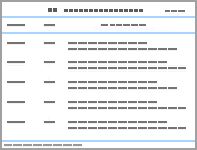
表1
缆绳主要参数
| 序号 | 类型 | 产品名称 | 直径/ mm | 干重/ (kg·m-1) | 结构 | 破断 载荷/kN |
|---|---|---|---|---|---|---|
| 1 | 主缆 | 超高分子量 聚乙烯缆绳 | 58 | 1.885 | 12股 | 2 058 |
| 2 | 尾缆 | 尼龙66缆绳 | 120 | 9.3 | 12股 | 2 058 |

图5
缆绳及护舷材料特性曲线


图6
FPSO码头系泊布置图

表2
FPSO基础参数
| 参数 | 设计值 |
|---|---|
| 吃水/m | 7.549 |
| 排水量/t | 141 696 |
| 垂线间长/m | 345.3 |
| 垂向重心位置(距基线)/m | 24.049 |
| 纵向重心位置(距艉垂线)/m | 155.04 |
表3
波浪参数
| 方向 | 角度/(°) | 有义波高/m | 谱峰周期/s |
|---|---|---|---|
| W | 0 | 1.13 | 3.92 |
| WSW | 22.5 | 1.27 | 4.28 |
| SW | 45 | 0.83 | 3.51 |
| SSW | 67.5 | 1.01 | 3.85 |
| S | 90 | 1.23 | 4.27 |
| SSE | 112.5 | 1.66 | 4.72 |
| SE | 135 | 1.90 | 8.12 |
| ESE | 157.5 | 2.31 | 8.95 |
| E | 180 | 2.33 | 8.23 |
| ENW | 202.5 | 0.10 | 8.23 |
| NE | 225 | 0.10 | 8.23 |
| NNE | 247.5 | 0.10 | 8.23 |
| N | 270 | 0.10 | 8.23 |
| NNW | 292.5 | 0.10 | 4.72 |
| NW | 315 | 0.10 | 8.12 |
| WNW | 337.5 | 0.10 | 8.95 |
表4
环境参数
| 环境参数 | 取值 |
|---|---|
| 水深/m | 9.1~16.24 |
| 波浪谱 | JONSWAP谱 |
| 流速/(m·s-1) | 2.24 |
| 风速/(m·s-1) | 36.9 |

图7
基于改进遗传算法的系泊优化流程图


图8
FPSO湿表面网格模型


图9
遗传算法迭代过程


图10
优化前后缆绳长度对比图


图11
优化前后各角度海况下最大缆力对比图


图12
270° 环境工况下优化前后缆绳载荷对比


图13
优化前后缆绳载荷区间分布图

表5
优化前后FPSO运动幅值对比
| 自由度 | 优化前幅值 | 优化后幅值 | 幅值变化 |
|---|---|---|---|
| 纵荡/m | 1.273 | 1.231 | -0.042 |
| 横荡/m | 0.572 | 0.580 | 0.008 |
| 垂荡/m | 0.359 | 0.360 | 0.001 |
| 横摇/(°) | 0.961 | 1.021 | 0.060 |
| 纵摇/(°) | 0.093 | 0.094 | 0.001 |
| 艏摇/(°) | 0.268 | 0.275 | 0.007 |
| [1] | 高明俊. 张力腿平台码头系泊水动力性能研究及系泊形式分析[D]. 天津: 天津大学, 2020. |
| GAO Mingjun. Research on mooring performance and analysis of mooring forms of tension leg platform wharf[D]. Tianjin: Tianjin University, 2020. | |
| [2] | 赵笑辉. 基于AQWA的大型矿砂船舶码头系泊特性及稳泊安全研究[D]. 厦门: 集美大学, 2022. |
| ZHAO Xiaohui. AQWA-based mooring characteristics of Very Large Ore Carrier and stable berthing safety study[D]. Xiamen: Jimei University, 2022. | |
| [3] |
CHERNJAWSKI M. Mooring of surface vessels to piers[J]. Marine Technology and SNAME News, 1980, 17(1): 1-7.
doi: 10.5957/mt1.1980.17.1.1 URL |
| [4] |
NATARAJAN R, GANAPATHY C. Analysis of moorings of a berthed ship[J]. Marine Structures, 1995, 8(5): 481-499.
doi: 10.1016/0951-8339(95)97305-R URL |
| [5] | 邹志利, 张日向, 张宁川, 等. 风浪流作用下系泊船系缆力和碰撞力的数值模拟[J]. 中国海洋平台, 2002, 17(2): 22-27. |
| ZOU Zhili, ZHANG Rixiang, ZHANG Ningchuan, et al. The numerical simulation of mooring force & impact force of ship moored to offshore platform[J]. China Offshore Platform, 2002, 17(2): 22-27. | |
| [6] | 刘俊红, 赵魏, 崔秀达. 30万t FPSO船体码头抗台系泊设计[J]. 船海工程, 2021, 50(2): 37-40. |
| LIU Junhong, ZHAO Wei, CUI Xiuda. Anti-typhoon quay mooring of 300 000 t FPSO hull[J]. Ship & Ocean Engineering, 2021, 50(2): 37-40. | |
| [7] |
BOLSHEV A, FROLOV S, SHONINA E. Optimization of mooring systems for an anchored floating structure in survival and normal-operation modes[J]. Power Technology and Engineering, 2024, 57(5): 710-715.
doi: 10.1007/s10749-024-01723-z |
| [8] |
PILLAI A C, THIES P R, JOHANNING L. Mooring system design optimization using a surrogate assisted multi-objective genetic algorithm[J]. Engineering Optimization, 2018, 51(8): 1370-1392.
doi: 10.1080/0305215X.2018.1519559 URL |
| [9] | 郭强. 基于遗传算法的系泊优化分析与应用[D]. 哈尔滨: 哈尔滨工程大学, 2016. |
| GUO Qiang. Optimization analysis and application of mooring system based on genetic algorithm[D]. Harbin: Harbin Engineering University, 2016. | |
| [10] | BOLSHEV A, FROLOV S, SHONINA E. Mooring system optimization for marine floating hydrotechnical structures[J]. Magazine of Civil Engineering, 2022, 111(3): 11112. |
| [11] |
ALI M O A, YENDURI A, et al. Optimization of mooring line design parameters using Mooring Optimization Tool for FPSO (MooOpT4FPSO) with the consideration of integrated design methodology[J]. Ocean Engineering, 2022, 264: 112499.
doi: 10.1016/j.oceaneng.2022.112499 URL |
| [12] |
YU Y, ZHAO M, LI Z, et al. Optimal design of asymmetrically arranged moorings in a floating production system based on improved particle swarm optimization and RBF surrogate model[J]. Marine Structures, 2024, 94: 103576.
doi: 10.1016/j.marstruc.2024.103576 URL |
| [13] | LAZZERINI G, COIRO D, TROISE G. Optimization of a floating offshore wind turbine platform and mooring lines according to an innovative wind farm wake control technique[J]. The Institution of Engineering and Technology, 2023, 7: 365-375. |
| [14] |
MA G, DU Z, WANG H, et al. Design and analysis of grid mooring system for gravity net cage with a comprehensive optimization method[J]. Ocean Engineering, 2024, 309: 118524.
doi: 10.1016/j.oceaneng.2024.118524 URL |
| [15] | 杨昆. 风浪流耦合作用下的系泊船舶与码头动力学分析[D]. 哈尔滨: 哈尔滨工程大学, 2023. |
| YANG Kun. Dynamics analysis of mooring ship and wharf under wind wave and current coupling[D]. Harbin: Harbin Engineering University, 2023. | |
| [16] | 许峰. 自升式钻井平台码头抗台风系泊工程研究[D]. 上海: 上海交通大学, 2016. |
| XU Feng. A research of on-quay anti-typhoon mooring engineering for a jack-up drilling platform[D]. Shanghai: Shanghai Jiao Tong University, 2016. | |
| [17] | 中国船级社. 海上移动平台入级规范[S]. 北京: 人民交通出版社股份有限公司, 2023. |
| China Classification Society. Rules for classification of mobile offshore units[S]. Beijing: China Communications Press Co., Ltd., 2023. | |
| [18] | OCIMF. Mooring equipment guidelines[M]. 4th ed. London, UK: OCIMF, 2018: 7-10. |
| [19] | 张鼎, 何夏茵. FSRU码头系泊系统特性影响因素分析[J]. 船舶工程, 2022, 44(Sup.1): 609-612. |
| ZHANG Ding, HE Xiayin. Analysis of factors affecting the characteristics of FSRU docking mooring system[J]. Ship Engineering, 2022, 44(Sup.1): 609-612. | |
| [20] | ZHANG D, LIU S, CHEN Y, et al. Influence of different mooring factors on characteristics of docking mooring system for large container vessel[C]// Proceedings of the International Offshore and Polar Engineering Conference. Ottawa, Canada: ISOPE, 2023: 3634-3639. |
| [1] | 王义, 阮艺铭, 邓家辉, 吴坡, 刘明洋. 基于残差组合神经网络的双馈风电场动态等值建模[J]. 上海交通大学学报, 2026, 60(6): 932-942. |
| [2] | . 低渗油井节能生产参数多目标优化方法[J]. J Shanghai Jiaotong Univ Sci, 2026, 31(2): 486-498. |
| [3] | 张栢源, 赵国成, 肖龙飞. 附壁射流式多金属结核采集装置几何参数优化[J]. 上海交通大学学报, 2025, 59(8): 1059-1066. |
| [4] | 张聪, 疏炳南, 张江涛, 金勇. 基于响应面法-遗传算法的船舶推进轴系多目标优化设计[J]. 上海交通大学学报, 2025, 59(4): 466-475. |
| [5] | 张荣夫, 王金强, 刘敏霞. 基于资源最优化的复杂系统模块化设计优化方法[J]. 空天防御, 2025, 8(3): 86-94. |
| [6] | 杨继沛, 杨苓, 魏茂华. 基于有源电容的直流母线电压振荡抑制器及其控制方法[J]. 上海交通大学学报, 2025, 59(3): 303-312. |
| [7] | 胡丹, 崔喻婷, 周海河, 刘英莉. 改进蜣螂算法优化工艺参数[J]. 上海交通大学学报, 2025, 59(12): 1901-1915. |
| [8] | 韩一鸣, 贺彬, 杨博, 李嘉乐. 考虑行驶特性的电动汽车充电站联合电储能系统最优规划[J]. 上海交通大学学报, 2025, 59(11): 1720-1731. |
| [9] | 孙栋一, 蒲宇亭, 章建榜. 基于GA-BP神经网络的防空导弹实时目标分配方法[J]. 空天防御, 2025, 8(1): 62-70. |
| [10] | 路庆昌, 刘鹏, 秦汉, 徐鹏程. 考虑路段恢复差异的道路网络恢复决策优化[J]. 上海交通大学学报, 2024, 58(7): 1118-1129. |
| [11] | 何之倬, 张颖, 郑刚, 郑芳, 黄琬迪, 张沈习, 程浩忠. 基于极限学习机模型参数优化的光伏功率区间预测技术[J]. 上海交通大学学报, 2024, 58(3): 285-294. |
| [12] | 孙乾洋, 周利, 丁仕风, 刘仁伟, 丁一. 基于人工神经网络的极地船舶冰阻力预报方法[J]. 上海交通大学学报, 2024, 58(2): 156-165. |
| [13] | 钟科星, 丁乐声, 张 聪, 毛彦东, 陈金龙. 基于神经网络的风电海缆弯曲限制器优化设计[J]. 海洋工程装备与技术, 2024, 11(1): 70-76. |
| [14] | 赵志斌, 骆彬, 唐婷, 王春芳, 孙中华. 改进型自激谐振无线电能传输系统[J]. 上海交通大学学报, 2023, 57(7): 859-867. |
| [15] | 张振宁1,刘强2,吕春峰3,毛义梅1,陶卫1,赵辉1. 双线圈电涡流传感器参数优化及精度提高方法研究[J]. J Shanghai Jiaotong Univ Sci, 2023, 28(5): 596-603. |
| 阅读次数 | ||||||
|
全文 |
|
|||||
|
摘要 |
|
|||||
