

Journal of Shanghai Jiao Tong University ›› 2026, Vol. 60 ›› Issue (7): 1045-1054.doi: 10.16183/j.cnki.jsjtu.2024.404
• New Type Power System and the Integrated Energy • Next Articles
LIU Hang1, LI Canbing1( ), LIU Jianzhe1, WU Yuhang1, SHI Minjie2
Received:2024-10-14
Revised:2024-11-10
Accepted:2024-11-19
Online:2026-07-28
Published:2026-08-05
Contact:
LI Canbing
E-mail:licanbing@sjtu.edu.cn
CLC Number:
LIU Hang, LI Canbing, LIU Jianzhe, WU Yuhang, SHI Minjie. Joint Scheduling Method for Peak and Frequency Regulation in Unit Commitment Using Battery Energy Storage Systems[J]. Journal of Shanghai Jiao Tong University, 2026, 60(7): 1045-1054.
Add to citation manager EndNote|Ris|BibTeX
URL: https://xuebao.sjtu.edu.cn/EN/10.16183/j.cnki.jsjtu.2024.404

Fig.1
Dynamic frequency response with and without BES


Fig.2
Frequency regulation control strategy of BES


Fig.3
SOC upper and lower bounds of peak regulation using BES


Fig.4
Load,wind power output, and photovoltaic output

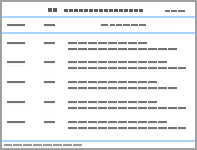
Tab.1
Minimum frequency after a 600 MW load increase at each load node Hz
| 负荷节点 | fna | 负荷节点 | fna |
|---|---|---|---|
| L3 | 59.7255 | L23 | 59.7323 |
| L4 | 59.7259 | L24 | 59.7282 |
| L7 | 59.7259 | L25 | 59.7276 |
| L8 | 59.7257 | L26 | 59.7272 |
| L12 | 59.7272 | L27 | 59.7260 |
| L15 | 59.7266 | L28 | 59.7281 |
| L16 | 59.7283 | L29 | 59.7303 |
| L18 | 59.7260 | L31 | 59.7278 |
| L20 | 59.7304 | L39 | 59.7280 |
| L21 | 59.7296 |
Tab.2
Error comparison of different data-driven methods
| 预测方法分类 | 最大误差/MW | 平均误差中值/MW | 平均绝对误差/MW | 平均绝对百分比误差/% | R2 |
|---|---|---|---|---|---|
| DNN | 6.6801 | 1.3689 | 1.5922 | 0.2284 | 0.9978 |
| LR | 10.5949 | 4.7557 | 4.8690 | 0.5284 | 0.9851 |
| SVR | 21.4414 | 14.6063 | 14.0228 | 1.6371 | 0.9636 |

Fig.5
Comparison of unit commitment results in three cases

Tab.3
Comparison of system operation costs in different cases 万元
| 场景 | 系统运行 总成本 | 火电机组 运行成本 | 电池储能 老化成本 |
|---|---|---|---|
| Case 1 | 9214.3 | 9214.3 | 0 |
| Case 2 | 9042.2 | 9014.3 | 27.9 |
| Case 3 | 8939.5 | 8911.3 | 28.2 |

Fig.6
System frequency nadir of Case 3


Fig.7
Comparison of energy storage peak regulation output of Case 2 and Case 3

Tab.4
Comparison between proposed method and existing methods
| 方法分类 | 可承受最大 扰动功率/MW | 误差 功率/MW | 机组组合 成本/万元 |
|---|---|---|---|
| 现有方法[ | 1027.53 | 222.33 | 8955.9 |
| 本文方法 | 1248.65 | 1.21 | 8939.5 |
| [1] |
蔡振华, 黎灿兵, 阳同光, 等. 考虑动态频率惯量特性的储能电池参与电网一次调频控制[J]. 上海交通大学学报, 2024, 58(12): 1946-1956.
doi: 10.16183/j.cnki.jsjtu.2023.257 |
| CAI Zhenhua, LI Canbing, YANG Tongguang, et al. Participation of energy storage batteries in primary frequency control for power grid considering dynamic frequency inertia characteristics[J]. Journal of Shanghai Jiao Tong University, 2024, 58(12): 1946-1956. | |
| [2] |
冯梦圆, 文书礼, 时珊珊, 等. 满足新型电力系统调峰调频需求的储能优化配置及运行研究综述[J]. 上海交通大学学报, 2026, 60(1): 1-18.
doi: 10.16183/j.cnki.jsjtu.2024.128 |
| FENG Mengyuan, WEN Shuli, SHI Shanshan, et al. A review of optimal allocation and operation of energy storage system for peak shaving and frequency regulation in new type power systems[J]. Journal of Shanghai Jiao Tong University, 2026, 60(1): 1-18. | |
| [3] | 夏清, 钟海旺, 康重庆. 安全约束机组组合理论与应用的发展和展望[J]. 中国电机工程学报, 2013, 33(16): 94-103. |
| XIA Qing, ZHONG Haiwang, KANG Chongqing. Review and prospects of the security constrained unit commitment theory and applications[J]. Proceedings of the CSEE, 2013, 33(16): 94-103. | |
| [4] | 黎灿兵, 吕素, 曹一家, 等. 面向节能发电调度的日前机组组合优化方法[J]. 中国电机工程学报, 2012, 32(16): 70-76. |
| LI Canbing, LÜ Su, CAO Yijia, et al. A new method for day-ahead unit commitment based on energy-saving generation dispatching[J]. Proceedings of the CSEE, 2012, 32(16): 70-76. | |
| [5] |
WEN Y F, GUO C X, KIRSCHEN D S, et al. Enhanced security-constrained OPF with distributed battery energy storage[J]. IEEE Transactions on Power Systems, 2014, 30(1): 98-108.
doi: 10.1109/TPWRS.2014.2321181 URL |
| [6] |
杨博, 王俊婷, 俞磊, 等. 基于孔雀优化算法的配电网储能系统双层多目标优化配置[J]. 上海交通大学学报, 2022, 56(10): 1294-1307.
doi: 10.16183/j.cnki.jsjtu.2021.371 |
| YANG Bo, WANG Junting, YU Lei, et al. Peafowl optimization algorithm based bi-level multi-objective optimal allocation of energy storage systems in distribution network[J]. Journal of Shanghai Jiao Tong University, 2022, 56(10): 1294-1307. | |
| [7] |
CHÁVEZ H, BALDICK R, SHARMA S. Governor rate-constrained OPF for primary frequency control adequacy[J]. IEEE Transactions on Power Systems, 2014, 29(3): 1473-1480.
doi: 10.1109/TPWRS.59 URL |
| [8] |
LEE Y, BALDICK R. A frequency-constrained stochastic economic dispatch model[J]. IEEE Transactions on Power Systems, 2013, 28(3): 2301-2312.
doi: 10.1109/TPWRS.2012.2236108 URL |
| [9] |
TENG F, TROVATO V, STRBAC G. Stochastic scheduling with inertia-dependent fast frequency response requirements[J]. IEEE Transactions on Power Systems, 2016, 31(2): 1557-1566.
doi: 10.1109/TPWRS.2015.2434837 URL |
| [10] |
AHMADI H, GHASEMI H. Security-constrained unit commitment with linearized system frequency limit constraints[J]. IEEE Transactions on Power Systems, 2014, 29(4): 1536-1545.
doi: 10.1109/TPWRS.2014.2297997 URL |
| [11] |
ZHANG Z Y, DU E S, TENG F, et al. Modeling frequency dynamics in unit commitment with a high share of renewable energy[J]. IEEE Transactions on Power Systems, 2020, 35(6): 4383-4395.
doi: 10.1109/TPWRS.59 URL |
| [12] | 林恒先, 侯凯元, 陈磊, 等. 高比例风电电力系统考虑频率安全约束的机组组合[J]. 电网技术, 2021, 45(1): 1-13. |
| LIN Hengxian, HOU Kaiyuan, CHEN Lei, et al. Unit commitment of power system with high proportion of wind power considering frequency safety constraints[J]. Power System Technology, 2021, 45(1): 1-13. | |
| [13] |
LESHNO M, LIN V Y, PINKUS A, et al. Multilayer feedforward networks with a nonpolynomial activation function can approximate any function[J]. Neural Networks, 1993, 6(6): 861-867.
doi: 10.1016/S0893-6080(05)80131-5 URL |
| [14] |
ANDERSON R, HUCHETTE J, MA W, et al. Strong mixed-integer programming formulations for trained neural networks[J]. Mathematical Programming, 2020, 183(1): 3-39.
doi: 10.1007/s10107-020-01474-5 |
| [15] | 王静, 刘文霞, 李守强, 等. 计及机组降损收益的电源侧电池储能调频/调峰经济效益评价方法[J]. 电网技术, 2020, 44(11): 4236-4245. |
| WANG Jing, LIU Wenxia, LI Shouqiang, et al. A method to evaluate economic benefits of power side battery energy storage frequency/peak regulation considering the benefits of reducing thermal power unit losses[J]. Power System Technology, 2020, 44(11): 4236-4245. | |
| [16] | 李盈, 赵伟, 赵立宁, 等. 基于电池储能SOC的调峰、调频混合控制策略[J]. 高压电器, 2023, 59(7): 48-55. |
| LI Ying, ZHAO Wei, ZHAO Lining, et al. Mixed control strategy of peak regulation and frequency modulation based on SOC of battery energy storage[J]. High Voltage Apparatus, 2023, 59(7): 48-55. | |
| [17] |
WEN Y F, LI W Y, HUANG G, et al. Frequency dynamics constrained unit commitment with battery energy storage[J]. IEEE Transactions on Power Systems, 2016, 31(6): 5115-5125.
doi: 10.1109/TPWRS.2016.2521882 URL |
| [18] |
SEDIGHIZADEH M, ESMAILI M, MOUSAVI-TAGHIABADI S M. Optimal energy and reserve scheduling for power systems considering frequency dynamics, energy storage systems and wind turbines[J]. Journal of Cleaner Production, 2019, 228: 341-358.
doi: 10.1016/j.jclepro.2019.04.343 URL |
| [19] | 李东东, 孙雅茹, 徐波, 等. 考虑频率稳定的新能源高渗透率电力系统最小惯量与一次调频容量评估方法[J]. 电力系统保护与控制, 2021, 49(23): 54-61. |
| LI Dongdong, SUN Yaru, XU Bo, et al. Minimum inertia and primary frequency capacity assessment for a new energy high permeability power system considering frequency stability[J]. Power System Protection & Control, 2021, 49(23): 54-61. | |
| [20] | 谢小荣, 马宁嘉, 刘威, 等. 新型电力系统中储能应用功能的综述与展望[J]. 中国电机工程学报, 2023, 43(1): 158-169. |
| XIE Xiaorong, MA Ningjia, LIU Wei, et al. Functions of energy storage in renewable energy dominated power systems: Review and prospect[J]. Proceedings of the CSEE, 2023, 43(1): 158-169. | |
| [21] | 王砚平, 鲍威, 李赢, 等. 考虑N-1故障的安全约束机组组合模型及约束削减方法[J]. 电力自动化设备, 2021, 41(7): 167-175. |
| WANG Yanping, BAO Wei, LI Ying, et al. Model and constraint-reduction method for security-constrained unit commitment considering N-1 contingency[J]. Electric Power Automation Equipment, 2021, 41(7): 167-175. | |
| [22] |
黄远明, 张玉欣, 夏赞阳, 等. 考虑需求响应资源和储能容量价值的新型电力系统电源规划方法[J]. 上海交通大学学报, 2023, 57(4): 432-441.
doi: 10.16183/j.cnki.jsjtu.2021.477 |
| HUANG Yuanming, ZHANG Yuxin, XIA Zanyang, et al. Power system planning considering demand response resources and capacity value of energy storage[J]. Journal of Shanghai Jiao Tong University, 2023, 57(4): 432-441. | |
| [23] | 林俐, 丁文敏, 唐传伟, 等. 计及储能调频能力的高比例新能源电力系统优化调度[J]. 华北电力大学学报(自然科学版), 2026, 53(1): 1-13. |
| LIN Li, DING Wenmin, TANG Chuanwei, et al. Optimal scheduling of high-proportion new energy power system considering energy storage frequency modulation capability[J]. Journal of North China Electric Power University (Natural Science Edition), 2026, 53(1): 1-13. | |
| [24] |
CUI H T, LI F X, TOMSOVIC K. Hybrid symbolic-numeric framework for power system modeling and analysis[J]. IEEE Transactions on Power Systems, 2020, 36(2): 1373-1384.
doi: 10.1109/TPWRS.2020.3017019 URL |
| [1] | FENG Mengyuan, WEN Shuli, SHI Shanshan, WANG Haojing, ZHU Miao, YANG Wen. A Review of Optimal Allocation and Operation of Energy Storage System for Peak Shaving and Frequency Regulation in New Type Power Systems [J]. Journal of Shanghai Jiao Tong University, 2026, 60(1): 1-18. |
| [2] | ZHENG Yuxi, ZENG Long, LIU Jianzhe, CUI Yiyang, ZHU Hong, CAO Liang, SU Yun, WEI Lei. Line Transmission Constraints Effectiveness Patterns and Similarity Mining Methods in Large-Scale Power Grid Unit Commitment [J]. Journal of Shanghai Jiao Tong University, 2025, 59(9): 1260-1269. |
| [3] | LUO Yifu, HU Qinran, QIAN Tao, CHEN Tao, ZHANG Yuanshi, ZHANG Fei, WANG Qi. Unit Commitment Optimization Model Considering Impact of Multiple Operating Conditions on Unit Life Loss [J]. Journal of Shanghai Jiao Tong University, 2025, 59(6): 768-779. |
| [4] | WU Shuangxi, LI Wenbo, QIN Yingjie, YAN Binjie, LI Jiapeng, LI Yujun. Quantization and Enhancement of System Frequency Nadir in Power Step Control [J]. Journal of Shanghai Jiao Tong University, 2025, 59(6): 857-866. |
| [5] | CUI Yiyang, PAN Dounan, LI Canbing, LIU Jianzhe. An Optimization Method for Iteration Path Search of Large-Scale Power Grid Unit Commitment State [J]. Journal of Shanghai Jiao Tong University, 2025, 59(6): 711-719. |
| [6] | CAO Yongji, ZHANG Jiangfeng, WANG Tianyu, ZHENG Keke, WU Qiuwei. Self-Adaptive Secondary Frequency Regulation Strategy Based on Distributed Model Predictive Control [J]. Journal of Shanghai Jiao Tong University, 2025, 59(3): 333-341. |
| [7] | CHEN Zijie, SONG Bingbing, LI Yutong, WANG Lifeng, TENG Xiaobi, YAN Zheng, CHEN Sijie. Inter-Provincial Tie-Line Power Assessment Mechanism and Model for Spot Market [J]. Journal of Shanghai Jiao Tong University, 2025, 59(12): 1773-1783. |
| [8] | ZHANG Lei, LI Ran, TANG Lun, CHEN Sijie, ZHAO Shizhen, SU Fu. Neural Branching Power-Computation Network Fast Optimization Method Considering Computing Demand Response [J]. Journal of Shanghai Jiao Tong University, 2025, 59(11): 1592-1602. |
| [9] | ZHANG Jianhua, YAO Yi, ZHAO Si, WANG Yongyue. A Coordinated Control Scheme for Fast Frequency Regulation of Thermal Power Units Based on Flexibility Transformation [J]. Journal of Shanghai Jiao Tong University, 2025, 59(11): 1694-1706. |
| [10] | CHENG Haowen, LI Kecheng, LIU Lu, CHENG Haozhong, SANG Bingyu. Optimization Configuration of Battery Storage Coordinated with Differentiated Frequency Regulation Strategy of Wind, Solar, and Thermal Power [J]. Journal of Shanghai Jiao Tong University, 2025, 59(10): 1407-1418. |
| [11] | LAO Wenjie, SHI Linjun, WU Feng, YANG Dongmei, LI Yang. Adaptive Frequency Regulation of Doubly-Fed Pumped Storage Unit Considering Speed and Power Limit [J]. Journal of Shanghai Jiao Tong University, 2025, 59(1): 28-37. |
| [12] | ZHU Lan, ZHANG Xuehan, TANG Longjun, QIU Nianhang, TIAN Yingjie. A Combined Clearing Model of Electric Energy, Inertia, and Primary Frequency Regulation Considering Emergency Interruptible Load Service [J]. Journal of Shanghai Jiao Tong University, 2025, 59(1): 16-27. |
| [13] | LI Zhenkun, YU Qiuyang, WEI Yanjun, TIAN Shuxin. Cost Modeling and Analysis of Integrated Energy Microgrid Group Participation in Frequency Regulation Auxiliary Service Market Based on CPSS [J]. Journal of Shanghai Jiao Tong University, 2024, 58(6): 893-903. |
| [14] | CAI Zhenhua, LI Canbing, YANG Tongguang, WEI Juan, GE Rui, LI Lixiong. Participation of Energy Storage Batteries in Primary Frequency Control for Power Grid Considering Dynamic Frequency Inertia Characteristics [J]. Journal of Shanghai Jiao Tong University, 2024, 58(12): 1946-1956. |
| [15] | LIU Chuanbin, JIAO Wenshu, WU Qiuwei, CHEN Jian, ZHOU Qian. Strategy of Wind-Storage Combined System Participating in Power System Secondary Frequency Regulation Based on Model Predictive Control [J]. Journal of Shanghai Jiao Tong University, 2024, 58(1): 91-101. |
| Viewed | ||||||
|
Full text |
|
|||||
|
Abstract |
|
|||||
