

Journal of Shanghai Jiao Tong University ›› 2025, Vol. 59 ›› Issue (6): 768-779.doi: 10.16183/j.cnki.jsjtu.2023.401
• New Type Power System and the Integrated Energy • Previous Articles Next Articles
LUO Yifu1, HU Qinran2( ), QIAN Tao2, CHEN Tao2, ZHANG Yuanshi2, ZHANG Fei2, WANG Qi1
Received:2023-08-21
Accepted:2023-09-11
Online:2025-06-28
Published:2025-07-04
Contact:
HU Qinran
E-mail:qhu@seu.edu.cn
CLC Number:
LUO Yifu, HU Qinran, QIAN Tao, CHEN Tao, ZHANG Yuanshi, ZHANG Fei, WANG Qi. Unit Commitment Optimization Model Considering Impact of Multiple Operating Conditions on Unit Life Loss[J]. Journal of Shanghai Jiao Tong University, 2025, 59(6): 768-779.
Add to citation manager EndNote|Ris|BibTeX
URL: https://xuebao.sjtu.edu.cn/EN/10.16183/j.cnki.jsjtu.2023.401
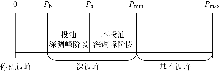
Fig.1
Diagram of peak shaving phase of thermal power unit

Tab.1
Life distribution data of a thermal power unit of GE company[8]
| 运行方式 | 损耗率/% | 累计运行次数 | 寿命损耗累积/% |
|---|---|---|---|
| 冷态启动 | 0.150 00 | 100 | 15 |
| 停机2 d后启动 | 0.010 00 | 500 | 5 |
| 停机8 h后启动 | 0.010 00 | 2 000 | 20 |
| 停机2 h后启动 | 0.050 00 | 100 | 5 |
| 大幅度变负荷 | 0.010 00 | 3 000 | 30 |
| 小幅度变负荷 | 0.000 25 | 20 000 | 5 |
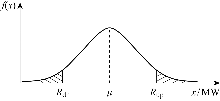
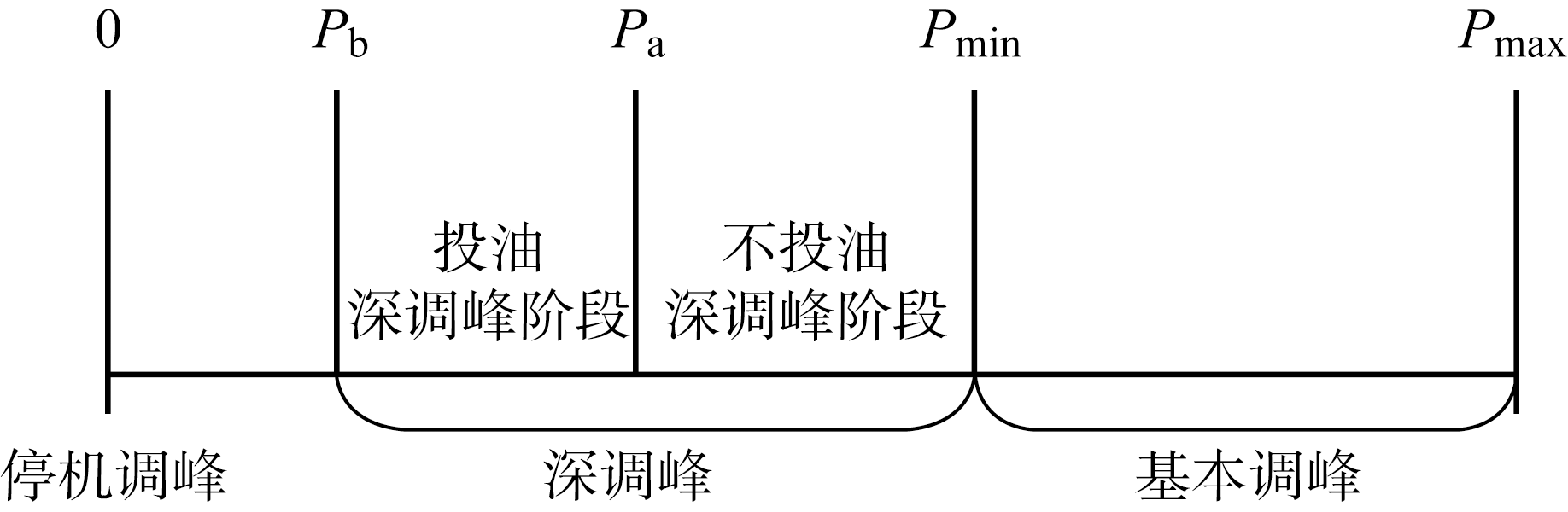
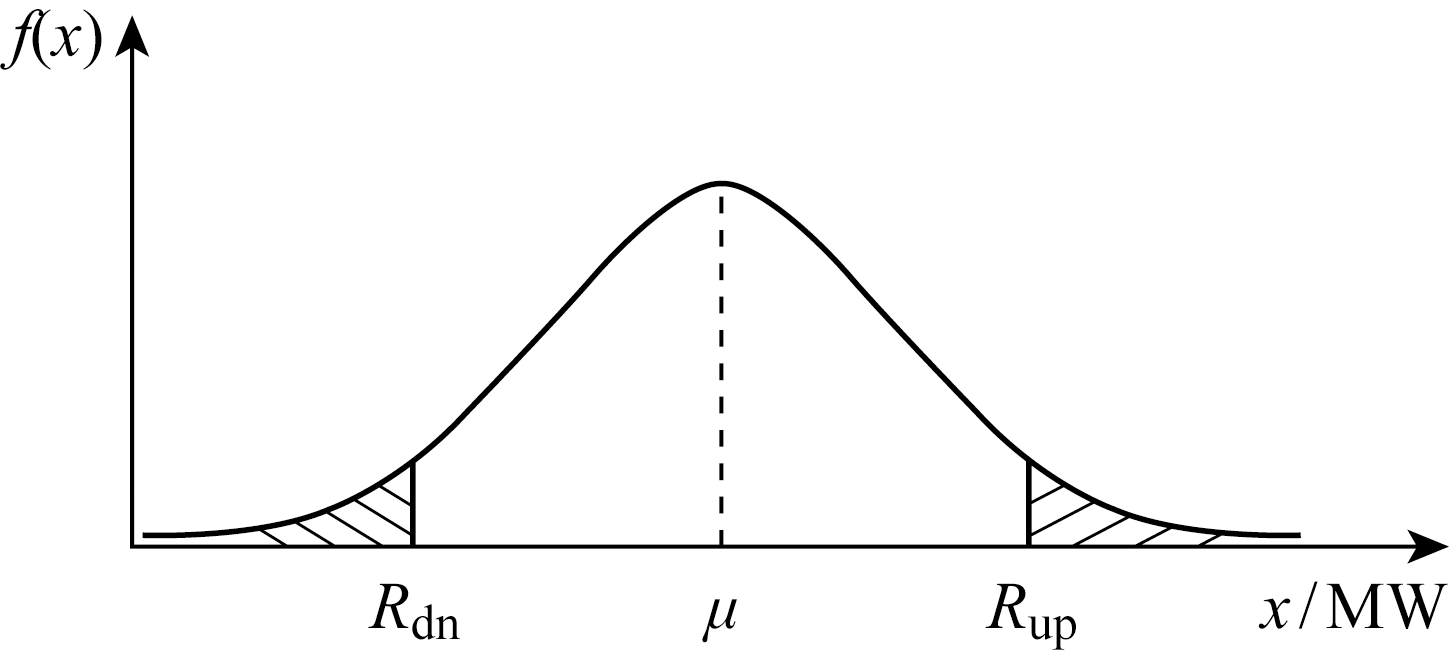
Fig.2
Probability density function of wind power prediction error
Tab.2
Unit parameter values
| 机组 编号 | 购机成本/ 万元 | 装机容量/ MW | 常规最小 出力/MW | 最大深 调峰/MW | 最大爬坡率/ (%·min-1) | 日最大 启停次数 | 发电耗量系数 | ||
|---|---|---|---|---|---|---|---|---|---|
| a/(元·MW-2) | b/(元·MW-1) | c/元 | |||||||
| 1、2 | 17250 | 1000 | 480 | 300 | 5 | 2 | 6.76 | 175.35 | 12830 |
| 3、4 | 10068 | 350 | 160 | 140 | 3 | 2 | 30.38 | 182.50 | 5843 |
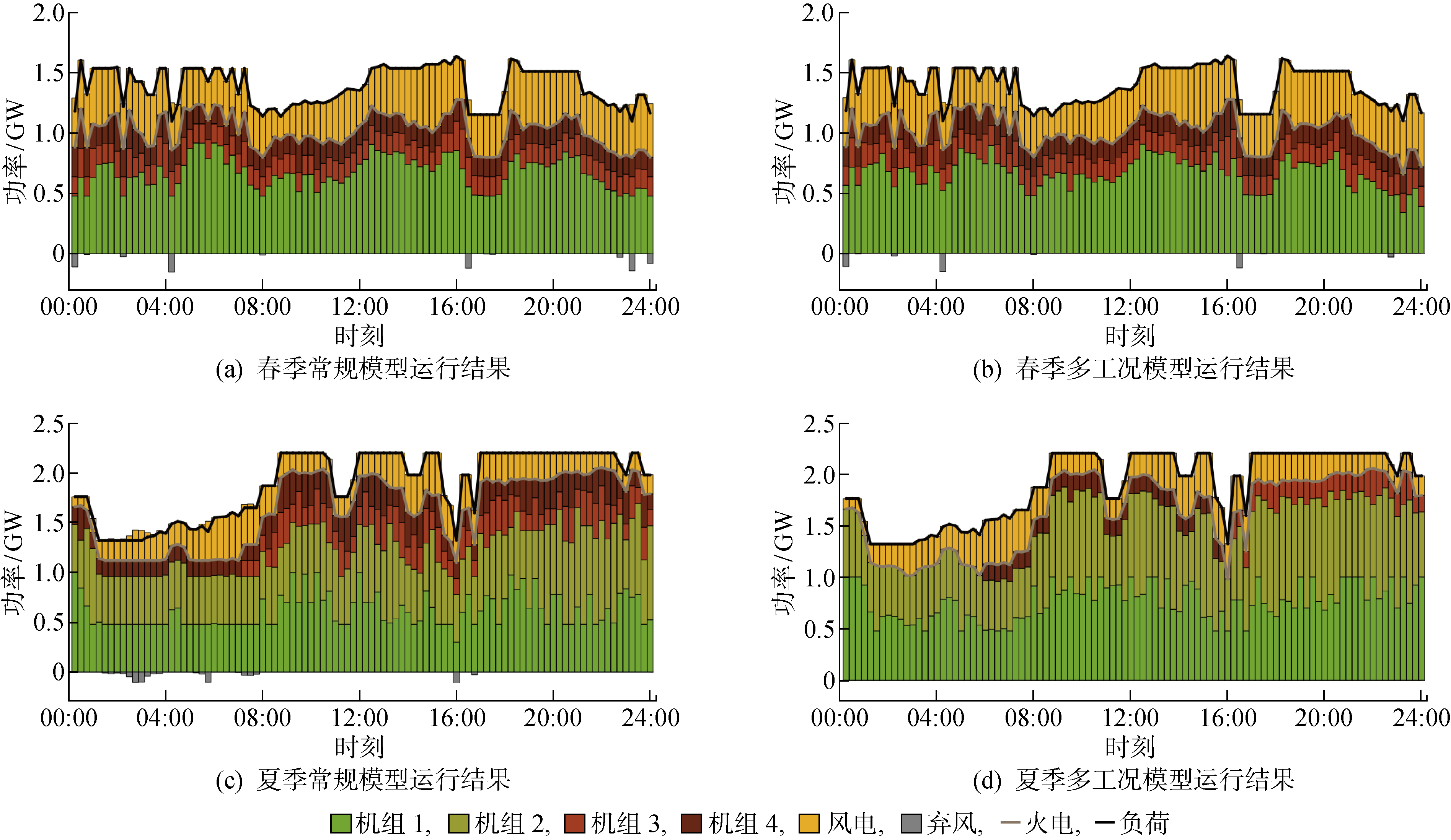
Fig.3
Operation of typical day
Tab.3
Index values of power system in typical day scenario
| 季节 | 模型 | 成本/ 万元 | 弃风电量/ (MW·h) | 折算电价/ [元·(kW·h)-1] |
|---|---|---|---|---|
| 春季 | A | 745.7 | 171.6 | 0.223 |
| B | 743.4 | 115.7 | 0.222 | |
| C | 746.4 | 171.6 | 0.223 | |
| 夏季 | A | 1 191.1 | 190.2 | 0.263 |
| B | 1 174.9 | 4.8 | 0.259 | |
| C | 1 250.5 | 190.2 | 0.276 |
Tab.4
Index values of medium-proportion wind power system (spring)
| 模型 | 成本/ 万元 | 弃风电量/ (MW·h) | 折算电价/[元· (kW·h)-1] | 1000 MW/350 MW 机型寿命损耗/% |
|---|---|---|---|---|
| A | 10 609.9 | 2 189.4 | 0.267 | 0.30/0.51 |
| B | 8 979.5 | 879.9 | 0.226 | 0.18/0.49 |
| C | 11 003.6 | 2 189.4 | 0.277 | 0.30/0.51 |
Tab.5
Index values of medium-proportion wind power system (summer)
| 模型 | 成本/ 万元 | 弃风电量/ (MW·h) | 折算电价/[元· (kW·h)-1] | 1000 MW/350 MW 机型寿命损耗/% |
|---|---|---|---|---|
| A | 16 602.7 | 1 273.1 | 0.285 | 0.89/0.91 |
| B | 15 892.4 | 237.6 | 0.273 | 0.49/0.45 |
| C | 16 263.7 | 1 273.1 | 0.279 | 0.89/0.91 |
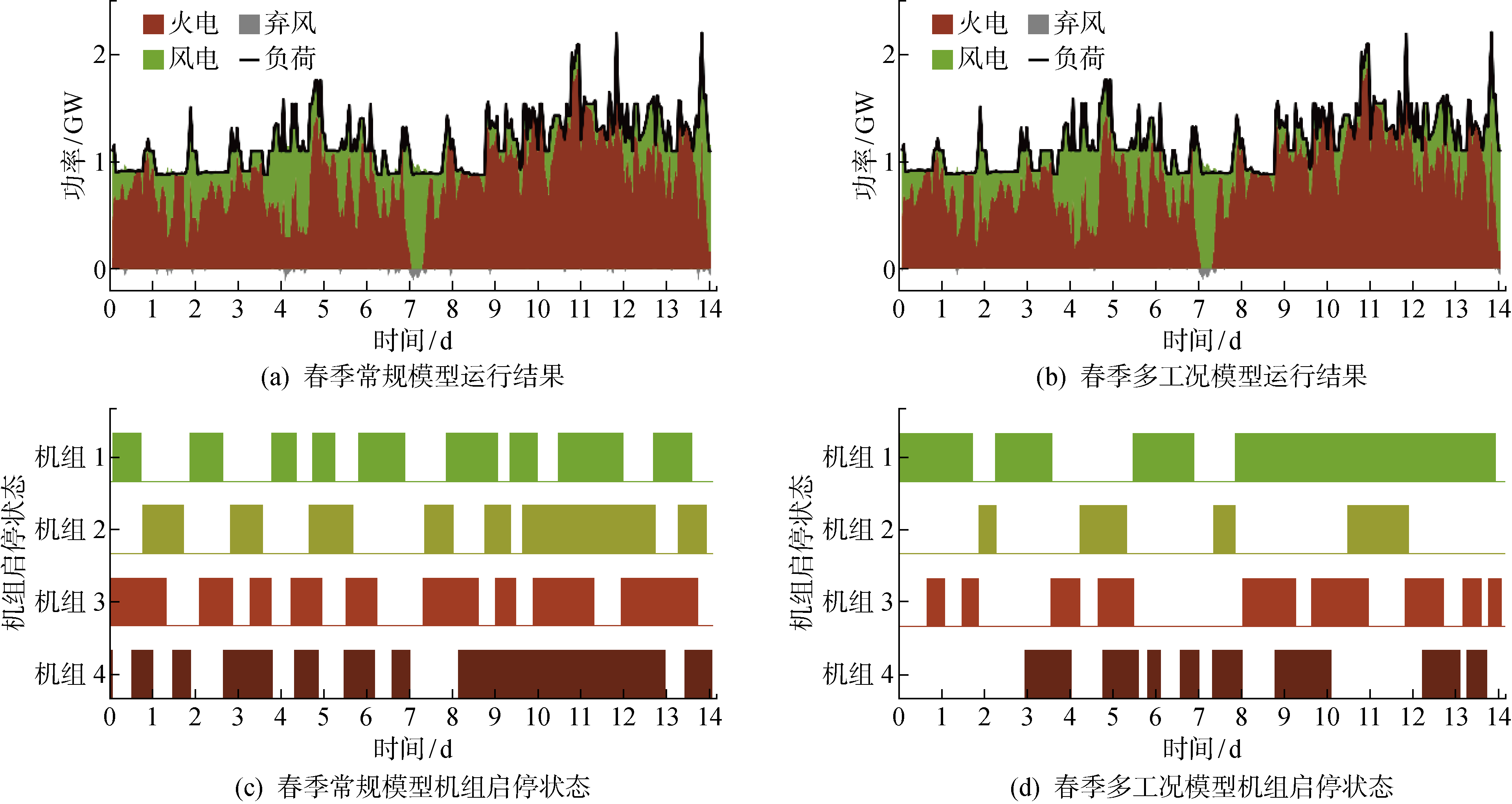
Fig.4
Operation results and unit startup and shutdown status of medium-proportion wind power system in spring
Tab.6
Startup and shutdown conditions of units in medium-proportion wind power system (spring)
| 模型 | 热态启动 次数 | 热态启动 平均时长/h | 温态启动 次数 | 温态启动 平均时长/h |
|---|---|---|---|---|
| A | 7 | 9 | 24 | 18.8 |
| B | 7 | 7 | 17 | 35.5 |
Tab.7
Startup and shutdown conditions of units in medium-proportion wind power system (summer)
| 模型 | 热态启动 次数 | 热态启动 平均时长/h | 温态启动 次数 | 温态启动 平均时长/h |
|---|---|---|---|---|
| A | 11 | 9.0 | 9 | 14.70 |
| B | 10 | 7.5 | 15 | 26.13 |

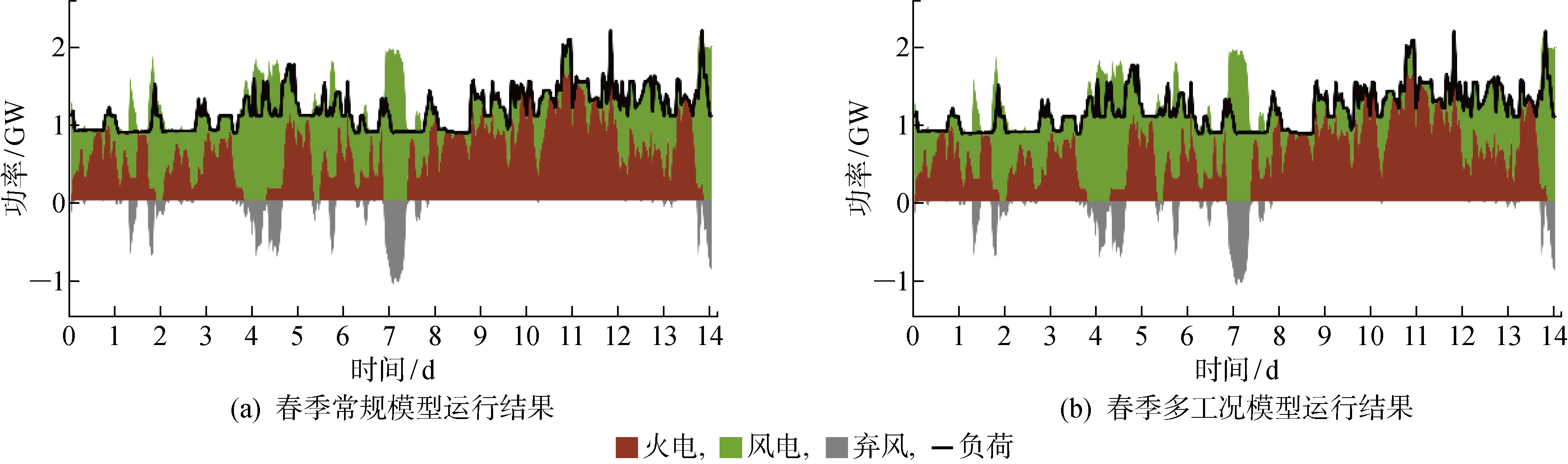
Fig.5
Operation results of high-proportion wind power system in spring
Tab.8
Index values of high-proportion wind power system (spring)
| 模型 | 成本/ 万元 | 弃风电量/ (MW·h) | 折算电价/[元· (kW·h)-1] | 1000 MW/350 MW 机型寿命损耗/% |
|---|---|---|---|---|
| A | 9 725.1 | 34 554.9 | 0.245 | 0.37/0.55 |
| B | 7 991.0 | 32 974.3 | 0.201 | 0.30/0.46 |
| C | 8 170.3 | 34 554.9 | 0.206 | 0.37/0.55 |
Fig.6
Wind power curtailment within load level in spring
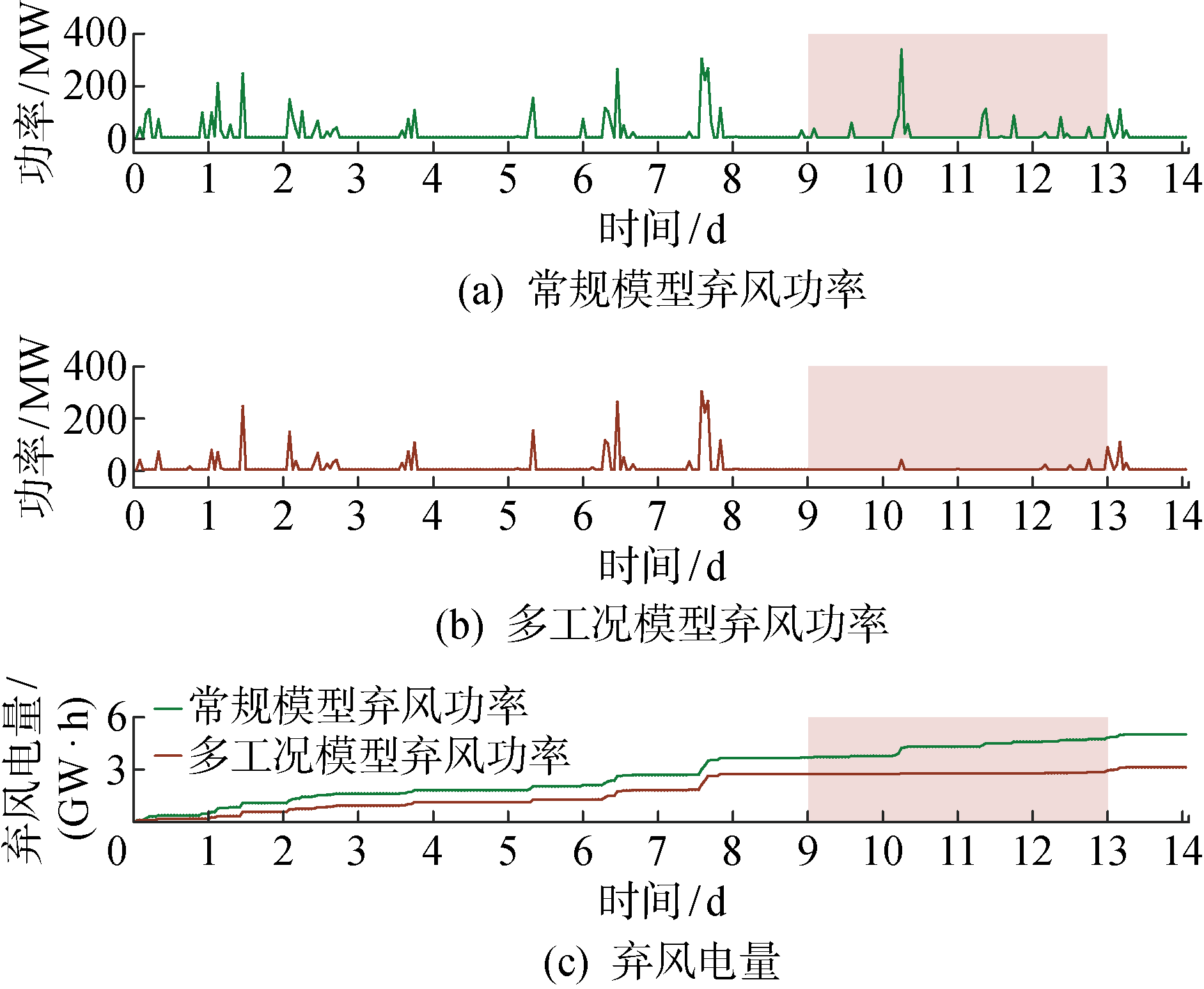

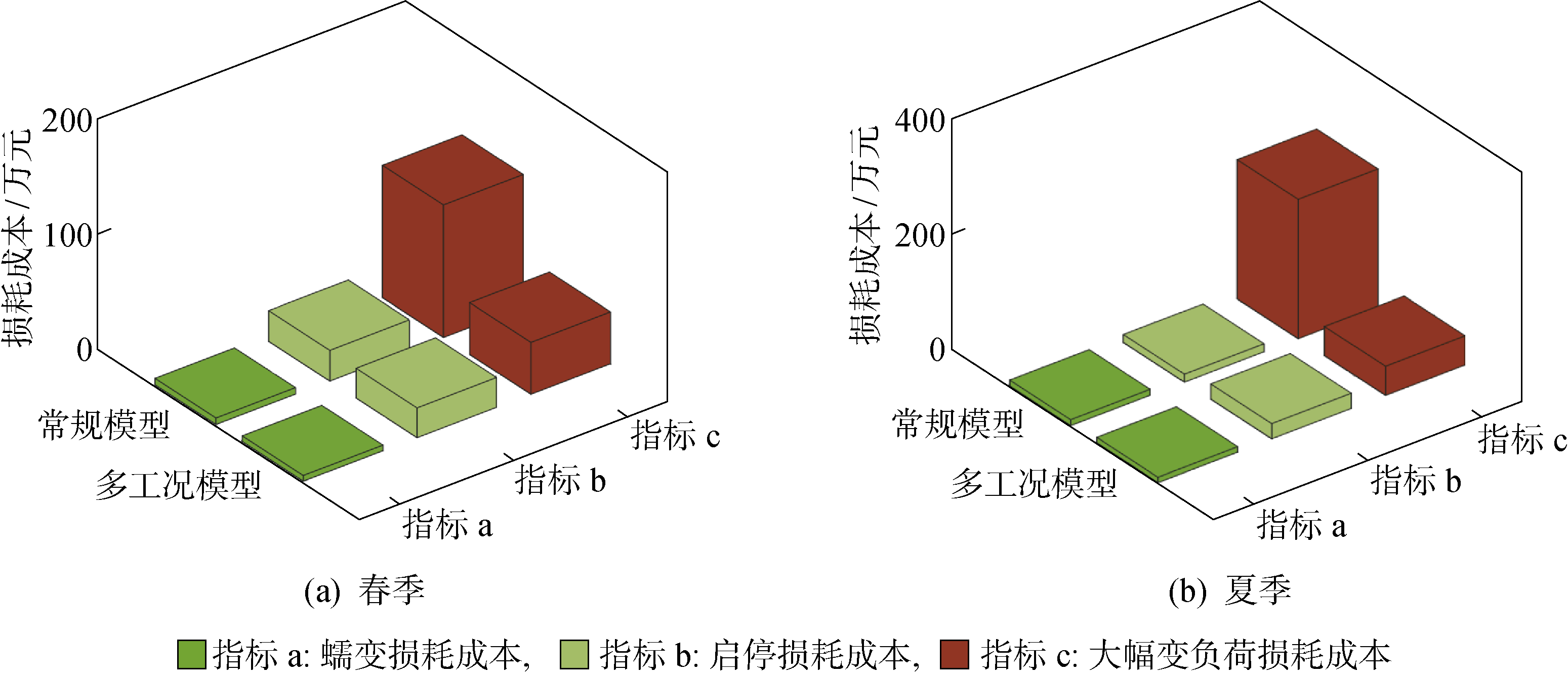
Fig.7
Life loss cost under various working conditions of thermal power unit
| [1] | BROUWER A S, VAN DEN BROEK M, SEEBREGTS A, et al. Operational flexibility and economics of power plants in future low-carbon power systems[J]. Applied Energy, 2015, 156: 107-128. |
| [2] | 刘永奇, 陈龙翔, 韩小琪. 能源转型下我国新能源替代的关键问题分析[J]. 中国电机工程学报, 2022, 42(2): 515-524. |
| LIU Yongqi, CHEN Longxiang, HAN Xiaoqi. The key problem analysis on the alternative new energy under the energy transition[J]. Proceedings of the CSEE, 2022, 42(2): 515-524. | |
| [3] | 金震杰, 纪冬梅, 吴凌轩. 某超超临界汽轮机转子蠕变-疲劳损伤分析及寿命评估[J]. 汽轮机技术, 2022, 64(2): 123-128. |
| JIN Zhenjie, JI Dongmei, WU Lingxuan. Creep-fatigue damage analysis and life assessment for a ultra-supercritical stream turbine rotor[J]. Turbine Technology, 2022, 64(2): 123-128. | |
| [4] | 赵乃龙, 吴穹, 王炜哲, 等. 超超临界汽轮机高压转子低周疲劳及损伤分析[J]. 上海交通大学学报, 2015, 49(5): 590-594. |
| ZHAO Nailong, WU Qiong, WANG Weizhe, et al. Numerical analysis of low-cycle fatigue and damage of a ultra-supercritical steam turbine high-pressure rotor[J]. Journal of Shanghai Jiao Tong University, 2015, 49(5): 590-594. | |
| [5] | 周新灵, 田宇, 李海霞, 等. 超超临界汽轮机高中压转子钢高温低周疲劳性能研究[J]. 机械工程师, 2013(7): 51-53. |
| ZHOU Xinling, TIAN Yu, LI Haixia, et al. Study on the high temperature low cycle fatigue behavior of ultra-supercritical turbine HP/IP rotor steel[J]. Mechanical Engineer, 2013(7): 51-53. | |
| [6] | ZHAO X, RU D H, WANG P, et al. Fatigue life prediction of a supercritical steam turbine rotor based on neural networks[J]. Engineering Failure Analysis, 2021, 127: 105435. |
| [7] | 刘华锋, 王炜哲, 蒋浦宁, 等. 超超临界汽轮机转子蠕变对低周疲劳应变的影响[J]. 动力工程学报, 2010, 30(9): 715-719. |
| LIU Huafeng, WANG Weizhe, JIANG Puning, et al. Influence of creep on low-cycle fatigue strain of ultra-supercritical steam turbine rotor[J]. Journal of Chinese Society of Power Engineering, 2010, 30(9): 715-719. | |
| [8] | 吴瑞康, 华敏, 秦攀, 等. 燃煤机组深度调峰对汽轮机设备的影响[J]. 热力发电, 2018, 47(5): 89-94. |
| WU Ruikang, HUA Min, QIN Pan, et al. Influence of deep peak load regulation of coal-fired units on turbine equipment[J]. Thermal Power Generation, 2018, 47(5): 89-94. | |
| [9] | JI D M, SUN J Q, SUN Q, et al. Optimization of start-up scheduling and life assessment for a steam turbine[J]. Energy, 2018, 160: 19-32. |
| [10] | 刘盛龙. 汽轮机转子损伤分析与启动过程优化研究[D]. 杭州: 浙江大学, 2020. |
| LIU Shenglong. Steam turbine rotor damage analysis and startup process optimization study[D]. Hangzhou: Zhejiang University, 2020. | |
| [11] | 程鹏, 钟芳源. 汽轮机转子蠕变-疲劳耦合寿命精细分析与传统方法的比较[J]. 动力工程, 1995, 15(6): 12-17. |
| CHENG Peng, ZHONG Fangyuan. Rotor life expenditure under the concurrent action of creep and fatigue: A precise analysis as compared with the conventional[J]. Journal of Chinese Society of Power Engineering, 1995, 15(6): 12-17. | |
| [12] | 荆建平, 孟光. 汽轮机转子疲劳强度理论研究现状与展望[J]. 汽轮机技术, 2003, 45(5): 260-264. |
| JING Jianping, MENG Guang. Survey of fatigue strength theory of turbine rotor[J]. Turbine Technology, 2003, 45(5): 260-264. | |
| [13] | 李一铭, 李文沅, 颜伟, 等. 基于机会约束规划模型降低机组寿命损耗的日调度计划[J]. 电网技术, 2014, 38(7): 1885-1890. |
| LI Yiming, LI Wenyuan, YAN Wei, et al. Daily generation scheduling for reducing losses of unit’s lives based on the chance constrained programming model[J]. Power System Technology, 2014, 38(7): 1885-1890. | |
| [14] | 陟晶, 张高航, 邵冲, 等. 含大规模风电及光热电站的电力系统优化调度方法[J]. 电力工程技术, 2021, 40(1): 79-85. |
| ZHI Jing, ZHANG Gaohang, SHAO Chong, et al. Optimal dispatching method for power system with large scale wind power and concentrated solar power plant[J]. Electric Power Engineering Technology, 2021, 40(1): 79-85. | |
| [15] | 邓婷婷, 娄素华, 田旭, 等. 计及需求响应与火电深度调峰的含风电系统优化调度[J]. 电力系统自动化, 2019, 43(15): 34-41. |
| DENG Tingting, LOU Suhua, TIAN Xu, et al. Optimal dispatch of power system integrated with wind power considering demand response and deep peak regulation of thermal power units[J]. Automation of Electric Power Systems, 2019, 43(15): 34-41. | |
| [16] |
程韧俐, 李江南, 周保荣, 等. 含碳捕集-电转气的风光火储一体化系统优化运行[J]. 上海交通大学学报, 2024, 58(5): 709-718.
doi: 10.16183/j.cnki.jsjtu.2022.270 |
| CHENG Renli, LI Jiangnan, ZHOU Baorong, et al. Operation optimization for integrated system of wind-PV-thermal-storage with CC-P2G[J]. Journal of Shanghai Jiao Tong University, 2024, 58(5): 709-718. | |
| [17] | 宋晓辉, 李晓飞, 蔺奕存, 等. 二次再热1 000 MW燃煤机组(极)热态启动过程切缸与并缸故障分析及处理[J]. 热力发电, 2022, 51(4): 141-149. |
| SONG Xiaohui, LI Xiaofei, LIN Yicun, et al. Analysis and treatment of cylinder cutting and cylinder merging during(extremely)hot start-up in double-reheat 1 000 MW coal-fired unit[J]. Thermal Power Generation, 2022, 51(4): 141-149. | |
| [18] | 赵振锐, 朱忠芳. 350 MW超临界机组跳闸后极热态启动过程的探讨[J]. 山西电力, 2018(1): 48-51. |
| ZHAO Zhenrui, ZHU Zhongfang. Discussion on 350 MW supercritical unit extreme hot start-up process after tripping[J]. Shanxi Electric Power, 2018(1): 48-51. | |
| [19] |
夏芹芹, 罗永捷, 王荣茂, 等. 考虑新能源爬坡的风光火耦合系统源荷匹配性分析及容量优化配置[J]. 上海交通大学学报, 2024, 58(1): 69-81.
doi: 10.16183/j.cnki.jsjtu.2022.260 |
| XIA Qinqin, LUO Yongjie, WANG Rongmao, et al. Source-load matching analysis and optimal planning of wind-solar-thermal coupled system considering renewable energy ramps[J]. Journal of Shanghai Jiao Tong University, 2024, 58(1): 69-81. | |
| [20] | 赵振宙, 王同光, 郑源. 风力机原理[M]. 北京: 中国水利水电出版社, 2016. |
| ZHAO Zhenzhou, WANG Tongguang, ZHENG Yuan. Wind turbine principle[M]. Beijing: China Water & Power Press, 2016. | |
| [21] | 于强. 新建火力发电厂精细化调试及管理[D]. 南京: 东南大学, 2018. |
| YU Qiang. Fine debugging and management of new thermal power plant[D]. Nanjing: Southeast University, 2018. | |
| [22] | 郭力, 杨书强, 刘一欣, 等. 风光储微电网容量规划中的典型日选取方法[J]. 中国电机工程学报, 2020, 40(8): 2468-2479. |
| GUO Li, YANG Shuqiang, LIU Yixin, et al. Typical day selection method for capacity planning of microgrid with wind turbine-photovoltaic and energy storage[J]. Proceedings of the CSEE, 2020, 40(8): 2468-2479. | |
| [23] |
刘子旭, 米阳, 卢长坤, 等. 计及需求响应和风力发电消纳的电-热系统低碳优化调度[J]. 上海交通大学学报, 2023, 57(7): 835-844.
doi: 10.16183/j.cnki.jsjtu.2022.056 |
| LIU Zixu, MI Yang, LU Changkun, et al. Low-carbon optimal dispatch of electric-thermal system considering demand response and wind power consumption[J]. Journal of Shanghai Jiao Tong University, 2023, 57(7): 835-844. | |
| [24] |
顾慧杰, 周华锋, 彭超逸, 等. 含抽水蓄能电站的高比例新能源发电系统多时间尺度调度模型[J]. 上海交通大学学报, 2024, 58(12): 1957-1967.
doi: 10.16183/j.cnki.jsjtu.2023.123 |
| GU Huijie, ZHOU Huafeng, PENG Chaoyi, et al. A multi-time scale scheduling model for power generation system with high proportion of new energy including pumped storage power station[J]. Journal of Shanghai Jiao Tong University, 2024, 58(12): 1957-1967. |
| [1] | ZHENG Yuxi, ZENG Long, LIU Jianzhe, CUI Yiyang, ZHU Hong, CAO Liang, SU Yun, WEI Lei. Line Transmission Constraints Effectiveness Patterns and Similarity Mining Methods in Large-Scale Power Grid Unit Commitment [J]. Journal of Shanghai Jiao Tong University, 2025, 59(9): 1260-1269. |
| [2] | CUI Yiyang, PAN Dounan, LI Canbing, LIU Jianzhe. An Optimization Method for Iteration Path Search of Large-Scale Power Grid Unit Commitment State [J]. Journal of Shanghai Jiao Tong University, 2025, 59(6): 711-719. |
| [3] | ZHANG Lei, LI Ran, TANG Lun, CHEN Sijie, ZHAO Shizhen, SU Fu. Neural Branching Power-Computation Network Fast Optimization Method Considering Computing Demand Response [J]. Journal of Shanghai Jiao Tong University, 2025, 59(11): 1592-1602. |
| [4] | YE Lun, OUYANG Xu, YAO Jiangang, YANG Shengjie, YIN Jungang. Reliability Index Calculation and Reserve Capacity Optimization Considering Multiple Uncertainties [J]. Journal of Shanghai Jiao Tong University, 2024, 58(1): 30-39. |
| [5] | PAN Qian1*(潘谦), HE Xing1 (何星), CAI Yun-ze1 (蔡云泽),WANG Zhi-hua2 (王治华), SU Fan2 (苏凡). Improved Real-Coded Genetic Algorithm Solution for Unit Commitment Problem Considering Energy Saving and Emission Reduction Demands [J]. Journal of shanghai Jiaotong University (Science), 2015, 20(2): 218-223. |
| Viewed | ||||||
|
Full text |
|
|||||
|
Abstract |
|
|||||
