

上海交通大学学报 ›› 2026, Vol. 60 ›› Issue (6): 932-942.doi: 10.16183/j.cnki.jsjtu.2024.297
王义1( ), 阮艺铭1, 邓家辉1, 吴坡2, 刘明洋2
收稿日期:2024-07-25
修回日期:2024-09-30
接受日期:2024-11-11
出版日期:2026-06-28
发布日期:2026-07-02
作者简介:王 义(1992—),副教授,从事新能源电力系统建模与分析控制、综合能源系统优化调度、电力系统态势感知研究. E-mail: yiwang@zzu.edu.cn.
基金资助:
WANG Yi1(), RUAN Yiming1, DENG Jiahui1, WU Po2, LIU Mingyang2
Received:2024-07-25
Revised:2024-09-30
Accepted:2024-11-11
Online:2026-06-28
Published:2026-07-02
摘要:
双馈风电场动态等值建模依赖于特定扰动,故难以获取普适性强的等值模型.针对该问题,提出一种基于数据驱动的双馈风电场动态等值建模方法.首先,将双馈风电机组的数学模型简化为一组方程式;其次,选择与该方程式具有相似性的神经网络并进行组合,构建包含特征记忆层、信息流加速层和数据关系映射层的残差组合神经网络,用于对风电场详细模型进行等值简化;然后,使用遗传算法优化该组合网络3个组成部分的主要参数.最后,以河南某典型风电场为例进行测试分析.结果表明:所提基于残差组合神经网络的风电场建模方法能够精准刻画风电场输出响应特性,具有更高建模精度.
中图分类号:
王义, 阮艺铭, 邓家辉, 吴坡, 刘明洋. 基于残差组合神经网络的双馈风电场动态等值建模[J]. 上海交通大学学报, 2026, 60(6): 932-942.
WANG Yi, RUAN Yiming, DENG Jiahui, WU Po, LIU Mingyang. Dynamic Equivalence Modeling of Doubly-Fed Wind Farm Based on Residual Combined Neural Network[J]. Journal of Shanghai Jiao Tong University, 2026, 60(6): 932-942.

图1
风电场数据驱动等值模型


图2
网络结构图


图3
基于遗传算法的模型参数优化流程图

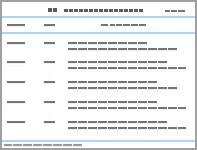
表1
风电场详细参数
| 设备名称 | 参数名称 | 参数值 |
|---|---|---|
| 发电机 | 额定功率/MW | 2.5 |
| 发电机 | 频率/Hz | 50 |
| 发电机 | 额定电压/kV | 0.69 |
| 发电机 | 定子电阻, | 0.0098 |
| 发电机 | 转子电阻, | 0.0093 |
| 发电机 | 定子电抗, | 0.0086 |
| 发电机 | 转子电抗, | 0.0094 |
| 发电机 | 励磁电抗, | 4.186 |
| 线路 | 线路电阻,Rp.u. | 0.01725 |
| 线路 | 线路电抗,Xp.u. | 0.05522 |
| 风力机 | 切入风速/(m·s-1) | 3 |
| 风力机 | 切出风速/(m·s-1) | 25 |
| 风力机 | 额定风速/(m·s-1) | 11.8 |
| 风力机 | 叶轮半径/m | 35.2 |
| 变压器 | 箱变容量/(MV·A) | 2.75 |
| 变压器 | 升压变容量/(MV·A) | 100 |

图4
适应度函数指标变化过程


图5
GA优化前、后模型等值结果(有功功率)


图6
GA优化前、后模型等值结果(无功功率)


图7
不同模型建模效果对比(有功功率)


图8
不同模型建模效果对比(无功功率)

表2
6种模型在有功功率数据上建模性能对比
| 模型 | e2 | 训练耗时/s |
|---|---|---|
| 单层LSTM | 1.66×10⁻⁴ | 38.90 |
| 单层GRU | 1.54×10⁻⁴ | 37.57 |
| 双层LSTM | 2.05×10⁻⁴ | 45.15 |
| 双层GRU | 1.62×10⁻⁴ | 44.98 |
| GRU-LSTM-FC | 1.84×10⁻⁴ | 42.76 |
| 所提模型 | 4.28×10⁻⁵ | 62.56 |
表3
6种模型在无功功率数据上建模性能对比
| 模型 | e2 | 训练耗时/s |
|---|---|---|
| 单层LSTM | 1.20×10⁻⁴ | 39.43 |
| 单层GRU | 8.80×10⁻⁵ | 37.78 |
| 双层LSTM | 8.84×10⁻⁵ | 45.96 |
| 双层GRU | 9.28×10⁻⁵ | 46.45 |
| GRU-LSTM-FC | 6.52×10⁻⁵ | 45.21 |
| 所提模型 | 1.69×10⁻⁵ | 63.16 |

图9
训练过程中损失函数变化

表4
机理建模机组分群聚类结果
| 聚类结果 | 风电机组编号 |
|---|---|
| 1 | 4,7,8,24,27,30,33,34,35,36,39,40 |
| 2 | 10,11,15 |
| 3 | 1,2,3,13,14,16,17,18,38 |
| 4 | 5,6,9,12,19,20,21,22,23,25,26,28,29,31,32,37 |

图10
所提模型与四机等值模型结果对比(有功功率)


图11
所提模型与四机等值模型结果对比(无功功率)

| [1] |
魏娟, 黎灿兵, 黄晟, 等. 大规模风电场高电压穿越控制方法研究综述[J]. 上海交通大学学报, 2024, 58(6): 783-797.
doi: 10.16183/j.cnki.jsjtu.2022.416 |
| WEI Juan, LI Canbing, HUANG Sheng, et al. Review of high voltage ride-through control method of large-scale wind farm[J]. Journal of Shanghai Jiao Tong University, 2024, 58(6): 783-797. | |
| [2] | 中华人民共和国国家能源局. 国家能源局发布2023年全国电力工业统计数据[J]. 电力科技与环保, 2024, 40(1): 95. |
| National Energy Administration of People’s Republic of China. National Energy Administration released statistical data of national electric power industry in 2023[J]. Electric Power Environmental Protection, 2024, 40(1): 95. | |
| [3] | Global Wind Energy Council. Global wind report 2024[EB/OL]. (2024-04-16)[2024-07-16]. https://gwec.net/global-wind-report-2024/. |
| [4] | 孙华东, 李佳豪, 李文锋, 等. 大规模电力系统仿真用新能源场站模型结构及建模方法研究(一): 模型结构[J]. 中国电机工程学报, 2023, 43(4): 1378-1389. |
| SUN Huadong, LI Jiahao, LI Wenfeng, et al. Research on model structures and modeling methods of renewable energy station for large-scale power system simulation (Part Ⅰ): Model structure[J]. Proceedings of the CSEE, 2023, 43(4): 1378-1389. | |
| [5] |
HANSEN A D, SØRENSEN P, BLAABJERG F, et al. Dynamic modelling of wind farm grid interaction[J]. Wind Engineering, 2002, 26(4): 191-210.
doi: 10.1260/030952402321039403 URL |
| [6] |
LI W X, CHAO P P, LIANG X D, et al. An improved single-machine equivalent method of wind power plants by calibrating power recovery behaviors[J]. IEEE Transactions on Power Systems, 2018, 33(4): 4371-4381.
doi: 10.1109/TPWRS.2017.2771323 URL |
| [7] | 吴磊, 晁璞璞, 李甘, 等. 数据-模型混合驱动的风电场聚合等值建模方法[J]. 电力系统自动化, 2022, 46(15): 66-74. |
| WU Lei, CHAO Pupu, LI Gan, et al. Hybrid data-model-driven aggregation equivalent modeling method for wind farm[J]. Automation of Electric Power Systems, 2022, 46(15): 66-74. | |
| [8] | 米增强, 苏勋文, 杨奇逊, 等. 风电场动态等值模型的多机表征方法[J]. 电工技术学报, 2010, 25(5): 162-169. |
| MI Zengqiang, SU Xunwen, YANG Qixun, et al. Multi-machine representation method for dynamic equivalent model of wind farms[J]. Transactions of China Electrotechnical Society, 2010, 25(5): 162-169. | |
| [9] |
余浩, 黎灿兵, 叶志亮, 等. 计及尾流效应的风电场短路故障动态等值建模[J]. 上海交通大学学报, 2024, 58(6): 798-805.
doi: 10.16183/j.cnki.jsjtu.2022.476 |
| YU Hao, LI Canbing, YE Zhiliang, et al. Dynamic equivalence modeling of short-circuit faults in wind farms considering wake effects[J]. Journal of Shanghai Jiao Tong University, 2024, 58(6): 798-805. | |
| [10] | 贾科, 孔繁哲, 张旸, 等. 基于改进K-均值算法的双馈风场故障等值建模方法[J]. 电网技术, 2023, 47(10): 4161-4173. |
| JIA Ke, KONG Fanzhe, ZHANG Yang, et al. Fault equivalent modeling of doubly fed wind farm based on improved K-means algorithm[J]. Power System Technology, 2023, 47(10): 4161-4173. | |
| [11] |
GENG X Y, MU Y K, MAO S L, et al. An improved K-means algorithm based on fuzzy metrics[J]. IEEE Access, 2020, 8: 217416-217424.
doi: 10.1109/Access.6287639 URL |
| [12] | 杨茂, 张罗宾. 基于数据驱动的超短期风电功率预测综述[J]. 电力系统保护与控制, 2019, 47(13): 171-186. |
| YANG Mao, ZHANG Luobin. Review on ultra-short term wind power forecasting based on data-driven approach[J]. Power System Protection & Control, 2019, 47(13): 171-186. | |
| [13] | 范高锋, 王伟胜, 刘纯, 等. 基于人工神经网络的风电功率预测[J]. 中国电机工程学报, 2008, 28(34): 118-123. |
| FAN Gaofeng, WANG Weisheng, LIU Chun, et al. Wind power prediction based on artificial neural network[J]. Proceedings of the CSEE, 2008, 28(34): 118-123. | |
| [14] | ZHENG C, WANG S R, LIU Y L, et al. A novel equivalent model of active distribution networks based on LSTM[J]. IEEE Transactions on Neural Networks & Learning Systems, 2019, 30(9): 2611-2624. |
| [15] | 牛哲文, 余泽远, 李波, 等. 基于深度门控循环单元神经网络的短期风功率预测模型[J]. 电力自动化设备, 2018, 38(5): 36-42. |
| NIU Zhewen, YU Zeyuan, LI Bo, et al. Short-term wind power forecasting model based on deep gated recurrent unit neural network[J]. Electric Power Automation Equipment, 2018, 38(5): 36-42. | |
| [16] |
邵宜祥, 刘剑, 胡丽萍, 等. 一种改进组合神经网络的超短期风速预测方法研究[J]. 发电技术, 2024, 45(2): 323-330.
doi: 10.12096/j.2096-4528.pgt.22038 |
|
SHAO Yixiang, LIU Jian, HU Liping, et al. Research on an ultra-short-term wind speed prediction method based on improved combined neural networks[J]. Power Generation Technology, 2024, 45(2): 323-330.
doi: 10.12096/j.2096-4528.pgt.22038 |
|
| [17] |
胡德凤, 张晨曦, 汪世涛, 等. 基于深度信号处理和堆叠残差GRU的刀具磨损智能预测模型[J]. 计算机科学, 2021, 48(6): 175-183.
doi: 10.11896/jsjkx.210100101 |
|
HU Defeng, ZHANG Chenxi, WANG Shitao, et al. Intelligent prediction model of tool wear based on deep signal processing and stacked-ResGRU[J]. Computer Science, 2021, 48(6): 175-183.
doi: 10.11896/jsjkx.210100101 |
|
| [18] | 余欣梅, 陈豪君, 王星华. 基于深度神经网络的DFIG低电压穿越技术研究[J]. 南方能源建设, 2021, 8(3): 122-130. |
| YU Xinmei, CHEN Haojun, WANG Xinghua. Research on low voltage ride through technology of DFIG based on deep neural networks[J]. Southern Energy Construction, 2021, 8(3): 122-130. | |
| [19] | KATOCH S, CHAUHAN S S, KUMAR V. A review on genetic algorithm: Past, present, and future[J]. Multimedia Tools & Applications, 2021, 80(5): 8091-8126. |
| [20] | 丁新虎, 潘学萍, 和大壮, 等. 基于GA优化GRU-LSTM-FC组合网络的风电场动态等值建模[J]. 电力自动化设备, 2023, 43(8): 119-125. |
| DING Xinhu, PAN Xueping, HE Dazhuang, et al. Wind farm dynamic equivalent modeling by GA-optimized GRU-LSTM-FC combined network[J]. Electric Power Automation Equipment, 2023, 43(8): 119-125. | |
| [21] | 中国电力科学研究院. PSASP 7.0版动态元件库用户手册[EB/OL]. (2023-03-01)[2024-07-16]. https://www.docin.com/p-826860807.html. |
| China Electric Power Research Institute. Mannual of power system analysis software package V7.0[EB/OL]. (2023-03-01)[2024-07-16]. https://www.docin.com/p-826860807.html. | |
| [22] | 卫慧, 陈鹏, 张芮菡, 等. 基于长短期记忆网络的大型漂浮式风力发电机平台运动极短期预报方法[J]. 上海交通大学学报, 2023, 57(Sup.1): 37-45. |
| WEI Hui, CHEN Peng, ZHANG Ruihan, et al. Ultra-short-term platform motion prediction method of large floating wind turbines based on LSTM network[J]. Journal of Shanghai Jiao Tong University, 2023, 57(Sup.1): 37-45. | |
| [23] | 王凇瑶, 张智晟. 基于量子加权多层级GRU神经网络的综合能源系统多元负荷短期预测[J]. 电力系统保护与控制, 2022, 50(23): 85-93. |
| WANG Songyao, ZHANG Zhisheng. Short-term multivariate load forecasting of an integrated energy system based on a quantum weighted multi-hierarchy gated recurrent unit neural network[J]. Power System Protection & Control, 2022, 50(23): 85-93. | |
| [24] | HE K M, ZHANG X Y, REN S Q, et al. Deep residual learning for image recognition[C]// 2016 IEEE Conference on Computer Vision and Pattern Recognition. Las Vegas, USA: IEEE, 2016: 770-778. |
| [25] | 吴红斌, 何叶, 赵波, 等. 基于改进K-means聚类算法的风电场动态等值[J]. 太阳能学报, 2018, 39(11): 3232-3238. |
| WU Hongbin, HE Ye, ZHAO Bo, et al. Research on dynamic equivalent of wind farm based on improved K-means clustering algorithm[J]. Acta Energiae Solaris Sinica, 2018, 39(11): 3232-3238. |
| [1] | 吴泽林, 罗风, 崔曦文, 程鑫, 夏唐斌. 融合深度学习的油田柱塞式注水泵不平衡数据故障诊断方法[J]. 上海交通大学学报, 2026, 60(6): 1017-1025. |
| [2] | 乔立捷, 董含, 冯可云, 李子洲, 郝琛, 王炜哲, 赵新宝. 透平叶片温度场快速预测的数据驱动降阶模型[J]. 上海交通大学学报, 2026, 60(6): 1026-1033. |
| [3] | 陈昕昊, 姜季江, 许玉旺, 付世晓, 刘成龙, 宋斌. 基于改进遗传算法的海上浮式生产储油轮码头抗台系泊缆系统参数优化方法[J]. 上海交通大学学报, 2026, 60(6): 985-995. |
| [4] | 吴亚军, 康英伟. 基于深度迁移学习的燃气轮机燃烧室故障预警[J]. 上海交通大学学报, 2026, 60(5): 848-859. |
| [5] | 李诗杰, 刘泰序, 刘佳仑, 董智霖, 徐诚祺. 基于GRU-MPC的双全回转推进拖轮轨迹跟踪控制[J]. 上海交通大学学报, 2026, 60(3): 418-426. |
| [6] | 梁佳铭, 余音, 胡祎乐. 基于时空神经网络的金属疲劳裂纹扩展预测[J]. 上海交通大学学报, 2026, 60(3): 511-521. |
| [7] | . 低渗油井节能生产参数多目标优化方法[J]. J Shanghai Jiaotong Univ Sci, 2026, 31(2): 486-498. |
| [8] | . DSNet:用于语音情感识别的带有中性校准的解耦孪生网络[J]. J Shanghai Jiaotong Univ Sci, 2026, 31(2): 248-257. |
| [9] | 夏筱彦, 张宇, 胡锡坤, 钟平. 基于扩散模型的无人机遥感目标检测物理对抗攻击方法研究[J]. 空天防御, 2026, 9(1): 52-62. |
| [10] | . 类间隙滞后非线性系统复合双通道干扰估计自适应控制器设计[J]. J Shanghai Jiaotong Univ Sci, 2026, 31(1): 106-116. |
| [11] | 李湘, 陈思远, 张俊, 柯德平, 高杰迈, 杨欢欢. 基于物理信息嵌入的非固定长度电力系统暂态稳定快速评估[J]. 上海交通大学学报, 2025, 59(7): 962-970. |
| [12] | . 基于深度学习序列方法的多人姿态估计用来检测人体与关键点位置[J]. J Shanghai Jiaotong Univ Sci, 2025, 30(6): 1103-1113. |
| [13] | 王晓倩, 周羽生, 毛源军, 李彬, 周文晴, 苏盛. 基于神经网络分位数的分布式光伏发电功率异常识别方法[J]. 上海交通大学学报, 2025, 59(6): 836-844. |
| [14] | 曾金灿, 何耿生, 李姚旺, 杜尔顺, 张宁, 朱浩骏. 基于卷积神经网络与轻量级梯度提升树组合模型的电力行业短期以电折碳方法[J]. 上海交通大学学报, 2025, 59(6): 746-757. |
| [15] | 潘美琪, 贺兴. 基于零样本学习的风力机故障诊断方法[J]. 上海交通大学学报, 2025, 59(5): 561-568. |
| 阅读次数 | ||||||
|
全文 |
|
|||||
|
摘要 |
|
|||||
