

上海交通大学学报 ›› 2026, Vol. 60 ›› Issue (4): 550-562.doi: 10.16183/j.cnki.jsjtu.2024.357
邓美玲, 陈永进( ), 白振毅
收稿日期:2024-09-12
修回日期:2024-11-13
接受日期:2025-01-09
出版日期:2026-04-28
发布日期:2025-02-26
通讯作者:
陈永进
E-mail:516467122@qq.com
作者简介:邓美玲(1987—),工程师,本科生,从事新能源发电并网技术、配网规划运行等研究.
基金资助:
DENG Meiling, CHEN Yongjin(), BAI Zhenyi
Received:2024-09-12
Revised:2024-11-13
Accepted:2025-01-09
Online:2026-04-28
Published:2025-02-26
Contact:
CHEN Yongjin
E-mail:516467122@qq.com
摘要:
大规模分布式光伏接入配电网容易引发线路重过载、电压失稳等问题,现有以经济性为核心的配电网光伏承载能力优化评估方法难以满足电压稳定性要求.为此,提出一种基于静态电压稳定裕度的配电网分布式光伏承载能力量化方法.首先,推导以光伏输出功率表征的静态电压稳定指标解析式,揭示分布式光伏出力与静态电压稳定指标之间的二次函数关系.其次,以分布式光伏接入容量最大为优化目标,综合考虑静态电压稳定裕度、配电网线损率、电压幅值以及无功补偿装置等约束,建立配电网分布式光伏承载能力量化模型,并采用改进的自适应遗传算法求解该非线性模型.最后,以IEEE 33节点系统为例进行分析,验证了所提方法可有效指导配电网分布式光伏的建设.
中图分类号:
邓美玲, 陈永进, 白振毅. 基于静态电压稳定裕度的配电网分布式光伏承载能力量化方法[J]. 上海交通大学学报, 2026, 60(4): 550-562.
DENG Meiling, CHEN Yongjin, BAI Zhenyi. Quantification Method for Distributed Photovoltaic Hosting Capacity of Distribution Networks Based on Static Voltage Stability Margin[J]. Journal of Shanghai Jiao Tong University, 2026, 60(4): 550-562.

图1
配电网两节点支路模型


图2
含分布式光伏接入的配电网两节点支路模型


图3
遗传算法求解流程


图4
IEEE 33节点系统


图5
各节点的LSVS值


图6
光伏和负荷功率增长对节点6的LSVS 值的影响


图7
光伏接入对系统电压稳定性的影响


图8
光伏不同接入方案对系统负荷功率裕度的影响


图9
系统功率-电压曲线

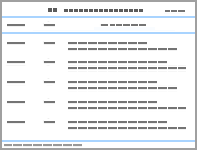
表1
光伏集中式接入对配电网电压稳定性的影响
| 光伏 接入节点 | 薄弱 节点 | LSVS值 | 崩溃电压 标幺值 | 系统负荷功率 裕度/MW |
|---|---|---|---|---|
| 4 | 6 | 0.3597 | 0.7004 | 2.8282 |
| 6 | 6 | 0.2742 | 0.7327 | 3.2567 |
| 15 | 6 | 0.2722 | 0.7309 | 3.5316 |
| 18 | 6 | 0.2750 | 0.7277 | 3.4483 |
| 22 | 6 | 0.3649 | 0.6559 | 2.5934 |
| 33 | 28 | 0.2721 | 0.7304 | 3.3002 |
表2
光伏分散式接入对配电网电压稳定性的影响
| 光伏接入节点 | LSVS值 | 崩溃电压 标幺值 | 系统负荷 功率裕度/MW |
|---|---|---|---|
| 6 | 0.2742 | 0.7327 | 3.2567 |
| 6、18 | 0.2715 | 0.7330 | 3.5452 |
| 6、18、28 | 0.2705 | 0.7205 | 3.7962 |
| 6、18、28、31 | 0.2696 | 0.6838 | 4.2584 |
| 9、12、25、31 | 0.2902 | 0.6893 | 3.7930 |

图10
负荷与光伏特性对LSVS值的影响


图11
全年的LSVS值波动情况


图12
迭代收敛曲线


图13
配电网各节点光伏承载能力


图14
光伏接入容量与网络潮流结果

表3
不同光伏接入方案的优化结果
| 方案 | 接入位置 | 接入节点 | 光伏接入容量/MW | 线路损耗/kW | 电压偏差标幺值 | 电压稳定裕度 |
|---|---|---|---|---|---|---|
| 1 | 线路始段 | 2,3 | 4.9408 | 135.7 | 1.3431 | 0.9273 |
| 2 | 线路始段 | 2,4,19 | 7.5803 | 70.5 | 0.3063 | 0.9571 |
| 3 | 线路始段 | 2,4,19,23 | 10.6992 | 120.0 | 0.5569 | 0.9583 |
| 4 | 线路中段 | 8,9 | 4.5029 | 110.0 | 0.6072 | 0.9584 |
| 5 | 线路中段 | 8,9,28 | 5.4562 | 108.5 | 0.8154 | 0.9722 |
| 6 | 线路中段 | 8,10,27,29 | 5.6246 | 98.8 | 0.8020 | 0.9740 |
| 7 | 线路末段 | 16,17 | 1.9614 | 131.4 | 0.7534 | 0.9551 |
| 8 | 线路末段 | 16,17,32 | 3.6867 | 87.3 | 0.6072 | 0.9736 |
| 9 | 线路末段 | 15,17,30,33 | 4.1022 | 76.4 | 0.7280 | 0.9737 |

图15
不同接入方案下光伏承载能力


图16
光伏与负荷归一化预测功率


图17
考虑全天的配电网优化结果


图18
电压优化结果


图19
无功优化结果

| [1] | 张智刚, 康重庆. 碳中和目标下构建新型电力系统的挑战与展望[J]. 中国电机工程学报, 2022, 42(8): 2806-2819. |
| ZHANG Zhigang, KANG Chongqing. Challenges and prospects for constructing the new-type power system towards a carbon neutrality future[J]. Proceedings of the CSEE, 2022, 42(8): 2806-2819. | |
| [2] | 张昕. 光伏发电并网电压稳定性及调压策略研究[D]. 长春: 吉林建筑大学, 2023. |
| ZHANG Xin. Study on voltage stability and voltage regulation strategy of grid-connected photovoltaic power system[D]. Changchun: Jilin Jianzhu University, 2023. | |
| [3] | 谢小荣, 马宁嘉, 刘威, 等. 新型电力系统中储能应用功能的综述与展望[J]. 中国电机工程学报, 2023, 43(1): 158-169. |
| XIE Xiaorong, MA Ningjia, LIU Wei, et al. Functions of energy storage in renewable energy dominated power systems: Review and prospect[J]. Proceedings of the CSEE, 2023, 43(1): 158-169. | |
| [4] | 周宇玺. 考虑静态电压稳定的配电网无功优化配置方法研究[D]. 湘潭: 湘潭大学, 2021. |
| ZHOU Yuxi. Research on optimal configuration method of reactive power in distribution network considering static voltage stability[D]. Xiangtan: Xiangtan University, 2021. | |
| [5] | 张谦, 廖清芬, 唐飞, 等. 计及分布式电源接入的配电网静态电压稳定性评估方法[J]. 电力系统自动化, 2015, 39(15): 42-48. |
| ZHANG Qian, LIAO Qingfen, TANG Fei, et al. Steady state voltage stability assessment method of distribution network considering inter-connection of distributed generators[J]. Automation of Electric Power Systems, 2015, 39(15): 42-48. | |
| [6] |
张师, 李卫国, 田蕾, 等. 分布式电源接入对配电网电压稳定性的影响[J]. 分布式能源, 2017, 2(4): 36-39.
doi: 10.16513/j.cnki.10-1427/tk.2017.04.006 |
|
ZHANG Shi, LI Weiguo, TIAN Lei, et al. Effect of distributed generation on voltage stability of distribution network[J]. Distributed Energy, 2017, 2(4): 36-39.
doi: 10.16513/j.cnki.10-1427/tk.2017.04.006 |
|
| [7] | 张曦, 张宁, 龙飞, 等. 分布式电源接入配网对其静态电压稳定性影响多角度研究[J]. 电力系统保护与控制, 2017, 45(6): 120-125. |
| ZHANG Xi, ZHANG Ning, LONG Fei, et al. Research of the impacts on static voltage stability of distribution networks with distributed generation from different aspects[J]. Power System Protection & Control, 2017, 45(6): 120-125. | |
| [8] |
SONG Y, HILL D J, LIU T. Static voltage stability analysis of distribution systems based on network-load admittance ratio[J]. IEEE Transactions on Power Systems, 2019, 34(3): 2270-2280.
doi: 10.1109/TPWRS.59 URL |
| [9] | HE Q F, QI F, WANG S, et al. Research on static voltage stability index of regional power network with new energy stations based on voltage stability criterion[C]// 2023 IEEE 7th Conference on Energy Internet & Energy System Integration. Hangzhou, China: IEEE, 2024: 2597-2601. |
| [10] | 吴志, 李广焕, 张小平, 等. 基于单端口耦合等值的配电网静态电压稳定指标分析及应用[J]. 电力系统自动化, 2023, 47(23): 44-54. |
| WU Zhi, LI Guanghuan, ZHANG Xiaoping, et al. Analysis and application of static voltage stability indices for distribution network based on single-port coupling equivalence[J]. Automation of Electric Power Systems, 2023, 47(23): 44-54. | |
| [11] | 刘运鑫, 姚良忠, 廖思阳, 等. 光伏渗透率对电力系统静态电压稳定性影响研究[J]. 中国电机工程学报, 2022, 42(15): 5484-5497. |
| LIU Yunxin, YAO Liangzhong, LIAO Siyang, et al. Study on the impact of photovoltaic penetration on power system static voltage stability[J]. Proceedings of the CSEE, 2022, 42(15): 5484-5497. | |
| [12] | 宋智翔. 中低压配电网三相潮流计算及静态电压稳定性分析[D]. 西安: 西安理工大学, 2018. |
| SONG Zhixiang. Three-phase power flow and static voltage stability analysis of medium-low voltage distribution network[D]. Xi’an: Xi’an University of Technology, 2018. | |
| [13] | 杨乐. 分布式电源接入对配电网电压稳定性的影响研究[D]. 北京: 北京交通大学, 2016. |
| YANG Le. Impact of distributed generation on distribution network voltage stability[D]. Beijing: Beijing Jiaotong University, 2016. | |
| [14] | 中华人民共和国国家能源局. 分布式电源接入电网承载力评估导则:DL/T2041—2019[S]. 北京: 中国电力出版社, 2019. |
| National Energy Bureau of the People’s Republic of China. Technical guideline for evaluating power grid hosting capacity of distributed resources connected to network: DL/T 2041—2019[S]. Beijing: China Electric Power Press, 2019. | |
| [15] | 谭笑, 王主丁, 李强, 等. 计及多约束的多分布式电源接入配电网最大承载力分段算法[J]. 电力系统自动化, 2020, 44(4): 72-80. |
| TAN Xiao, WANG Zhuding, LI Qiang, et al. Segmentation algorithm for maximum hosting capacity of distributed generator accessing to distribution network considering multiple constraints[J]. Automation of Electric Power Systems, 2020, 44(4): 72-80. | |
| [16] | 鞠冠章, 李顺昕, 赵敏, 等. 基于配网运行裕度的光伏最佳接入容量评估[J]. 电力系统及其自动化学报, 2023, 35(11): 66-73. |
| JU Guanzhang, LI Shunxin, ZHAO Min, et al. Evaluation on optimal photovoltaic integration capacity based on operation margin of distribution network[J]. Proceedings of the CSU-EPSA, 2023, 35(11): 66-73. | |
| [17] | 丁琦欣, 覃洪培, 万灿, 等. 基于机会约束规划的配电网分布式光伏承载能力评估[J]. 东北电力大学学报, 2022, 42(6): 28-38. |
| DING Qixin, QIN Hongpei, WAN Can, et al. Chance-constrained optimization-based distributed photovoltaic hosting capacity assessment of distribution networks[J]. Journal of Northeast Electric Power University, 2022, 42(6): 28-38. | |
| [18] | 王强强, 姚良忠, 盛万兴, 等. 基于机会约束规划的配电网分布式光伏承载力提升方法[J]. 电力系统自动化, 2023, 47(18): 132-141. |
| WANG Qiangqiang, YAO Liangzhong, SHENG Wanxing, et al. Enhancement method for distributed photovoltaic hosting capacity of distribution network based on chance-constrained programming[J]. Automation of Electric Power Systems, 2023, 47(18): 132-141. | |
| [19] | XIE Y D, LING F, LIU S C, et al. Maximum hosting capacity assessment of distributed photovoltaic in distribution system based on interval optimal power flow[C]// 2022 5th International Conference on Power and Energy Applications. Guangzhou, China: IEEE, 2023: 663-669. |
| [20] | 刘科研, 刘永梅, 盛万兴, 等. 考虑电压约束的分布式电源接入配电网最大准入容量计算方法[J]. 电力自动化设备, 2016, 36(6): 81-87. |
| LIU Keyan, LIU Yongmei, SHENG Wanxing, et al. Maximal allowable DG penetration capacity calculation considering voltage constraints[J]. Electric Power Automation Equipment, 2016, 36(6): 81-87. | |
| [21] |
WANG S X, CHEN S J, GE L J, et al. Distributed generation hosting capacity evaluation for distribution systems considering the robust optimal operation of OLTC and SVC[J]. IEEE Transactions on Sustainable Energy, 2016, 7(3): 1111-1123.
doi: 10.1109/TSTE.2016.2529627 URL |
| [22] | 郝文斌, 孟志高, 张勇, 等. 新型电力系统下多分布式电源接入配电网承载力评估方法研究[J]. 电力系统保护与控制, 2023, 51(14): 23-33. |
| HAO Wenbin, MENG Zhigao, ZHANG Yong, et al. Carrying capacity evaluation of multiple distributed power supply access to the distribution network with the background of a new power system[J]. Power System Protection & Control, 2023, 51(14): 23-33. | |
| [23] | 张硕. 配电网分布式光伏承载能力评估方法研究[D]. 秦皇岛: 燕山大学, 2023. |
| ZHANG Shuo. Research on evaluation method of distributed photovoltaic hosting capacity in distribution network[D]. Qinhuangdao: Yanshan University, 2023. | |
| [24] | 李成, 李闯, 王国邦, 等. 基于改进自适应遗传算法的独立微网配置优化的方法[J]. 浙江电力, 2015, 34(11): 42-46. |
| LI Cheng, LI Chuang, WANG Guobang, et al. Optimization allocation of standalone microgrid based on improved adaptive genetic algorithm[J]. Zhejiang Electric Power, 2015, 34(11): 42-46. | |
| [25] | 李继宇, 江修波, 李功新. 考虑用户期望及低碳效益的分布式电源优化配置[J]. 电气技术, 2019(8): 11-17. |
| LI Jiyu, JIANG Xiubo, LI Gongxin. Optimal distributed power supply configuration considering user expectations and low carbon benefits[J]. Electrical Engineering, 2019(8): 11-17. |
| [1] | 方子闻, 周永智, 但扬清, 韦巍. 考虑微电网协同的线路冰灾下配电网韧性提升策略[J]. 上海交通大学学报, 2026, 60(4): 584-594. |
| [2] | 陈锋升, 王梓耀, 于仲安, 吴毓峰, 潘振宁, 孙立明. 融合叶节点递归剪枝的前推回代潮流计算方法[J]. 上海交通大学学报, 2026, 60(4): 695-703. |
| [3] | 曾举鹏, 曾祥君, 白浩, 喻锟, 杨炜晨, 龙璇林, 壮婕. 基于时-频行波全息映射的有源配电网故障定位方法[J]. 上海交通大学学报, 2026, 60(2): 256-269. |
| [4] | 赵耀, 于文强, 李东东, 高少炜, 王岩. 计及产消者的激励型需求侧响应对配电网可靠性影响[J]. 上海交通大学学报, 2026, 60(1): 74-86. |
| [5] | 王若琪, 胡炎, 杨增力, 王晶, 吴迪, 张振. 大量分布式电源接入的配电网自适应重合闸及故障恢复策略[J]. 上海交通大学学报, 2026, 60(1): 42-50. |
| [6] | 王晓倩, 周羽生, 毛源军, 李彬, 周文晴, 苏盛. 基于神经网络分位数的分布式光伏发电功率异常识别方法[J]. 上海交通大学学报, 2025, 59(6): 836-844. |
| [7] | 全少理, 于昊正, 马杰, 王炜宇, 郭勇, 陈春. 交/直流混合配网多逆变器分布式协同抗扰控制[J]. 上海交通大学学报, 2025, 59(5): 605-616. |
| [8] | 邬东格, 常馨月, 薛屹洵, 黄昱熙, 苏珈, 李泽宁, 孙宏斌. 基于动态碳熵的主动配电网低碳能量管理策略[J]. 上海交通大学学报, 2025, 59(12): 1795-1804. |
| [9] | 叶骏, 何一冰, 李先锋, 严国灿, 燕磊. 城市电力系统演化路径的系统动力学建模分析[J]. 上海交通大学学报, 2025, 59(11): 1732-1741. |
| [10] | 胡凯强, 蔡泽祥, 蔡煜, 屈径, 刘媛媛. 考虑虚拟化时延的配电网保护控制微服务调度模型与优化[J]. 上海交通大学学报, 2025, 59(11): 1684-1693. |
| [11] | 高崇, 段瑶, 程苒, 陈沛东, 周姝灿, 张沈习, 陈玮林, 刘志文. 考虑5G基站可调度备用储能和智能软开关的主动配电网协同优化调度方法[J]. 上海交通大学学报, 2025, 59(11): 1603-1617. |
| [12] | 陈锦铭, 蒋玮, 王志伟, 朱振汉, 陈烨, 赵彦超. 基于生成对抗网络的中压配网供电单元自动成图方法[J]. 上海交通大学学报, 2025, 59(10): 1431-1441. |
| [13] | 薛贵挺, 刘哲, 韩兆儒, 石访, 王倜, 王晓. 开关投切过程建模及其在配网故障诊断算法测试中的应用[J]. 上海交通大学学报, 2024, 58(9): 1381-1389. |
| [14] | 王于波, 郝玲, 徐飞, 陈文彬, 郑利斌, 陈磊, 闵勇. 分布式光伏集群发电功率波动模式识别与超短期概率预测[J]. 上海交通大学学报, 2024, 58(9): 1334-1343. |
| [15] | 米阳, 陈宇阳, 陈博洋, 韩云昊, 袁明瀚. 考虑微能网接入主动配电网的共享储能多目标配置[J]. 上海交通大学学报, 2024, 58(9): 1309-1322. |
| 阅读次数 | ||||||
|
全文 |
|
|||||
|
摘要 |
|
|||||
