

上海交通大学学报 ›› 2026, Vol. 60 ›› Issue (6): 1008-1016.doi: 10.16183/j.cnki.jsjtu.2024.264
仇雅诗1,2, 刘洪池2, 曹化锦3, 冯国辉4, 杨开放4, 徐长节1,5,6( )
收稿日期:2024-07-02
修回日期:2024-07-31
接受日期:2024-08-26
出版日期:2026-06-28
发布日期:2026-07-02
通讯作者:
徐长节,教授,博士生导师;E-mail: xucj@zju.edu.cn.
作者简介:仇雅诗(1998—),博士生,主要从事机器学习在岩土工程中的应用的研究.
基金资助:
QIU Yashi1,2, LIU Hongchi2, CAO Huajin3, FENG Guohui4, YANG Kaifang4, XU Changjie1,5,6()
Received:2024-07-02
Revised:2024-07-31
Accepted:2024-08-26
Online:2026-06-28
Published:2026-07-02
摘要:
将图卷积网络算法应用于地层界面预测,并对图卷积网络进行了改进,提出了一种改进的图卷积网络算法,使其能够仅通过场地内不等距且稀疏的钻孔来预测场地的孔间地层界线,并提出了边界准确率来更好地判断预测地层界线的准确性.将本方法应用于实际地质剖面案例中,并与现有的马尔可夫随机场方法和卷积迭代-极限梯度提升(IC-XGBoost)方法进行比较,结果表明,本方法在全局准确率和边界准确率上均有所提高,说明该方法能较为准确地预测孔间地层界线.将该方法实际应用于杭州某基坑的孔间地层界面预测,其中验证钻孔的准确率均高于0.8.讨论了钻孔间距大小和间距是否相等对预测结果的影响,发现钻孔间距越小,预测出的地质剖面边界越准确,但钻孔间距的缩小和预测准确率的提高并不是简单的线性关系,预测准确率的提高取决于增加的钻孔提供的土层空间信息;当钻孔数量相同时,钻孔不等间距对结果的影响取决于钻孔的位置所提供的土层空间信息,钻孔提供的土层空间信息越多,预测越准确.
中图分类号:
仇雅诗, 刘洪池, 曹化锦, 冯国辉, 杨开放, 徐长节. 基于改进图卷积网络算法的孔间地层界线预测分析[J]. 上海交通大学学报, 2026, 60(6): 1008-1016.
QIU Yashi, LIU Hongchi, CAO Huajin, FENG Guohui, YANG Kaifang, XU Changjie. Novel Graph Convolutional Network for Predicting Geological Profiles[J]. Journal of Shanghai Jiao Tong University, 2026, 60(6): 1008-1016.

图1
GCN模型预测技术路线


图2
GCN模型


图3
孔间地层界面预测


图4
预测结果对比


图5
不同钻孔间距预测结果


图6
钻孔不同位置预测结果


图7
杭州某基坑不同位置钻孔预测结果

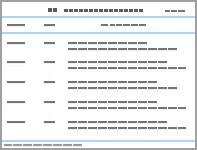
表1
不同预测结果中不同验证钻孔准确率
| 验证钻孔 位置/m | AM | ||
|---|---|---|---|
| 28 | 0.82 | — | — |
| 57 | — | 0.94 | — |
| 86 | 0.86 | — | — |
| 115 | — | — | 1 |
| 144 | 0.82 | 0.96 | — |
| 173 | — | — | 0.8 |
| 231 | — | 0.88 | 0.9 |
| 平均AM | 0.83 | 0.93 | 0.9 |
表2
不同预测结果与图7(a)相比的全局准确率和边界准确率
| 不同预测结果 | AG | AB |
|---|---|---|
| 0.88 | 0.512 | |
| 0.89 | 0.527 | |
| 0.89 | 0.526 |
| [1] |
SHI C, WANG Y. Nonparametric and data-driven interpolation of subsurface soil stratigraphy from li-mited data using multiple point statistics[J]. Canadian Geotechnical Journal, 2021, 58(2): 261-280.
doi: 10.1139/cgj-2019-0843 URL |
| [2] |
QI X H, LIU H X. Estimation of autocorrelation distances for in-situ geotechnical properties using limited data[J]. Structural Safety, 2019, 79: 26-38.
doi: 10.1016/j.strusafe.2019.02.003 URL |
| [3] |
GONG W, ZHAO C, JUANG C H, et al. Coupled characterization of stratigraphic and geo-properties uncertainties—A conditional random field approach[J]. Engineering Geology, 2021, 294: 106348.
doi: 10.1016/j.enggeo.2021.106348 URL |
| [4] |
ZHAO C, GONG W, LI T, et al. Probabilistic cha-racterization of subsurface stratigraphic configuration with modified random field approach[J]. Engineering Geology, 2021, 288: 106138.
doi: 10.1016/j.enggeo.2021.106138 URL |
| [5] |
JUANG C H, ZHANG J, SHEN M, et al. Probabilistic methods for unified treatment of geotechnical and geological uncertainties in a geotechnical analysis[J]. Engineering geology, 2019, 249: 148-161.
doi: 10.1016/j.enggeo.2018.12.010 URL |
| [6] |
JIANG S H, HUANG J, QI X H, et al. Efficient probabilistic back analysis of spatially varying soil parameters for slope reliability assessment[J]. Engineering Geology, 2020, 271: 105597.
doi: 10.1016/j.enggeo.2020.105597 URL |
| [7] |
LI D Q, QI X H, CAO Z J, et al. Evaluating slope stability uncertainty using coupled Markov chain[J]. Computers and Geotechnics, 2016, 73: 72-82.
doi: 10.1016/j.compgeo.2015.11.021 URL |
| [8] |
QI X H, LI D Q, PHOON K K, et al. Simulation of geologic uncertainty using coupled Markov chain[J]. Engineering Geology, 2016, 207: 129-140.
doi: 10.1016/j.enggeo.2016.04.017 URL |
| [9] |
DENG Z P, LI D Q, QI X H, et al. Reliability eva-luation of slope considering geological uncertainty and inherent variability of soil parameters[J]. Computers and Geotechnics, 2017, 92: 121-131.
doi: 10.1016/j.compgeo.2017.07.020 URL |
| [10] |
WANG Y, ZHAO T. Statistical interpretation of soil property profiles from sparse data using Bayesian compressive sampling[J]. Géotechnique, 2017, 67(6): 523-536.
doi: 10.1680/jgeot.16.P.143 URL |
| [11] |
ZHAO T, HU Y, WANG Y. Statistical interpretation of spatially varying 2D geo-data from sparse measurements using Bayesian compressive sampling[J]. Engineering Geology, 2018, 246: 162-175.
doi: 10.1016/j.enggeo.2018.09.022 URL |
| [12] |
HU Y, WANG Y, ZHAO T, et al. Bayesian supervised learning of site-specific geotechnical spatial variability from sparse measurements[J]. ASCE-ASME Journal of Risk and Uncertainty in Engineering Systems, Part A: Civil Engineering, 2020, 6(2): 04020019.
doi: 10.1061/AJRUA6.0001059 URL |
| [13] |
HUANG Y, BECK J L, WU S, et al. Robust Bayesian compressive sensing for signals in structural health monitoring[J]. Computer-Aided Civil and Infrastructure Engineering, 2014, 29(3): 160-179.
doi: 10.1111/mice.12051 URL |
| [14] |
WEI X, WANG H. Stochastic stratigraphic modeling using Bayesian machine learning[J]. Engineering Geology, 2022, 307: 106789.
doi: 10.1016/j.enggeo.2022.106789 URL |
| [15] |
SHI C, WANG Y. Development of subsurface geological cross-section from limited site-specific boreholes and prior geological knowledge using iterative convolution XGBoost[J]. Journal of Geotechnical and Geoenvironmental Engineering, 2021, 147(9): 04021082.
doi: 10.1061/(ASCE)GT.1943-5606.0002583 URL |
| [16] |
QIU Y S, ZHANG N, YIN Z Y, et al. Novel multi-spatial receptive field (MSRF) XGBoost method for predicting geological cross-section based on sparse borehole data[J]. Engineering Geology, 2024, 338: 107604.
doi: 10.1016/j.enggeo.2024.107604 URL |
| [17] | KIPF T N, WELLING M. Semi-supervised classification with graph convolutional networks[C]// International Conference on Learning Representations. Vancouver, British Columbia, Canada: Curran Associates, Inc.,2017: 231-245. |
| [1] | . 基于知识-数据融合模型的综合能源系统多元负荷短期预测[J]. J Shanghai Jiaotong Univ Sci, 2026, 31(2): 499-514. |
| [2] | . 图卷积网络融合脑电与肌电用于上肢运动意图识别[J]. J Shanghai Jiaotong Univ Sci, 2026, 31(1): 12-23. |
| [3] | . 图卷积网络与Stacking集成学习相结合的堆芯自给能中子探测器故障识别方法[J]. J Shanghai Jiaotong Univ Sci, 2025, 30(5): 1018-1027. |
| [4] | LONARE Savita1,2, BHRAMARAMBA Ravi2. 基于图卷积网络的联邦式隐私保护交通预测方法[J]. J Shanghai Jiaotong Univ Sci, 2024, 29(3): 509-517. |
| [5] | 杨坚1,李聪敏2,洪道鉴1,卢东祁1,林秋佳3,方兴其2,喻谦1,张乾1. 基于人体关键点的室内电力人员安全行为实时检测技术[J]. J Shanghai Jiaotong Univ Sci, 2024, 29(2): 309-315. |
| [6] | 陈利跃1,洪道鉴2,何星3,卢东祁2,张乾2,谢妮娜2,徐一洲2,应煌浩2. 基于图卷积网络的分布式光伏实时输出估计方法[J]. J Shanghai Jiaotong Univ Sci, 2024, 29(2): 290-296. |
| [7] | 徐廷学, 丛林虎, 董琪. 基于UGM-ULSSVM的导弹制导控制系统状态预测方法[J]. 上海交通大学学报, 2015, 49(12): 1761-1767. |
| 阅读次数 | ||||||
|
全文 |
|
|||||
|
摘要 |
|
|||||
